
Car Ownership for New US Residents: Licenses, Registration, and Insurance Basics

Key Takeaways
- Most US states require new residents to obtain a state driver's license within 30 to 90 days of establishing residency.
- Vehicle title and registration are separate documents - both are required to legally own and operate a car.
- Auto liability insurance is legally mandatory in nearly every US state before you drive.
- International driving experience does not automatically transfer - you may need to pass written and road tests.
- Registration fees, insurance premiums, and emissions testing requirements vary significantly by state.
- Building a US credit history can affect your insurance rates and financing options over time.
Start here
Getting a US Driver's License as a New Resident
Next
Vehicle Titling and Registration Explained
Then
How Auto Insurance Works in the US
Finally
Ongoing Costs and Responsibilities to Plan For
Getting a US Driver's License as a New Resident
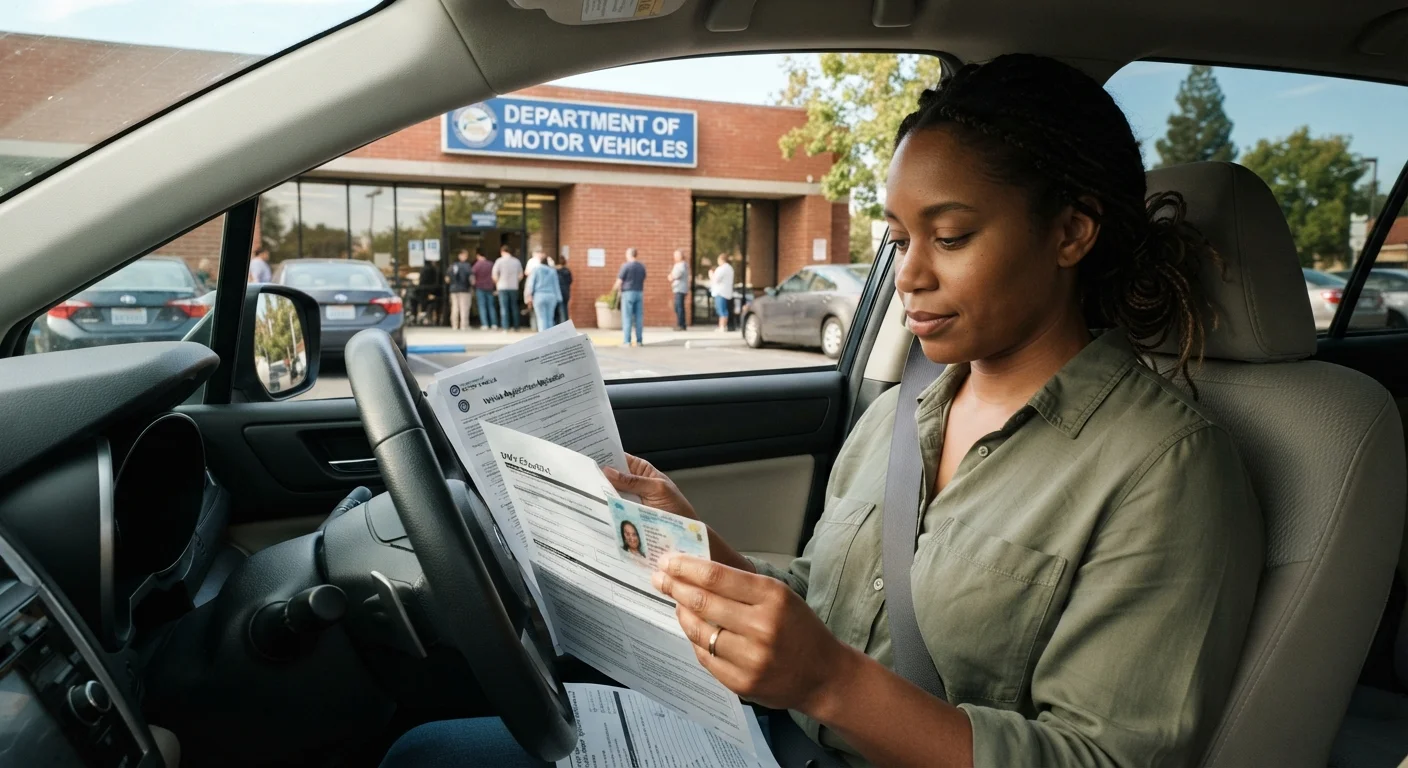
The US does not have a single national driver's license - each of the 50 states issues its own, with its own rules. As a new resident, your first step is identifying which state's DMV (Department of Motor Vehicles) governs you, based on where you've established your primary residence.
Most states require new residents to convert to a local license within 30 to 90 days of moving. Arriving with a foreign license does not exempt you from this requirement indefinitely. Typical documents you'll need include:
- Proof of identity (passport or national ID)
- Proof of US residency (utility bill, lease agreement)
- Social Security number or an SSN ineligibility letter
- Proof of legal presence in the US (visa, immigration documents)
Depending on your home country and state, you may be required to pass a written knowledge test, a vision screening, and a behind-the-wheel road test - even if you've held a foreign license for years. Some states have reciprocity agreements that waive certain tests for drivers from specific countries, but these are exceptions rather than the rule.
DMV
The Department of Motor Vehicles is the state agency responsible for issuing driver's licenses, vehicle titles, and registrations. Each US state has its own DMV with its own rules and offices.
Vehicle Title
A legal document that proves who owns a vehicle. When you buy a car, the title must be transferred to your name at the DMV.
Vehicle Registration
An annual permit to operate a vehicle on public roads, issued by the state. It produces your license plate and must be renewed regularly.
Liability Insurance
The minimum insurance required by most US states. It pays for damage or injuries you cause to other people - not damage to your own vehicle.
Lienholder
A lender (such as a bank or credit union) that has a legal financial claim on your vehicle because they financed its purchase. Their name appears on the title until the loan is paid off.
REAL ID
A federal US standard for state-issued IDs and driver's licenses. A REAL ID-compliant license requires specific identity documents and is needed for domestic air travel and some federal facilities.
If you're also figuring out whether to buy or lease your first US vehicle, the leasing vs. buying breakdown lays out the key differences in plain terms.
Vehicle Titling and Registration Explained
In the US, owning a vehicle involves two distinct legal documents that are often confused: the title and the registration.
- Title
- The certificate of title is the legal proof of ownership. It lists the owner's name and any lienholder (a lender, if the car is financed). When you purchase a vehicle, the title must be transferred into your name through your state's DMV.
- Registration
- Registration is the annual authorization to operate the vehicle on public roads. It produces the license plate and a registration sticker. Registration fees are paid to the state and vary based on factors like vehicle age, weight, and local tax rates.
When buying from a private seller, you typically handle the title transfer yourself at the DMV. When buying from a dealership, the dealer often processes the paperwork on your behalf. Either way, you need insurance before you can register the vehicle.
Bring All Documents in One Trip
DMV offices often have long wait times. Before visiting, download your state's specific checklist of required documents from its official DMV website. Having everything ready - ID, proof of residency, insurance card, and any inspection certificates - avoids a second trip and delays in getting legally registered.
Some states also require an emissions inspection or safety inspection before registration is approved. Missing this step is one of the surprises first-time car owners often encounter.
How Auto Insurance Works in the US
Auto insurance in the US is regulated at the state level, meaning coverage minimums, pricing rules, and claim processes differ by where you live. However, liability insurance is legally required in almost every state. Liability coverage pays for injuries or property damage you cause to others - it does not cover your own vehicle or injuries.
Beyond the legal minimum, most drivers carry additional coverage types:
- Collision: Covers damage to your vehicle from an accident, regardless of fault.
- Comprehensive: Covers non-collision damage such as theft, weather, or fire.
- Uninsured/Underinsured Motorist: Protects you if the at-fault driver has no insurance or insufficient coverage.
For a full explanation of each coverage type, see the auto insurance coverage types guide.
Don't Drive Uninsured, Even Briefly
Some new residents assume they can drive immediately after purchase and sort insurance out later. In nearly every US state, driving without insurance is illegal from the moment you operate the vehicle. Penalties include fines, license suspension, and personal financial liability for any accident that occurs. Secure insurance before you drive.
As a new US resident, insurers may classify you as a high-risk driver due to the absence of a domestic insurance history. Premiums can be substantially higher initially. Ask insurers whether an international insurance letter or an International Driving Permit from your home country can support your application.
Ongoing Costs and Responsibilities to Plan For
Licensing, registration, and insurance are the foundational requirements - but they represent only part of what car ownership costs each year. New residents are often surprised by how quickly recurring expenses add up.
- Annual registration renewal: Fees vary widely by state, ranging from modest flat fees to amounts tied to vehicle value.
- Emissions and safety inspections: Required in many states, typically annually or biennially.
- Routine maintenance: Oil changes, tire rotations, and brake service are ongoing expenses. Skipping them increases long-term repair costs.
- Fuel costs: The US measures fuel in gallons; gas prices fluctuate by region and season.
For a realistic picture of total annual vehicle expenses, the true annual cost of owning a car in America provides a detailed breakdown. And for a comprehensive view of the full ownership lifecycle - from purchase through eventual sale - see car ownership from purchase to sale.
Building a US credit history over time can also open better financing and insurance options. If you're new to US financial systems broadly, general financial education resources can help orient you to how credit, lending, and savings work here.
This article is for general informational purposes only. Licensing, registration, and insurance rules vary by state and individual circumstance. Verify current requirements with your state's DMV and consult a licensed insurance professional for advice specific to your situation.