

Key Takeaways
- Dietary fat is essential for energy, hormone production, and absorbing certain vitamins.
- Unsaturated fats - found in plants and fish - are generally associated with better heart health.
- Saturated fat isn't forbidden, but most guidelines suggest keeping it moderate.
- Artificial trans fats have largely been removed from the US food supply due to health risks.
- The overall quality of your diet matters more than any single nutrient in isolation.
Start here
Why Fat Is a Necessary Nutrient
Build your foundation
The Main Types of Dietary Fat
Know what to limit
Trans Fats: The One Type to Minimize
Understand the stakes
Fat and Cardiovascular Health
Put it into practice
Practical Ways to Apply This Knowledge
Why Fat Is a Necessary Nutrient
Fat has spent decades as a dietary villain, but the science tells a more balanced story. Dietary fat is one of three macronutrients - alongside carbohydrates and protein - that your body relies on for basic function. For a fuller picture of how all three work together, see what macronutrients actually do inside your body.
Fat serves several non-negotiable roles: it provides a concentrated source of energy (9 calories per gram), supports cell membrane integrity, enables the absorption of fat-soluble vitamins (A, D, E, and K), and is the raw material for hormones and signaling molecules. Without adequate fat intake, these processes are compromised.
Saturated fat
A type of dietary fat that is solid at room temperature, found mainly in animal products and some tropical oils. Often discussed in relation to LDL cholesterol levels.
Unsaturated fat
A category of fat - including monounsaturated and polyunsaturated types - that is liquid at room temperature and generally associated with heart-health benefits.
Trans fat
A type of fat formed when liquid oils are partially hydrogenated. Artificial trans fats have been largely eliminated from the US food supply due to cardiovascular health risks.
Omega-3 fatty acids
A family of polyunsaturated fats the body cannot make on its own, found in fatty fish, flaxseed, and walnuts. Linked to heart and brain health benefits in research.
LDL cholesterol
Low-density lipoprotein, often called 'bad' cholesterol. High levels in the blood are associated with increased risk of cardiovascular disease.
HDL cholesterol
High-density lipoprotein, often called 'good' cholesterol. Higher levels are generally associated with a lower risk of heart disease.
The Main Types of Dietary Fat
Not all fats behave the same way inside the body. Understanding the three major categories is the most practical thing you can do to improve your relationship with fat.
Saturated Fat
Saturated fats are solid at room temperature - think butter, lard, and the fat marbled in red meat. They're also found in full-fat dairy and tropical oils like coconut and palm oil. Saturated fat has long been associated with raising LDL cholesterol levels, though current research suggests the relationship is more complex depending on the specific fatty acids and food matrix involved.
Monounsaturated Fat (MUFA)
These fats are liquid at room temperature but solidify when chilled. Olive oil, avocado, and most nuts are rich sources. MUFAs are generally considered beneficial for cardiovascular health and are a cornerstone of the Mediterranean dietary pattern.
Polyunsaturated Fat (PUFA)
PUFAs include two families your body cannot make on its own: omega-3 fatty acids (found in fatty fish, flaxseed, and walnuts) and omega-6 fatty acids (found in vegetable oils and seeds). Both are considered essential, though most Americans get considerably more omega-6 than omega-3 in their diets.
Trans Fats: The One Type to Minimize
Artificial trans fats - created by partially hydrogenating vegetable oils - were once widely used in processed foods for texture and shelf life. Research consistently linked them to raised LDL cholesterol, lowered HDL (the 'good' cholesterol), and increased cardiovascular risk. The U.S. Food and Drug Administration banned their use in food manufacturing, with compliance required by 2020.
Watch for Hidden Trans Fats in Labels
US labeling rules allow a product to list '0g trans fat' per serving if it contains less than 0.5 grams - which can add up if you eat multiple servings. Always scan the ingredient list for 'partially hydrogenated oil' as a more reliable indicator. This rule applies even to foods marketed as 'healthy' or 'natural.'
Small amounts of naturally occurring trans fats are found in meat and dairy from ruminant animals (such as cattle and sheep). These differ structurally from artificial trans fats, and current evidence does not link them to the same health risks - though research is ongoing.
When checking packaged foods, a label can legally state '0g trans fat' if a serving contains less than 0.5g. If you see 'partially hydrogenated oil' in the ingredient list, the product contains trace amounts. Reading nutrition facts labels carefully is the most reliable way to spot hidden trans fats.
Fat and Cardiovascular Health
The relationship between dietary fat and heart health has been one of the most studied - and debated - topics in nutrition science. For context on why nutrition guidance shifts over time, where nutrition advice goes wrong and why it keeps changing is useful background reading.
Current evidence, reflected in guidelines from major health organizations, broadly supports:
- Replacing saturated fat with unsaturated fat (particularly PUFAs) may reduce cardiovascular risk for some people.
- Omega-3 fatty acids from fish and plant sources are associated with reduced triglyceride levels and may support heart rhythm regulation.
- Overall dietary patterns - such as the Mediterranean or DASH approaches - appear more predictive of heart health than any single nutrient.
Think Dietary Patterns, Not Single Nutrients
Research consistently shows that the overall quality of your diet - not one specific food or fat type - is the strongest predictor of long-term health. Aim for a variety of whole foods that include healthy fat sources, rather than obsessing over individual gram counts. Small, sustainable shifts tend to compound into meaningful benefits over time.
It's worth noting that replacing saturated fat with refined carbohydrates does not appear to improve cardiovascular outcomes, a nuance that older low-fat dietary guidance did not always communicate clearly.
Practical Ways to Apply This Knowledge
Translating fat science into everyday eating doesn't require tracking every gram. A few durable principles go a long way:
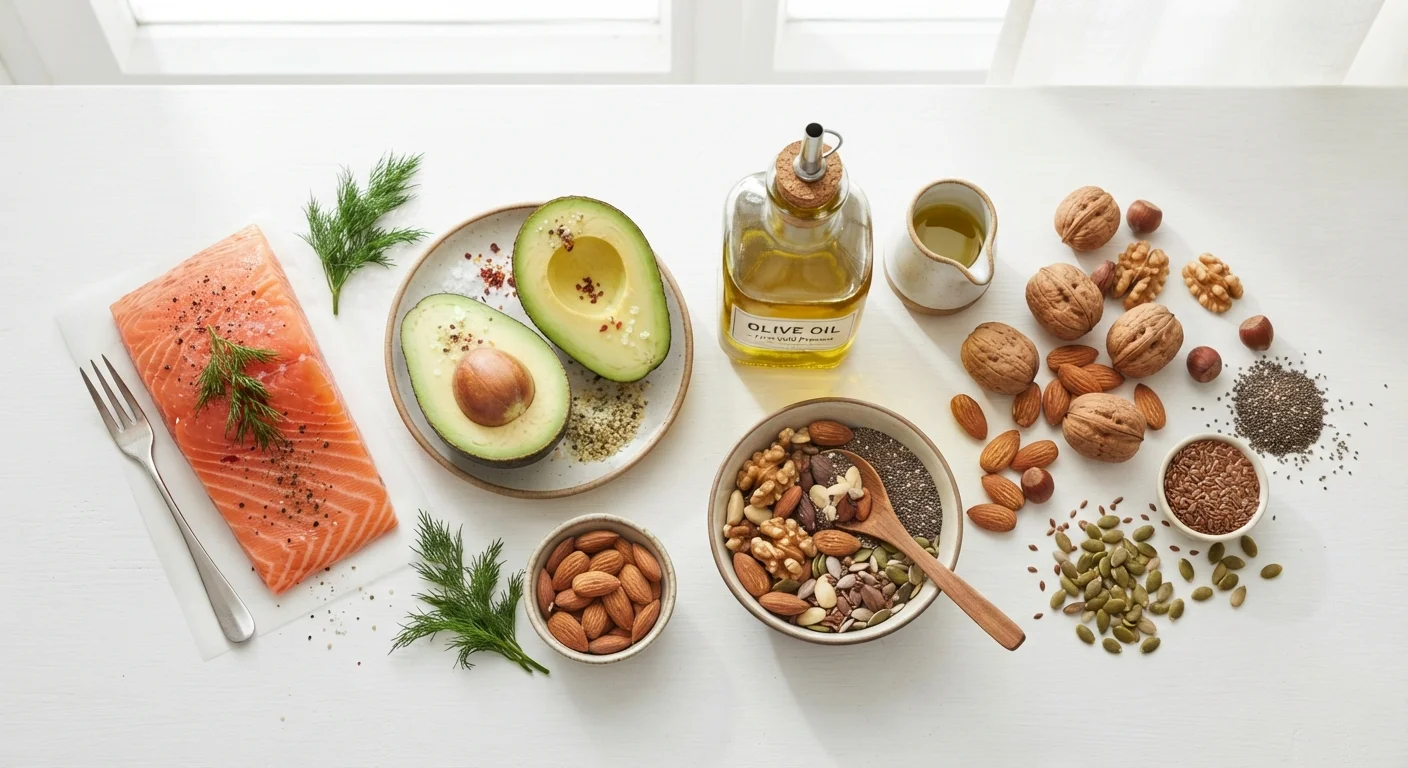
- Emphasize whole food fat sources - nuts, seeds, avocado, olive oil, and fatty fish tend to come with beneficial nutrients alongside the fat itself.
- Use saturated fat in moderation rather than eliminating it - context and overall diet quality matter more than any single food.
- Check ingredient lists on packaged foods for partially hydrogenated oils, especially in shelf-stable snacks, pastries, and fried items.
- Build varied, balanced meals - for practical guidance on assembling a nutritionally complete plate, see building a balanced plate.
If you have a diagnosed cardiovascular condition, are pregnant, or have other health concerns, discuss your specific fat intake goals with a registered dietitian or your healthcare provider rather than relying on general guidance.
This article is for general informational and educational purposes only and is not a substitute for professional medical or nutritional advice. Always consult a qualified healthcare professional for guidance tailored to your individual health needs.