

Key Takeaways
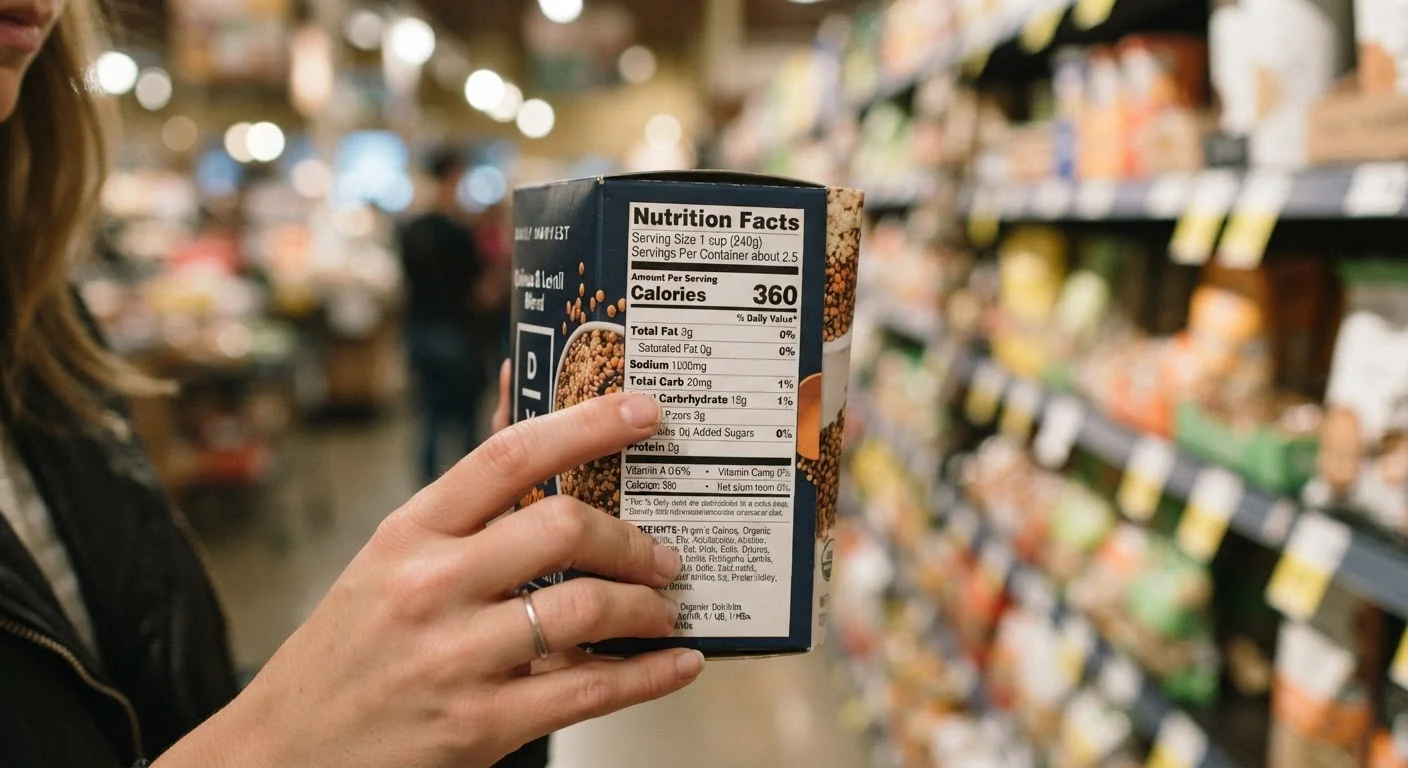
- Serving size is the foundation of every number on a nutrition label - always check it first.
- Percent Daily Value (%DV) tells you how much a nutrient contributes to a 2,000-calorie reference diet.
- Ingredients are listed by weight from most to least, revealing what a food is actually made of.
- Added sugars and saturated fat are the two nutrients most worth watching for most adults.
- No single food is perfect; context across your whole diet matters more than any one label.
What you will need
Why Nutrition Labels Exist - and What They're Actually Telling You
The Nutrition Facts label is a federally standardized panel required on most packaged foods sold in the United States. Its purpose is straightforward: give consumers consistent, comparable information so they can evaluate what they're eating. Despite that goal, the label still trips people up - not because it's deceptive, but because a few key concepts are easy to misread.
The most important thing to internalize before reading any label is that all numbers on it apply to one serving, not the whole package. A bag of chips might list 150 calories per serving but contain three servings. Eating the whole bag means consuming 450 calories. That single misunderstanding accounts for a large share of label confusion.
For deeper context on how nutrients like fat and carbohydrates are categorized, see our plain-language guide to dietary fat and our explainer on whole grains vs. refined grains.
What you will need
Step-by-Step: How to Read the Label
Follow these steps each time you pick up a packaged food. With practice, the whole process takes under a minute.
Find the serving size and number of servings
At the very top of the label, you'll see Serving Size (e.g., "2 crackers" or "1 cup") and Servings Per Container. Every calorie count and nutrient value that follows applies only to that serving amount. If you eat twice the serving size, double every number on the label mentally.
Check the calorie count in context
Calories tell you how much energy one serving provides. As a rough reference, the FDA uses a 2,000-calorie daily diet for %DV calculations. A 400-calorie snack isn't inherently bad or good - it depends on the rest of what you eat that day and your individual needs.
Interpret Percent Daily Value (%DV)
The %DV column shows what percentage of a nutrient's recommended daily amount one serving provides, based on a 2,000-calorie diet. A quick rule of thumb: 5% DV or less is low; 20% DV or more is high. Use this to limit saturated fat, sodium, and added sugars, and to get enough fiber, calcium, iron, and vitamin D.
Review fats, sodium, and added sugars
These are the three nutrients most people benefit from monitoring. Look for:
- Saturated fat - associated with cardiovascular risk in excess; keep %DV low. Trans fat should be 0g.
- Sodium - processed foods are the primary source of excess sodium in the US diet.
- Added sugars - distinct from naturally occurring sugars in fruit or dairy; the label now separates them so you can see exactly how much sugar was added during processing.
Note the nutrients to seek out
Fiber, vitamin D, calcium, iron, and potassium are nutrients many Americans fall short on. A high %DV for these is a positive signal. Dietary fiber in particular supports digestive health and steady blood sugar - look for foods where it contributes a meaningful %DV per serving.
Use Labels for Comparison, Not Perfection
Nutrition labels are most useful when comparing similar products side by side - same serving size, different nutrient profiles. Don't aim for a "perfect" label; focus on gradual, sustainable improvements across your overall eating pattern. For guidance on evaluating broader nutrition claims, see our article on why nutrition advice keeps changing.
Understanding the Ingredient List
The ingredient list sits below the Nutrition Facts panel and follows one rule: ingredients are listed in descending order by weight. The first ingredient is the most abundant; the last is the least. A bread labeled "whole wheat" that lists enriched white flour first contains more refined flour than whole wheat - regardless of the marketing on the front of the package.
Scan the first three to five ingredients; they define the character of the food. Long ingredient lists aren't automatically bad - spice blends and fortified cereals have many ingredients by necessity - but a long list dominated by refined starches, added sugars under multiple names (corn syrup, dextrose, maltose, cane juice), or partially hydrogenated oils is worth noting.
For a closer look at how sugar terminology works on labels, our article on added sugar vs. natural sugar explains the key distinctions. If you also want to understand what vitamins and minerals in the label actually do, the micronutrient reference guide is a useful companion.
Front-of-Package Claims Are Marketing
Terms like "natural," "light," "multigrain," or "low-fat" on the front of a package are not regulated the same way as the Nutrition Facts panel. A "low-fat" product may be high in added sugars. Always flip to the Nutrition Facts label and ingredient list to get the standardized, comparable data - the front of the package is designed to attract attention, not inform your decision.
This article is for general informational and educational purposes only and is not a substitute for advice from a qualified healthcare professional or registered dietitian. Individual nutritional needs vary; consult a professional before making significant dietary changes.