

| Total essential vitamins | 13 (NIH Office of Dietary Supplements) |
| Total essential minerals | ~16 (macrominerals + trace minerals) (USDA Dietary Guidelines framework) |
| Most common deficiency worldwide | Iron deficiency (World Health Organization) |
| Vitamin D status concern | ~35% of U.S. adults may have insufficient levels (CDC National Health and Nutrition Examination Survey data) |
| Best general strategy | Varied whole-food diet covering all food groups (Dietary Guidelines for Americans) |
Why Micronutrients Matter
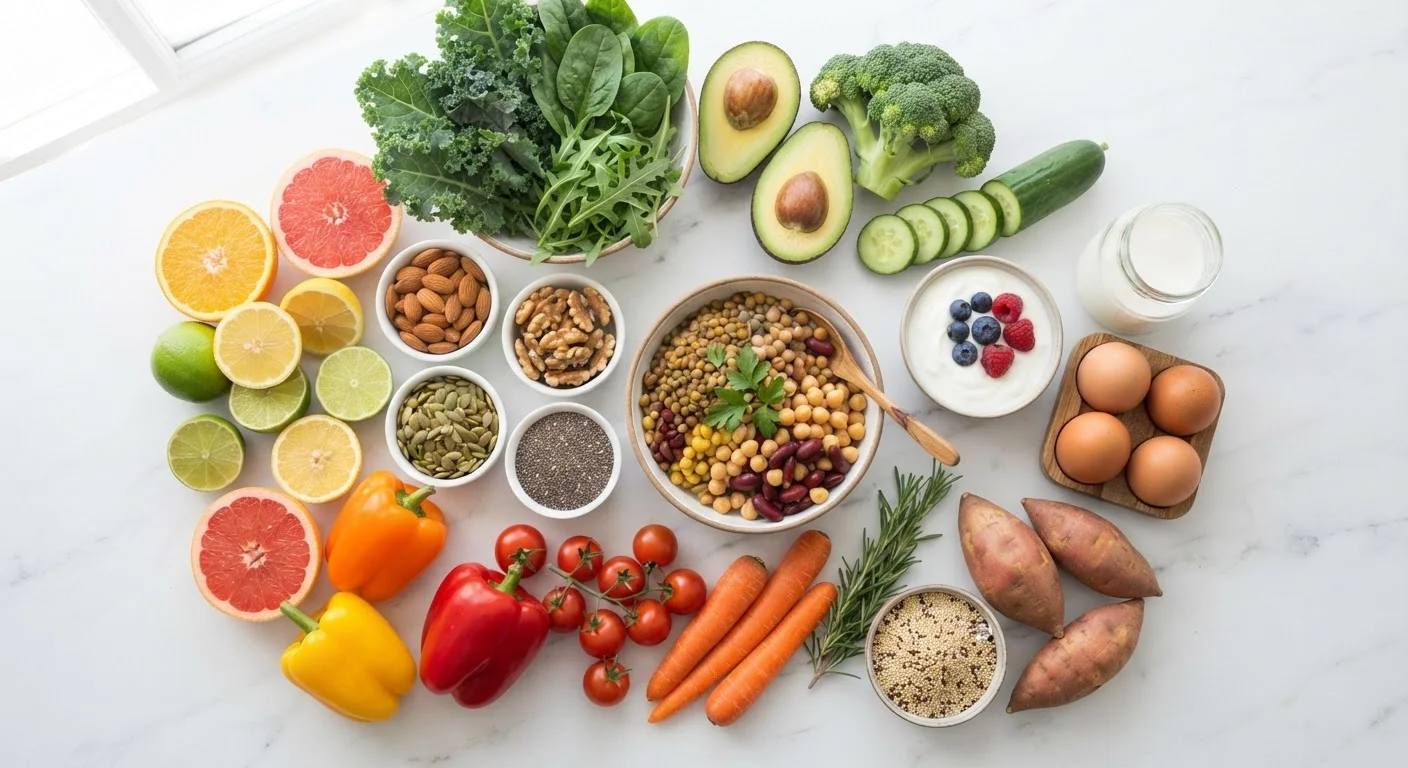
Vitamins and minerals are classified as micronutrients because your body requires them in relatively small amounts - yet their roles are enormous. They enable enzyme reactions, support immune defenses, regulate cell growth, and help convert the food you eat into usable energy. Unlike macronutrients (carbohydrates, proteins, and fats), micronutrients provide no calories directly; instead, they make the entire metabolic system work. To understand how these fit into the bigger picture, see what macronutrients actually do inside your body.
Most people can meet their needs through a varied, whole-food diet. Persistent gaps, however, can quietly erode health over months or years before obvious symptoms appear. This reference is meant to make the essentials easier to find and understand - not to replace guidance from a qualified healthcare professional.
| Total essential vitamins | 13 (NIH Office of Dietary Supplements) |
| Total essential minerals | ~16 (macrominerals + trace minerals) (USDA Dietary Guidelines framework) |
| Most common deficiency worldwide | Iron deficiency (World Health Organization) |
| Vitamin D status concern | ~35% of U.S. adults may have insufficient levels (CDC National Health and Nutrition Examination Survey data) |
| Best general strategy | Varied whole-food diet covering all food groups (Dietary Guidelines for Americans) |
Key Vitamins: Functions, Sources, and Deficiency Signs
Vitamins are divided into two categories based on how the body stores them:
- Fat-soluble vitamins (A, D, E, K) are stored in fatty tissue and the liver, meaning they accumulate over time. Excess intake - typically from high-dose supplements - can reach toxic levels.
- Water-soluble vitamins (C and all B vitamins) are not stored as readily; excess amounts are generally excreted in urine, making regular dietary intake important.
Micronutrient
A vitamin or mineral required by the body in small quantities to support essential physiological functions. Unlike macronutrients, micronutrients do not directly supply energy (calories).
Fat-Soluble Vitamin
A vitamin (A, D, E, or K) that dissolves in fat and is stored in the body's fatty tissues and liver. Because they accumulate, excessive supplementation can cause toxicity over time.
Water-Soluble Vitamin
A vitamin (C and the B vitamins) that dissolves in water and is generally not stored in significant quantities. Excess amounts are excreted in urine, so consistent dietary intake is important.
Trace Mineral
A mineral the body needs in very small amounts - typically less than 100 mg per day. Examples include iron, zinc, selenium, and iodine.
Bioavailability
The proportion of a nutrient that is actually absorbed and used by the body after consumption. Bioavailability varies by food source, preparation method, and individual health factors.
Daily Value (DV)
A reference amount set by the U.S. FDA representing the recommended daily intake of a nutrient for most adults, used on Nutrition Facts labels to help consumers compare foods.
Fat-Soluble Vitamins
| Vitamin | Primary Function | Common Food Sources | Deficiency Signs |
|---|---|---|---|
| A (Retinol) | Vision, immune function, cell growth | Liver, dairy, eggs; beta-carotene in orange and leafy vegetables | Night blindness, increased infection risk |
| D | Calcium absorption, bone health, immune modulation | Fatty fish, egg yolks, fortified dairy; sunlight synthesis | Bone softening (rickets/osteomalacia), fatigue, muscle weakness |
| E | Antioxidant protection, immune support | Nuts, seeds, vegetable oils, leafy greens | Nerve damage, muscle weakness (rare in healthy adults) |
| K | Blood clotting, bone metabolism | Leafy greens (kale, spinach), fermented foods | Impaired clotting, easy bruising |
Key Water-Soluble Vitamins
| Vitamin | Primary Function | Common Food Sources | Deficiency Signs |
|---|---|---|---|
| C | Collagen synthesis, antioxidant, iron absorption aid | Citrus, bell peppers, strawberries, broccoli | Scurvy (fatigue, bleeding gums, slow wound healing) |
| B1 (Thiamine) | Energy metabolism, nerve function | Whole grains, legumes, pork | Beriberi, neurological symptoms |
| B9 (Folate) | DNA synthesis, red blood cell formation | Leafy greens, legumes, fortified grains | Megaloblastic anemia; neural tube defects in pregnancy |
| B12 | Nerve function, red blood cell production | Animal products (meat, fish, dairy, eggs) | Anemia, neurological changes, fatigue |
If you suspect your diet may be leaving gaps, signs your eating habits may be leaving nutritional gaps offers a practical look at common warning patterns.
Essential Minerals: What They Do and Where to Find Them
Minerals are inorganic elements that the body cannot manufacture. They fall into two groups: macrominerals (needed in larger amounts, such as calcium and magnesium) and trace minerals (needed in tiny amounts, such as iron and zinc).
~2 billion
People affected by micronutrient deficiencies globally
According to the World Health Organization, micronutrient deficiency - sometimes called 'hidden hunger' - affects roughly 2 billion people worldwide.
90%
Of Americans fall short of recommended potassium intake
The Dietary Guidelines for Americans identifies potassium as a nutrient of public health concern due to widespread underconsumption.
40%
Of the global population at risk of zinc deficiency
Research published in nutrition epidemiology literature estimates that zinc inadequacy affects a significant share of the world's population, particularly in regions with low meat intake.
| Mineral | Primary Function | Common Food Sources | Deficiency Signs |
|---|---|---|---|
| Calcium | Bone and tooth structure, muscle contraction, nerve signaling | Dairy, fortified plant milks, tofu, leafy greens | Bone loss, muscle cramps, increased fracture risk |
| Magnesium | Enzyme activation, blood sugar regulation, muscle and nerve function | Nuts, seeds, whole grains, dark chocolate, legumes | Muscle cramps, fatigue, irregular heartbeat |
| Iron | Oxygen transport (hemoglobin), energy metabolism | Red meat, poultry, lentils, spinach, fortified cereals | Iron-deficiency anemia: fatigue, pallor, shortness of breath |
| Zinc | Immune function, wound healing, protein synthesis | Meat, shellfish, legumes, seeds, nuts | Impaired immunity, slow wound healing, taste/smell changes |
| Potassium | Fluid balance, blood pressure regulation, nerve transmission | Bananas, potatoes, beans, dairy, leafy greens | Muscle weakness, fatigue, irregular heartbeat |
| Iodine | Thyroid hormone production, metabolism regulation | Iodized salt, seafood, dairy | Goiter, hypothyroidism, cognitive impairment |
Understanding how to read labels can help you assess mineral intake from packaged foods. Our guide on reading a nutrition facts label without the confusion explains how daily value percentages work in practice.
Nutritional needs also shift across the lifespan. Calcium and vitamin D become especially critical later in life, while folate takes priority during pregnancy. Learn more in nutrition through the life stages.
This article is for general informational and educational purposes only and is not a substitute for personalized medical or nutritional advice. Always consult a qualified healthcare professional before making changes to your diet or supplement routine.