
Nutrition Through the Life Stages: How Needs Shift from Childhood to Older Adulthood

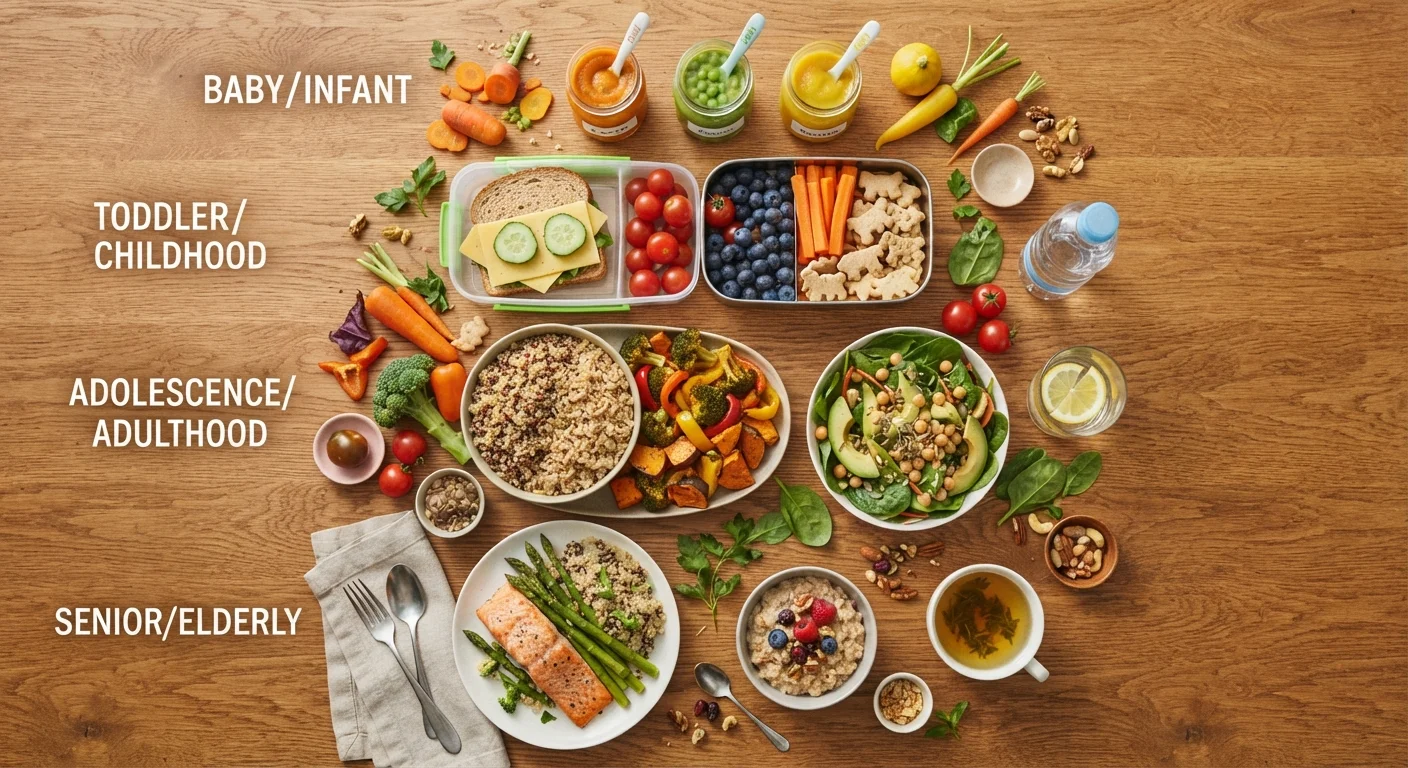
Key Takeaways
- Caloric and nutrient needs shift substantially across different life stages.
- Iron, calcium, and vitamin D are critical at multiple life stages but for different reasons.
- Older adults face unique risks including muscle loss and reduced absorption of key vitamins.
- No single diet works for every age - eating patterns should evolve as the body does.
- A registered dietitian can help tailor nutrition guidance to individual life circumstances.
Why Nutritional Needs Change Over a Lifetime
The human body is not static. From rapid growth in infancy to slower metabolism in older age, the body's demand for energy and specific nutrients shifts constantly. What constitutes a nutritionally adequate diet for a teenager is fundamentally different from what supports a 70-year-old's health - even if the plate looks similar.
These shifts are driven by biology: changing hormone levels, evolving organ function, differing rates of cell turnover, and varying physical activity levels all influence how much of any given nutrient the body requires and how efficiently it can absorb and use what's consumed.
Understanding these changes isn't about following rigid rules - it's about building awareness so that food choices can better match the body's current demands. For a deeper look at how nutrition science itself evolves, see why nutrition advice keeps changing.
90%
Of peak bone mass built by late adolescence
According to the National Institutes of Health, most bone density accumulation occurs before age 18-20.
2x
Brain volume growth in the first year of life
Neuroscience research consistently documents near-doubling of brain volume in the first 12 months, underscoring why early nutrition is critical.
30-50%
Of older adults may have vitamin B12 insufficiency
Studies in older populations suggest a substantial proportion have reduced B12 absorption due to atrophic gastritis or reduced stomach acid.
Infancy and Early Childhood (Ages 0-5)
No life stage involves faster growth than the first two years. Brain volume roughly doubles in the first year alone, making adequate nutrition during this period especially consequential. Breast milk or infant formula provides a complete nutritional package for the first six months, after which the introduction of solid foods gradually broadens nutrient sources.
Key nutrients during this phase include:
- Iron: Critical for brain development; becomes especially important after six months when breast milk alone may not meet demand.
- Zinc: Supports immune function and growth.
- Vitamin D: Essential for bone development; many exclusively breastfed infants may require supplementation - consult a pediatrician.
- Healthy fats: Omega-3 fatty acids, particularly DHA, support neurological development.
By ages 2-5, dietary variety expands. Establishing exposure to vegetables, fruits, legumes, and whole grains during this window helps shape taste preferences that can persist for years.
Supplement Decisions Require Professional Guidance
Vitamin D and iron supplementation for infants and young children are sometimes medically appropriate - but should only be given under the guidance of a pediatrician. Excess iron in particular can be harmful. Do not supplement a child's diet without professional advice.
School Age and Adolescence (Ages 6-18)
Childhood and adolescence bring two distinct nutritional phases. During the school years (roughly 6-11), growth is steady but not as explosive as infancy. Energy needs increase alongside physical activity, and consistent intake of calcium and vitamin D becomes critical as bone density accumulates - nearly 90% of peak bone mass is established by late adolescence.
Puberty dramatically increases nutritional demands. Adolescent girls begin to lose iron through menstruation, elevating their dietary iron requirements. Boys experience rapid muscle mass gain, increasing protein and zinc needs. Both groups need substantially more calcium than younger children.
During adolescence, focus on building food literacy rather than labeling foods 'good' or 'bad' - teaching teens to recognize hunger, fullness, and nutritional variety creates more durable habits.
Research on adolescent eating behavior suggests that restrictive dietary framing correlates with disordered eating patterns, while positive food education supports long-term dietary quality.
For adults over 65, eating adequate protein at breakfast - not just dinner - can be more effective at supporting muscle maintenance, since muscle protein synthesis appears more evenly distributed throughout the day in older bodies.
Emerging research on protein distribution suggests that spreading intake across meals may better support anabolic response in older adults compared with back-loading protein at a single meal.
Despite these elevated needs, this is also the life stage where diet quality often declines - driven by greater independence in food choices, peer influence, and busy schedules. Encouraging balanced eating patterns rather than restrictive rules tends to be more effective and safer during adolescence.
Adulthood (Ages 19-50)
For many adults, this is the longest and most varied nutritional chapter. Growth has ended, but dietary choices during these decades significantly influence the risk of chronic conditions later in life - including cardiovascular disease, type 2 diabetes, and osteoporosis.
Caloric needs generally stabilize and then gradually decline through this period, but several nutrients deserve particular attention:
- Folate: Especially important for people who may become pregnant; adequate intake before and in early pregnancy reduces the risk of neural tube defects.
- Calcium and vitamin D: Bone maintenance continues to require these throughout adulthood.
- Fiber: Supports digestive health and helps moderate blood sugar and cholesterol levels.
Adulthood is also when the interaction between nutrition and lifestyle becomes most visible. Food, sleep, and movement together shape daily energy, mood, and long-term resilience. And since hydration interacts closely with how nutrients are absorbed, fluid intake matters as much as food choices.
Make Nutrient Density a Daily Habit
Rather than tracking individual nutrients obsessively, focus on consistently including a variety of colorful vegetables, legumes, whole grains, and quality protein sources in your daily meals. This approach naturally covers most micronutrient needs across adulthood without requiring detailed calculations. Small, consistent dietary patterns add up over years more powerfully than short-term interventions.
Older Adulthood (Ages 51 and Beyond)
Nutritional priorities shift noticeably in older adulthood, often in ways that catch people off guard. Caloric needs fall as metabolic rate slows and physical activity tends to decrease - yet requirements for several key nutrients actually increase.
Notable shifts include:
- Protein: Older adults need more protein per kilogram of body weight to counter sarcopenia (age-related muscle loss). The body becomes less efficient at synthesizing muscle protein.
- Vitamin B12: Absorption declines with age due to reduced stomach acid production. Deficiency can cause neurological symptoms that are sometimes mistaken for cognitive decline.
- Calcium and vitamin D: Requirements rise further, particularly to protect against osteoporosis and fall-related fractures.
- Vitamin B6: Needs increase modestly; this nutrient supports immune function and neurological health.
Appetite often decreases in older adults due to medication effects, reduced sense of taste or smell, and social isolation - making nutrient density per calorie especially important. If you're noticing signs of dietary shortfalls at any age, this guide on nutritional gaps outlines what to look for and when to consult a professional.
“Older adults face a dual nutritional challenge: they need fewer calories but more of several critical nutrients. Nutrient density - not just food volume - becomes the central organizing principle of eating well in later life.”
— National Institute on Aging, U.S. federal agency focused on aging research and older adult health
Practical Ways to Eat Well at Every Stage
Knowing that nutritional needs change is only useful if it translates into practical action. A few principles hold across all life stages:
- Prioritize whole foods: Vegetables, legumes, whole grains, lean proteins, and dairy or fortified alternatives consistently deliver the broadest range of nutrients.
- Don't wait for symptoms: Nutritional deficiencies often develop gradually. Regular health check-ups that include basic bloodwork can catch shortfalls before they become problematic.
- Adjust with life changes: Pregnancy, menopause, a new exercise routine, or a chronic health diagnosis all signal moments to revisit dietary patterns. Adapting how you eat as your life changes is normal and wise.
- Work with professionals: A registered dietitian or your primary care provider can offer guidance tailored to your specific circumstances, medical history, and nutritional status.
Nutrition is also inseparable from how we move. Physical activity needs shift across decades in parallel with dietary needs - the two are best considered together. And for a broader view of how daily habits should evolve as you age, this decade-by-decade lifestyle guide offers helpful context.
MyPlate by USDA
The USDA's MyPlate resource provides life-stage-specific dietary guidance and interactive tools to help individuals understand balanced eating at every age.
Dietary Reference Intakes (DRIs) - NIH Office of Dietary Supplements
A comprehensive reference from the National Institutes of Health detailing recommended intake levels for vitamins and minerals across all age groups and life stages.
Academy of Nutrition and Dietetics - Find a Registered Dietitian
Use this professional directory to locate a registered dietitian nutritionist who can provide personalized dietary guidance tailored to your age, health history, and goals.
This article is for general informational purposes only and is not a substitute for professional medical or dietary advice. Always consult a qualified healthcare provider for guidance specific to your health situation.