

Key Takeaways
- Earnest money is a deposit made when your offer is accepted - typically 1%-3% of the purchase price.
- The down payment is paid at closing and represents your initial equity stake in the home.
- Closing costs are separate from the down payment and typically range from 2%-5% of the loan amount.
- Earnest money is usually credited toward your total amount due at closing, not an extra cost.
- All three obligations require liquid funds - money that is actually available, not just on paper.
Home Purchase Upfront Costs
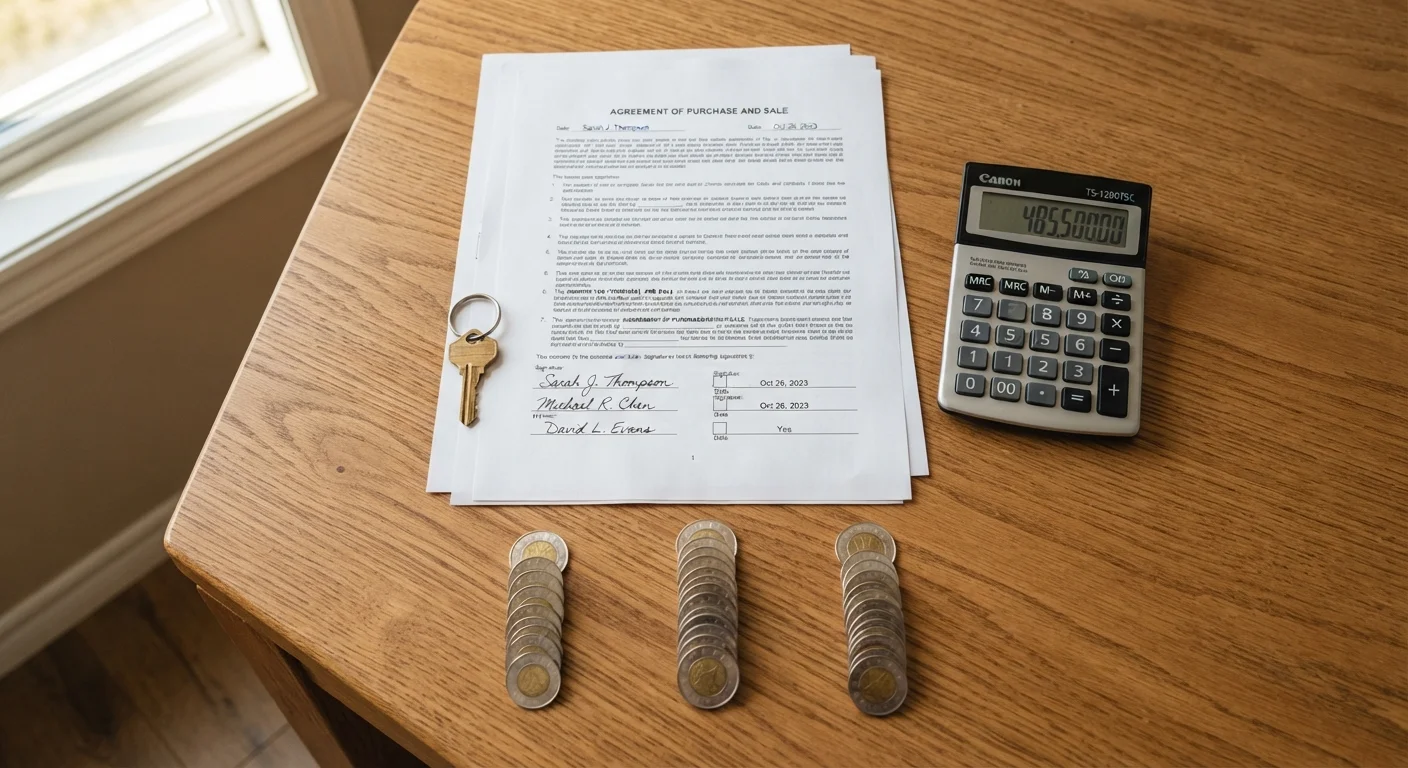
When buying a home, buyers typically encounter three separate financial obligations before and at closing: earnest money (a good-faith deposit made with an offer), the down payment (a percentage of the purchase price paid at closing), and closing costs (fees charged by lenders, title companies, and other parties to complete the transaction). These are not the same amount, not due at the same time, and serve entirely different purposes.
In most transactions, earnest money is credited toward the down payment or closing costs at settlement, so it is not an additional expense - but it must be available upfront, often within days of an accepted offer.
Earnest Money: Putting Skin in the Game Early
When a seller accepts your offer, they typically take the home off the market. To compensate them for that risk, buyers submit an earnest money deposit - a sum held in escrow that signals genuine intent to purchase.
In most US markets, earnest money runs between 1% and 3% of the purchase price, though competitive markets may see higher amounts. On a $350,000 home, that's roughly $3,500 to $10,500, usually due within one to three business days of a signed purchase agreement.
Critically, earnest money is not a fee you lose - assuming the sale closes, it gets credited toward your down payment or closing costs. What puts it at risk is walking away from the deal outside the terms of your contingencies. A financing contingency protects you if your loan falls through; an inspection contingency protects you if a home inspection uncovers serious issues. Understand what your contract allows before you sign.
Keep Earnest Money Liquid and Ready
Your earnest money deposit typically needs to be wired or submitted as a cashier's check within one to three business days of a signed contract. Make sure those funds are in an accessible account before you start making offers - moving money from investments or retirement accounts takes time and may carry tax implications.
See the full home-buying timeline for a step-by-step look at when earnest money and other obligations come due relative to each stage of the transaction.
The Down Payment: Your Equity Starting Point
The down payment is the portion of the home's purchase price you pay directly - as opposed to financing it through a mortgage. It is paid at the closing appointment, not when you make your offer.
Common down payment thresholds include 3%-5% for conventional loans aimed at first-time buyers, 3.5% for FHA loans, and the traditional 20% benchmark that avoids private mortgage insurance (PMI). PMI is a monthly insurance premium that protects the lender - not the buyer - when a borrower puts down less than 20%.
2%-5%
Typical closing cost range as a share of loan amount
According to the Consumer Financial Protection Bureau, closing costs commonly fall in this range and vary by state, loan type, and transaction.
1%-3%
Typical earnest money deposit range
Real estate industry data generally places standard earnest money deposits between 1% and 3% of the purchase price, with higher amounts common in competitive markets.
3.5%
Minimum down payment for FHA loans
The Federal Housing Administration sets a 3.5% minimum down payment for borrowers who meet its credit requirements, making it a common option for first-time buyers.
A larger down payment lowers your loan balance and typically reduces your interest rate, but tying up more cash in a home has tradeoffs. For more context on how loan type affects your down payment requirements, the mortgage types breakdown covers FHA, VA, conventional, and other structures in plain language.
Closing Costs: The Line Items That Catch Buyers Off Guard
Closing costs are a collection of fees paid at the closing table to finalize the transaction. They are separate from the down payment, and many first-time buyers are surprised to discover how much they add up.
Common line items include:
- Loan origination fees - charged by the lender to process the mortgage
- Title search and title insurance - confirms ownership history and protects against future claims
- Appraisal fee - required by most lenders to verify the home's value
- Prepaid items - homeowners insurance, prepaid interest, and initial escrow deposits for property taxes
- Recording fees - government charges to record the deed transfer
Closing costs typically range from 2% to 5% of the loan amount. On a $300,000 mortgage, that means $6,000 to $15,000 in addition to your down payment. Your lender is required to provide a Loan Estimate within three business days of your application - review it carefully and compare it against the Closing Disclosure you receive before settlement.
Closing Costs Vary Significantly by State
Some states have higher recording fees, transfer taxes, or attorney requirements that meaningfully affect total closing costs. New York and Pennsylvania, for example, tend to have higher closing costs than many other states. Always request a Loan Estimate early in the process and review it line by line to understand what's driving the total in your specific market.
First-time buyers often underestimate the cash they'll need at closing. The mistakes first-time buyers commonly make article covers this and other financial blind spots worth knowing before you sign anything.
How the Three Work Together
Here's how these obligations typically sequence on a real purchase:
- Offer accepted → earnest money deposited into escrow (days 1-3)
- Loan application, inspection, appraisal, underwriting (weeks 1-5)
- Closing day → down payment plus closing costs due, minus earnest money already credited
Buyers who conflate these three costs often miscalculate how much liquid cash they need. Budget for all three as separate line items. If your down payment is $30,000 and your earnest money was $5,000, you'll owe $25,000 on that front at closing - plus closing costs on top.
For a broader look at the financial realities that continue after you get the keys, see the ongoing costs of homeownership, which covers property taxes, insurance, maintenance, and HOA fees that many buyers underestimate.
This article is for general informational purposes only and does not constitute financial, legal, or real estate advice. Consult a licensed real estate professional, lender, or attorney for guidance specific to your situation and jurisdiction.