

Key Takeaways
- Salt does raise boiling point, but not enough to matter in a home kitchen.
- You absolutely can oversalt pasta water - balance and taste are still essential.
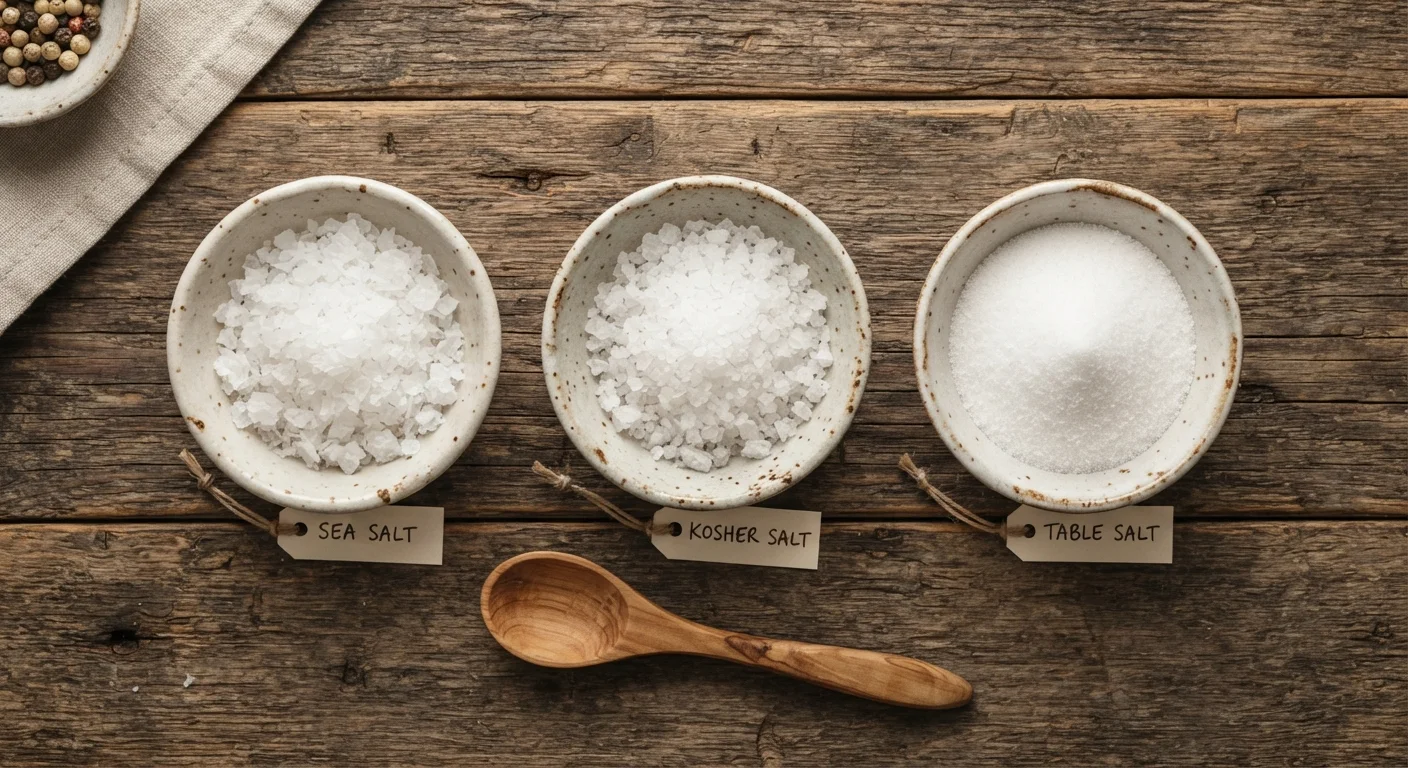
- Kosher, sea, and table salt behave differently by volume, not just by taste.
- Salting meat early draws out moisture briefly but ultimately improves flavor and texture.
- Salt does not preserve all foods at home the way it does in industrial processes.
Why Salt Myths Stick Around
Salt is one of the oldest and most universal cooking ingredients on the planet, which means there's been plenty of time for good advice to get garbled into half-truths. Some myths survive because they contain a kernel of real chemistry. Others persist simply because they sound authoritative when repeated in a kitchen setting.
The result? Home cooks who are quietly undermining their own meals - under-seasoning out of health anxiety, oversalting pasta water based on a misquote, or swapping salt types without realizing it throws off the whole dish. Getting salt right isn't complicated, but it does require letting go of a few deeply held assumptions.
Myth
Adding salt makes water boil faster, so you should always add it right away.
Fact
Salt does raise water's boiling point, but the effect at kitchen quantities is so small it's physically negligible.
This one sounds scientific, which is probably why it persists. Salt does technically raise the boiling point of water - a principle called boiling-point elevation. But to raise the boiling point of a liter of water by even one degree Celsius, you'd need roughly 58 grams of salt. That's about three tablespoons - far more than anyone adds to a pot of pasta.
In practice, the time difference is unmeasurable. Add salt when it's convenient, but do add it: the real reason to salt pasta water is flavor, not speed.
Myth
You can't oversalt pasta water - the pasta won't absorb that much anyway.
Fact
Pasta does absorb salt from its cooking water, and water that tastes unpleasantly briny will produce unpleasantly briny pasta.
The idea that pasta water should taste "like the sea" gets misquoted constantly. The phrase likely meant well-seasoned, not ocean-level saline. Pasta absorbs water as it cooks, and that water carries sodium along with it.
A good target is water that tastes pleasantly seasoned - a little salty on the tongue but not harsh. Taste your water before adding pasta. If it's overwhelming, dilute it or start over. This simple habit is one of the easiest ways to improve your cooking, and it connects directly to the broader ideas in understanding why recipes fail.
Myth
All salt is interchangeable - a teaspoon is a teaspoon.
Fact
Different salts vary significantly in density and grain size, so the same volume measure can deliver very different amounts of actual sodium.
This is where a lot of home cooks quietly oversalt their food without realizing it. One teaspoon of fine table salt contains roughly twice as much sodium as one teaspoon of Diamond Crystal kosher salt, because the fine crystals pack together much more densely.
When a recipe specifies "kosher salt," using fine table salt in the same quantity can easily double the saltiness. When in doubt, season by taste rather than strict measurement - and if you're switching salt types mid-recipe, adjust accordingly.
Myth
Salting meat before cooking dries it out, so you should season right before it hits the pan.
Fact
Salting meat early - ideally hours or overnight - actually improves moisture retention and develops better flavor through a process called dry brining.
The concern isn't baseless: salt does initially draw moisture to the surface through osmosis. But given time (at least 40-45 minutes, and preferably overnight), that moisture is reabsorbed along with the dissolved salt, seasoning the meat from within and helping proteins retain liquid during cooking.
Last-minute salting, by contrast, leaves surface moisture that can inhibit browning. Early salting is one of the most impactful low-effort techniques a home cook can adopt. Flavor fundamentals like this pair well with understanding how acids and fats shape flavor in your cooking.
Myth
Salt is a preservative, so heavily salted homemade food will last as long as store-bought preserved goods.
Fact
Home preservation with salt requires precise, tested concentrations and methods - casual heavy salting does not make food shelf-stable or safe.
Salt does inhibit microbial growth at sufficiently high concentrations - this is the science behind cured meats and fermented vegetables. But "high concentration" means carefully calibrated ratios, not just "a lot of salt." Improperly preserved foods can still harbor dangerous bacteria, including those that produce toxins not detectable by smell or taste.
If you're interested in home curing or fermentation, follow tested recipes from credible food-safety sources, and understand that this is a specialized skill with real safety considerations - not just aggressive seasoning.
Putting the Facts to Work
Once you clear away the myths, a few practical habits make a real difference. Taste as you cook rather than relying on fixed measurements. Note which salt type your recipes were developed with - it genuinely matters. Salt your proteins early when you have the time. And treat pasta water as a seasoning opportunity, not a formality.
~2x
Sodium difference: table salt vs. kosher salt by volume
A teaspoon of fine table salt can contain roughly twice the sodium of the same volume of coarse kosher salt due to grain density differences.
58g
Salt needed to raise 1L water's boiling point by 1°C
Basic chemistry shows this amount far exceeds what any home cook adds to a pot, making the boiling-speed claim practically irrelevant.
Salt misconceptions are a good reminder that kitchen intuition is built on accurate information, not just repetition. The same impulse to question received wisdom applies across topics - whether it's popular nutrition myths or the food lore passed down at the stove. When in doubt, taste, adjust, and trust the evidence.
Home Preservation Isn't Just Heavy Salting
If you're experimenting with curing, pickling, or fermenting at home, use tested, sourced recipes from credible food-safety organizations rather than improvising. Incorrect salt concentrations in preservation can allow dangerous microbial growth that isn't visible or detectable by smell. When in doubt, consult official food safety guidance.