

Key Takeaways
- Habit tracking can strengthen consistency, but the method matters as much as the act itself.
- Digital apps offer automation and reminders; paper journals offer reflection and lower screen time.
- Tracking can sometimes fuel anxiety or perfectionism rather than genuine behavior change.
- The most sustainable system is one you'll actually return to after missing a day.
Makes invisible patterns visible over time
Logging daily behavior creates a record you can actually review. Trends in sleep, activity, or food choices that feel random often reveal clear triggers when you look at a few weeks of data.
Reinforces commitment through accountability
The simple act of checking a box or logging a habit appears to strengthen follow-through for many people. This effect - sometimes called the "what gets measured gets managed" principle - is well-documented in behavior-change research.
Builds momentum through visible streaks
Seeing a run of consecutive days can motivate you to protect it. Many people find that even a modest streak makes it harder to skip a day, especially early in building a new routine.
Supports self-reflection and intentionality
Writing down what you did - and didn't do - each day encourages a moment of honest self-appraisal that passive routines don't offer. Paper journals in particular tend to invite a slower, more thoughtful review.
Easy to adjust goals as your life changes
Whether digital or analog, a tracking system lets you see at a glance what's working and what isn't, making it easier to recalibrate without guesswork.
Broken streaks can trigger all-or-nothing thinking
Missing a single day can feel like failure, especially in streak-based apps. For people prone to perfectionism, this can lead to abandoning a habit entirely rather than simply resuming the next day.
Tracking can become the goal instead of the behavior
It's surprisingly easy to optimize for a green check mark rather than the underlying habit. Someone might log a 10-minute walk to preserve a streak without getting the actual physical benefit they were aiming for.
Information overload leads to decision fatigue
Tracking too many habits at once - sleep, water, steps, mood, meals, gratitude - creates cognitive load that makes the whole system feel like a chore. Most people find their engagement drops sharply after the first few weeks.
Can increase anxiety around normal life variation
Bodies and schedules fluctuate naturally. Watching metrics dip during a stressful week or travel period can generate unnecessary worry rather than useful insight.
Digital apps raise real data privacy concerns
Many free habit apps monetize user data. Information about sleep schedules, menstrual cycles, mood states, and substance use is sensitive, and users often have limited visibility into how it's stored or shared.
Adds more screen time to already full days
Logging habits digitally means one more reason to pick up your phone. For people already working to set healthier boundaries with devices, this friction can quietly undermine other wellbeing goals.
Our Verdict
Habit tracking genuinely helps many people build consistency, but it's not a one-size-fits-all solution. The right format - app, journal, or simple tally - depends on your personality, goals, and relationship with structure. A tool that creates stress rather than support probably isn't working for you.
Habit tracking works best for people who enjoy a bit of structure, want a tangible record of their progress, and are willing to treat missed days as data rather than failure.
Why Tracking Habits Became So Popular
The appeal is pretty intuitive: if you can see your behavior laid out in front of you, you're more likely to understand it - and maybe change it. Researchers who study behavior change have long noted that self-monitoring is one of the more reliable levers for building new routines, whether that's drinking more water, sleeping consistently, or moving your body regularly.
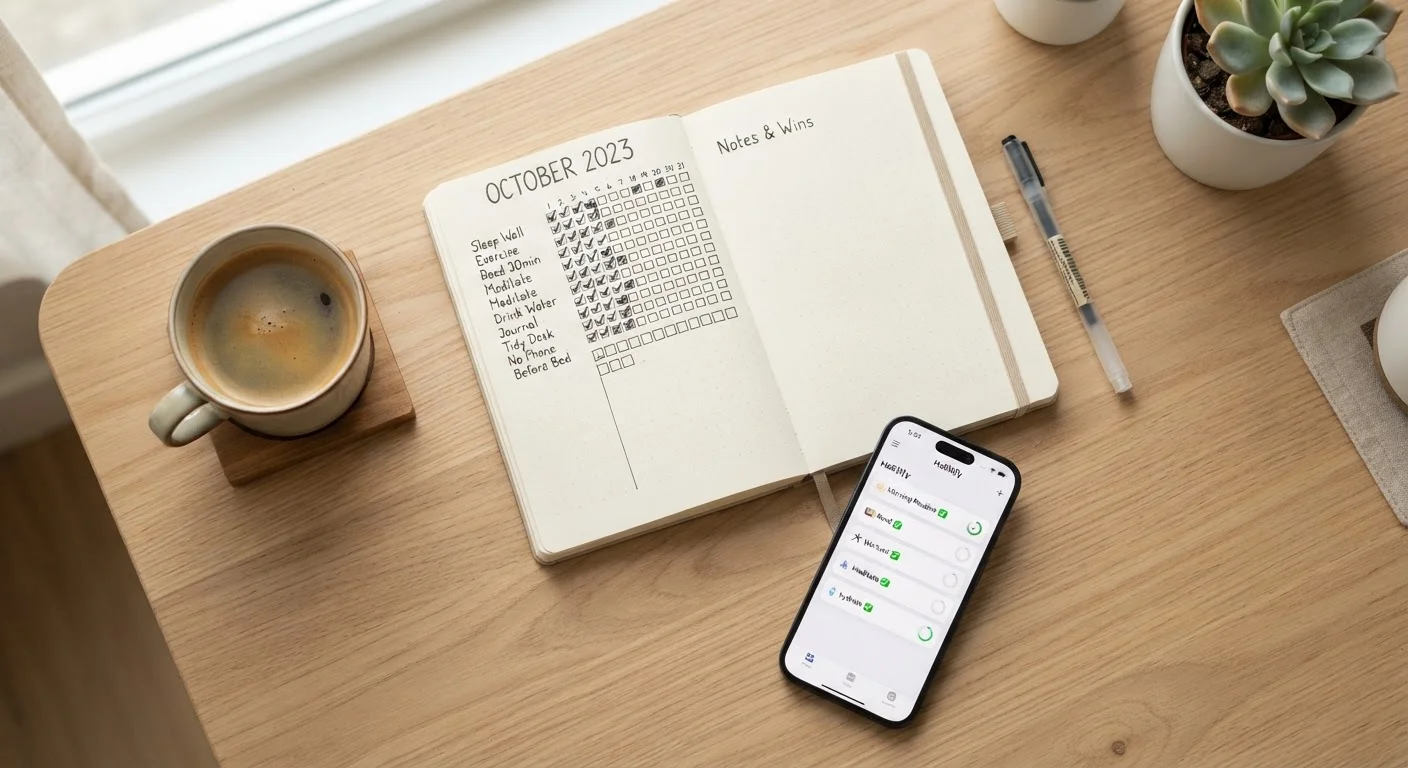
Apps turbocharged this idea by making tracking frictionless. A quick tap logs a workout. A streak counter rewards daily check-ins. Paper journals, meanwhile, offer a different kind of engagement - slower, more reflective, and completely offline. Neither approach is inherently superior, but each carries its own set of tradeoffs worth understanding before you commit to either.
If you already track your spending - a closely related habit - you'll recognize some of the same dynamics at play. The same tensions between detail and overwhelm, consistency and rigidity, apply whether you're monitoring dollars or daily push-ups. Practical methods for monitoring spending share a lot of DNA with habit tracking systems.
The Real Advantages of Tracking Your Habits
When habit tracking works, it works well. Here's what the research and lived experience tend to agree on:
Makes invisible patterns visible over time
Logging daily behavior creates a record you can actually review. Trends in sleep, activity, or food choices that feel random often reveal clear triggers when you look at a few weeks of data.
Reinforces commitment through accountability
The simple act of checking a box or logging a habit appears to strengthen follow-through for many people. This effect - sometimes called the "what gets measured gets managed" principle - is well-documented in behavior-change research.
Builds momentum through visible streaks
Seeing a run of consecutive days can motivate you to protect it. Many people find that even a modest streak makes it harder to skip a day, especially early in building a new routine.
Supports self-reflection and intentionality
Writing down what you did - and didn't do - each day encourages a moment of honest self-appraisal that passive routines don't offer. Paper journals in particular tend to invite a slower, more thoughtful review.
Easy to adjust goals as your life changes
Whether digital or analog, a tracking system lets you see at a glance what's working and what isn't, making it easier to recalibrate without guesswork.
One underrated benefit is the data you accumulate over time. Patterns that feel invisible in the moment - like always skipping your evening walk when work runs late - become obvious when you look back over a few weeks of records. That kind of self-knowledge is genuinely useful, and it's hard to get any other way.
The Downsides Worth Knowing About
Tracking isn't a neutral act. The format, frequency, and framing all shape how the practice affects you - sometimes in ways that work against the original goal.
Broken streaks can trigger all-or-nothing thinking
Missing a single day can feel like failure, especially in streak-based apps. For people prone to perfectionism, this can lead to abandoning a habit entirely rather than simply resuming the next day.
Tracking can become the goal instead of the behavior
It's surprisingly easy to optimize for a green check mark rather than the underlying habit. Someone might log a 10-minute walk to preserve a streak without getting the actual physical benefit they were aiming for.
Information overload leads to decision fatigue
Tracking too many habits at once - sleep, water, steps, mood, meals, gratitude - creates cognitive load that makes the whole system feel like a chore. Most people find their engagement drops sharply after the first few weeks.
Can increase anxiety around normal life variation
Bodies and schedules fluctuate naturally. Watching metrics dip during a stressful week or travel period can generate unnecessary worry rather than useful insight.
Digital apps raise real data privacy concerns
Many free habit apps monetize user data. Information about sleep schedules, menstrual cycles, mood states, and substance use is sensitive, and users often have limited visibility into how it's stored or shared.
Adds more screen time to already full days
Logging habits digitally means one more reason to pick up your phone. For people already working to set healthier boundaries with devices, this friction can quietly undermine other wellbeing goals.
It's also worth noting a privacy angle that often goes overlooked: habit apps frequently collect detailed behavioral data, and that information may be shared or stored beyond what users expect. If you're already thinking about your digital footprint, health and wellness apps are worth scrutinizing closely.
Tracking Is a Tool, Not a Treatment
Habit apps and journals are helpful organizational tools, but they're not substitutes for professional support when underlying issues - like disordered eating, anxiety, or sleep disorders - are involved. If you find tracking is amplifying distress rather than reducing it, that's a signal worth paying attention to. A conversation with a qualified healthcare provider is always the right next step.
Analog vs. Digital: Choosing What Fits You
The honest answer is that neither format wins outright. A paper journal slows you down in a way that encourages reflection - which suits habits tied to emotional wellbeing, like mood, sleep quality, or gratitude. If you're new to journaling altogether, a beginner's guide to journaling for mental clarity is a good place to start before layering in habit tracking.
Digital apps shine for habits that benefit from reminders and streaks - hydration, medication, or daily movement. That said, more screen time has its own costs. Managing screen time as an adult is already a challenge for many people, and adding another daily app check-in can quietly add up. Similarly, if you're considering a wearable to automate some of the tracking, the tradeoffs of smartwatch ownership are worth thinking through first.
66 days
Average time to form a new habit automatically
A study published in the European Journal of Social Psychology found that habit automaticity took an average of 66 days to develop, ranging widely depending on the person and behavior.
40%
Of daily actions driven by habit, not decision
Research from Duke University suggests that roughly 40% of everyday actions are habitual rather than consciously chosen, highlighting why routine-building has an outsized effect on outcomes.
A practical middle path: track fewer habits more meaningfully. One or two well-chosen behaviors, tracked consistently, tend to build more momentum than an ambitious dashboard that burns you out by week three.
This article is for general informational purposes only and does not constitute medical or psychological advice. If habit-tracking is causing significant anxiety or affecting your wellbeing, consider speaking with a qualified healthcare provider.