
What "R-Value" Actually Means-and Why Insulation Numbers Matter More Than Thickness

Key Takeaways
- R-value measures thermal resistance - a higher number means better insulating performance.
- Thickness alone does not determine R-value; material type is equally important.
- Different parts of your home (attic, walls, floors) require different minimum R-values.
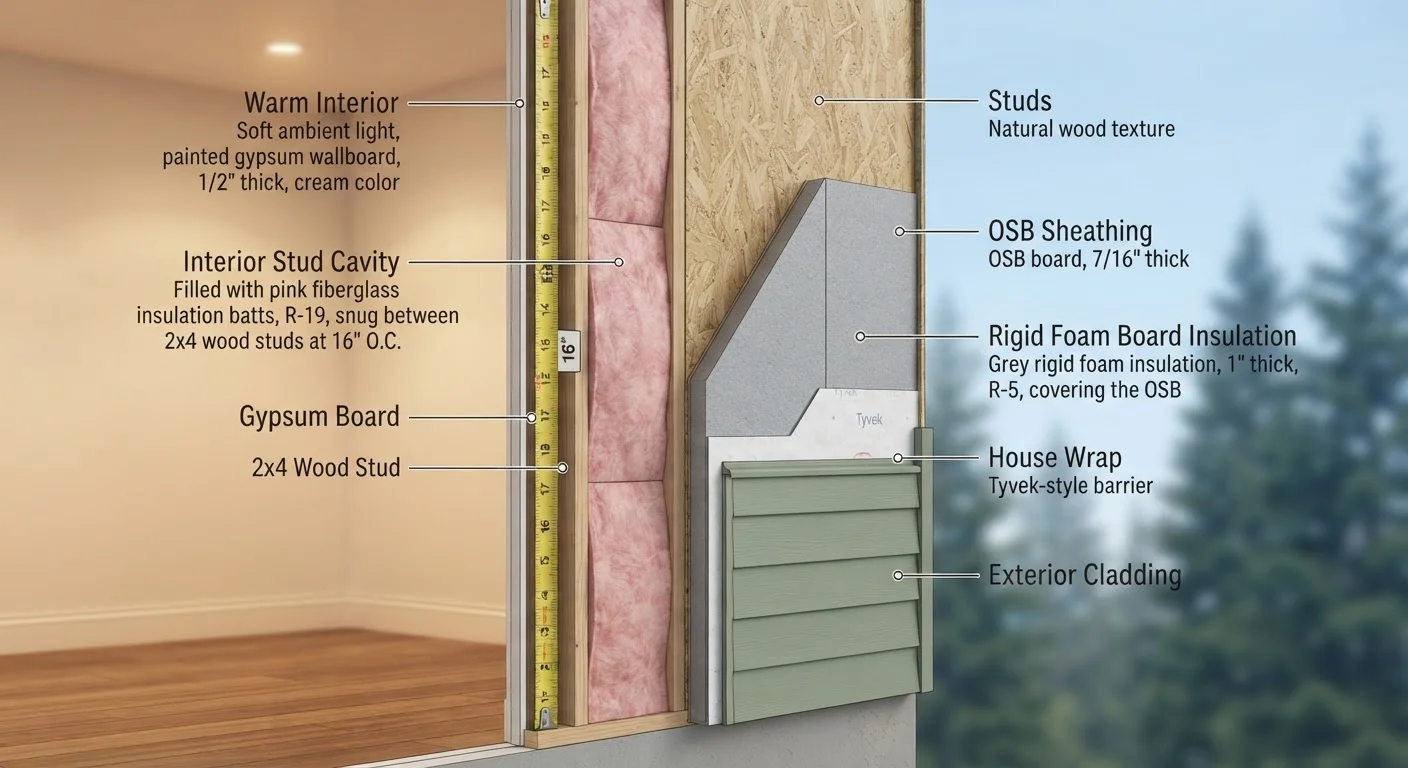
- R-values are additive, so layering compatible materials increases total resistance.
- Local climate and the U.S. Department of Energy's zone map should guide your R-value targets.
- Installing insulation with an inadequate R-value for your region may undercut energy savings.
R-Value
R-value is a number that measures how well a material resists the flow of heat. The higher the R-value, the more effective the insulation is at keeping heat inside during winter and outside during summer. It applies to insulation materials, walls, roofs, and windows - any building component that affects heat transfer.
R-value is calculated as the ratio of temperature difference across a material to the heat flux through it, expressed in units of °F·ft²·h/BTU in the U.S. system. Individual material R-values are additive when layers are stacked.
Why R-Value Matters More Than Inches of Insulation
Walk into any home improvement store and you'll see insulation labeled with numbers like R-13, R-19, or R-38. Many homeowners assume thicker insulation automatically means better performance - but that logic only holds within the same material type. R-value is the actual performance metric that tells you how well insulation resists heat transfer, regardless of how thick a batt looks in the packaging.
Two rolls of insulation that appear nearly identical in thickness can have very different R-values depending on their material. Spray foam, for example, can achieve a higher R-value per inch than standard fiberglass batts. This means a 2-inch layer of closed-cell spray foam may outperform a 3.5-inch fiberglass batt in the same wall cavity. Relying on thickness alone leads to under-insulated homes and wasted material costs.
R-60
Max recommended attic insulation in coldest U.S. zones
The U.S. Department of Energy recommends up to R-60 for attics in climate zones 6-8, covering states like Minnesota, Maine, and Montana.
~3.7
R-value per inch of closed-cell spray foam
Closed-cell spray polyurethane foam typically delivers around R-6 to R-7 per inch, compared to roughly R-3.2 per inch for standard fiberglass batts.
15%
Estimated heat loss through poorly insulated attics
The U.S. Environmental Protection Agency (EPA) has noted that air sealing and insulation can help reduce heating and cooling costs in many homes, with the attic being a primary area of heat loss.
How R-Value Is Determined - and What Affects It
R-value is a property of the material itself, measured in laboratory conditions. The number reflects how much a material slows the movement of heat through conduction, convection, and radiation. Several factors can change a material's real-world performance relative to its rated value:
- Compression: Squeezing batt insulation into a space that's too small reduces the air pockets that provide resistance, lowering effective R-value.
- Moisture: Wet insulation loses significant thermal performance. Moisture management and vapor control are just as important as the insulation itself.
- Installation gaps: Even small gaps or voids in insulation coverage create pathways for heat flow that compromise the whole assembly's performance.
- Temperature: Some insulation materials perform differently at extreme cold or heat, a nuance worth considering in very hot or very cold climates.
Understanding these variables helps explain why professional installation often matters as much as the product choice itself.
Air Seal Before You Insulate
Even the highest R-value insulation can't compensate for air leaks around recessed lights, plumbing penetrations, or attic hatches. Before adding or upgrading insulation, seal gaps with caulk or spray foam. This one step often improves thermal performance more than additional insulation layers alone.
R-Value Recommendations by Location in Your Home
The right R-value depends on where in the house you're insulating and what climate zone you live in. The U.S. Department of Energy divides the country into eight climate zones and publishes recommended R-value ranges for each. Here's a general overview of where different levels are typically applied:
| Location | Typical R-Value Range |
|---|---|
| Attic (cold climates) | R-49 to R-60 |
| Attic (moderate climates) | R-38 to R-49 |
| Exterior walls | R-13 to R-21 |
| Floors over unheated spaces | R-25 to R-30 |
| Basement walls | R-11 to R-15 |
These are general ranges - your local building code sets the minimum legal requirement, and the DOE recommendations often exceed code minimums for better energy performance. Always verify with your local building department before starting a project.
Building Codes Set the Minimum, Not the Ideal
Local building codes establish the minimum R-value required for new construction and permitted renovations - but meeting the minimum doesn't always mean optimal performance. DOE recommendations frequently exceed code minimums, particularly for attics. When planning an upgrade, use building code as your floor, not your ceiling.
Putting R-Value Knowledge to Work in Your Home
Before purchasing any insulation, identify your climate zone using the DOE's online map, then compare what's currently in your walls or attic against the recommended target. If you're starting a new construction or major renovation, the climate zone targets should inform your framing and cavity choices from the start.
Remember that R-values are additive. If your attic currently has R-19 worth of old insulation and you need R-49, you can add R-30 of new material on top - as long as the existing insulation is dry and in good condition. Air sealing gaps and penetrations before adding insulation will also significantly improve real-world performance, since no amount of R-value compensates for unchecked air leakage.
For insulation work involving exterior walls, crawlspaces, or areas requiring building permits, consult a licensed insulation contractor or energy auditor. They can assess your current thermal envelope and recommend the most cost-effective upgrade path for your specific home and location. For more on separating insulation facts from fiction, see our guide to common myths about energy-efficient home upgrades.