
Secured Cards vs. Credit-Builder Loans: Two Paths to Building Credit From Scratch

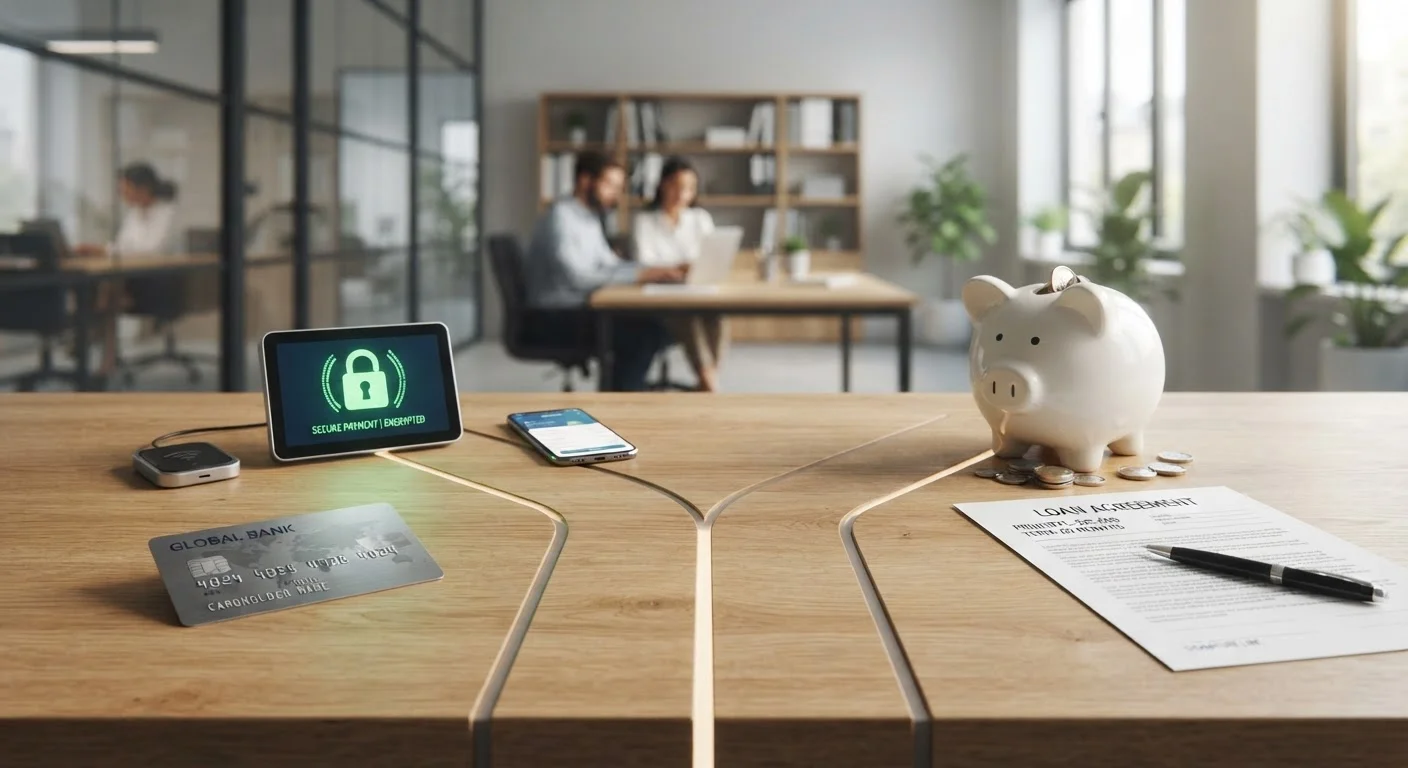
Key Takeaways
- Secured cards require an upfront cash deposit that becomes your credit limit, while credit-builder loans hold funds in a locked account until the loan is repaid.
- Both tools report payment history to major credit bureaus, which is the single biggest factor in your credit score.
- Secured cards carry a risk of carrying balances and paying interest; credit-builder loans have fixed monthly payments with no temptation to overspend.
- Most people see meaningful score movement within six to twelve months of consistent, on-time use of either tool.
- You can use both simultaneously if your budget allows - they build different types of credit accounts, which may benefit your score.
Option A
Secured Credit Card
The revolving credit approach with everyday spending flexibility.
Best for: People who want to practice real-world spending habits while simultaneously building a credit history.
Option B
Credit-Builder Loan
The disciplined savings-and-credit combo for structured builders.
Best for: People who want to build credit and accumulate a small savings cushion at the same time, with no risk of overspending.
If you want to practice everyday spending and earn rewards while building credit
Secured Credit Card
A secured card functions like a regular credit card, giving you hands-on experience managing a revolving balance with real-world transactions.
If you tend to overspend and want a forced savings habit alongside credit building
Credit-Builder Loan
Payments go toward a savings account you can't touch until the loan is paid off, so there's no risk of running up debt you can't repay.
If you have limited cash available and cannot tie up a deposit
Credit-Builder Loan
Many credit-builder loans require no upfront deposit - you pay in monthly installments and receive the total at the end of the term.
If you want the fastest path to a conventional unsecured credit card
Secured Credit Card
Many issuers review your account after 12-18 months and may upgrade you to an unsecured card and return your deposit automatically.
How Each Tool Actually Works
Starting with no credit history - sometimes called being "credit invisible" - makes it harder to qualify for standard loans or credit cards. Two tools are specifically designed to solve this problem: secured credit cards and credit-builder loans. Understanding their mechanics is the first step to choosing the right one for your situation.
Secured credit cards work like ordinary credit cards with one key difference: you provide a cash deposit upfront, typically between $200 and $500, which becomes your credit limit. You then use the card for everyday purchases and pay the bill monthly. The card issuer reports your payment behavior to the three major credit bureaus - Equifax, Experian, and TransUnion - just as they would with any credit card account.
Credit-builder loans flip the traditional loan structure. Instead of receiving money upfront, the lender holds the loan amount - usually $300 to $1,000 - in a locked savings account or certificate of deposit. You make fixed monthly payments over a set term, typically 6 to 24 months. Once the loan is fully repaid, you receive the accumulated funds. The lender reports each payment to the credit bureaus throughout the term.
| Criterion | Secured Credit Card | Credit-Builder Loan |
|---|---|---|
| Upfront requirement | Cash deposit (becomes credit limit) | Usually none required |
| When you access funds | Immediately - spend as you go | After loan is fully repaid |
| Account type reported | Revolving credit | Installment loan |
| Overspending risk | Yes - balance can accrue interest | No - fixed payment, locked funds |
| Savings benefit | None inherent | Lump sum returned at end of term |
| Typical term | Ongoing (open-ended) | 6 to 24 months |
| Path to conventional credit | Issuer may upgrade after 12-18 months | Demonstrates repayment history for future applications |
Costs, Risks, and What to Watch Out For
Neither tool is free, and understanding the real costs helps you avoid surprises.
Secured cards commonly charge an annual fee, which can range from nominal to several dozen dollars depending on the issuer. If you carry a balance month-to-month, you'll also pay interest - often at rates higher than standard cards. Keeping your balance below 30% of your credit limit (a concept called credit utilization) is important, since high utilization can hurt rather than help your score. The risk with secured cards is the same as with any revolving credit: it's possible to overspend and accumulate debt that's expensive to repay.
Credit-builder loans charge interest on the loan amount, meaning you'll pay slightly more over the term than the total you ultimately receive. However, because payments are fixed and the funds are locked, there's no risk of accumulating a revolving balance. Some credit unions and community development financial institutions (CDFIs) offer credit-builder loans with low or no fees, making them a cost-effective option.
Can You Use Both at the Same Time?
Using a secured card and a credit-builder loan simultaneously is possible and can be beneficial - they add both a revolving and an installment account to your credit file, which may improve your credit mix. However, only do this if your monthly budget comfortably covers both the card payment and the loan installment. Missing a payment on either account would hurt your score, negating the benefit of holding two accounts.
Before committing to either product, it's worth understanding the habits that can quietly erode progress - see our piece on habits that quietly undermine a good credit score to avoid inadvertent setbacks.
Timeline and What to Expect From Your Score
Credit scoring models generally require at least one account with six months of history before generating a score. That means either tool can get you a scoreable file within half a year - provided you make every payment on time.
35%
Weight of payment history in most credit scores
According to FICO's published scoring model breakdown, payment history is the single largest factor in a standard credit score calculation.
45M+
Credit-invisible Americans
The Consumer Financial Protection Bureau has estimated that tens of millions of Americans lack a scoreable credit file, limiting their access to mainstream financial products.
6-12 months
Typical timeframe for first meaningful score improvement
Credit scoring models generally require six months of account history before generating a score, with consistent on-time payments accelerating improvement.
Payment history is the single largest component of most mainstream credit scores, accounting for roughly 35% of the calculation. Both secured cards and credit-builder loans build this factor directly. Secured cards also affect your credit utilization ratio, so keeping balances low is essential. Credit-builder loans add an installment loan to your file, which can diversify your credit mix - another minor scoring factor.
Most people with consistent, on-time use report a noticeable score improvement within 6 to 12 months. After establishing a baseline, you can think about sustaining strong credit over the long term. And if you're ready to take the next step with a formal application, reviewing a pre-application readiness checklist can help you avoid common missteps.
This article is for general informational purposes only and does not constitute personalized financial or credit advice. Consult a qualified financial professional for guidance tailored to your individual circumstances.