

Key Takeaways
- Investing is how money grows beyond what a savings account alone can achieve over time.
- Understanding risk, diversification, and compounding is essential before placing any money.
- Different account types - like IRAs and 401(k)s - offer distinct tax advantages worth knowing.
- Stocks, bonds, and funds are the building blocks of most beginner portfolios.
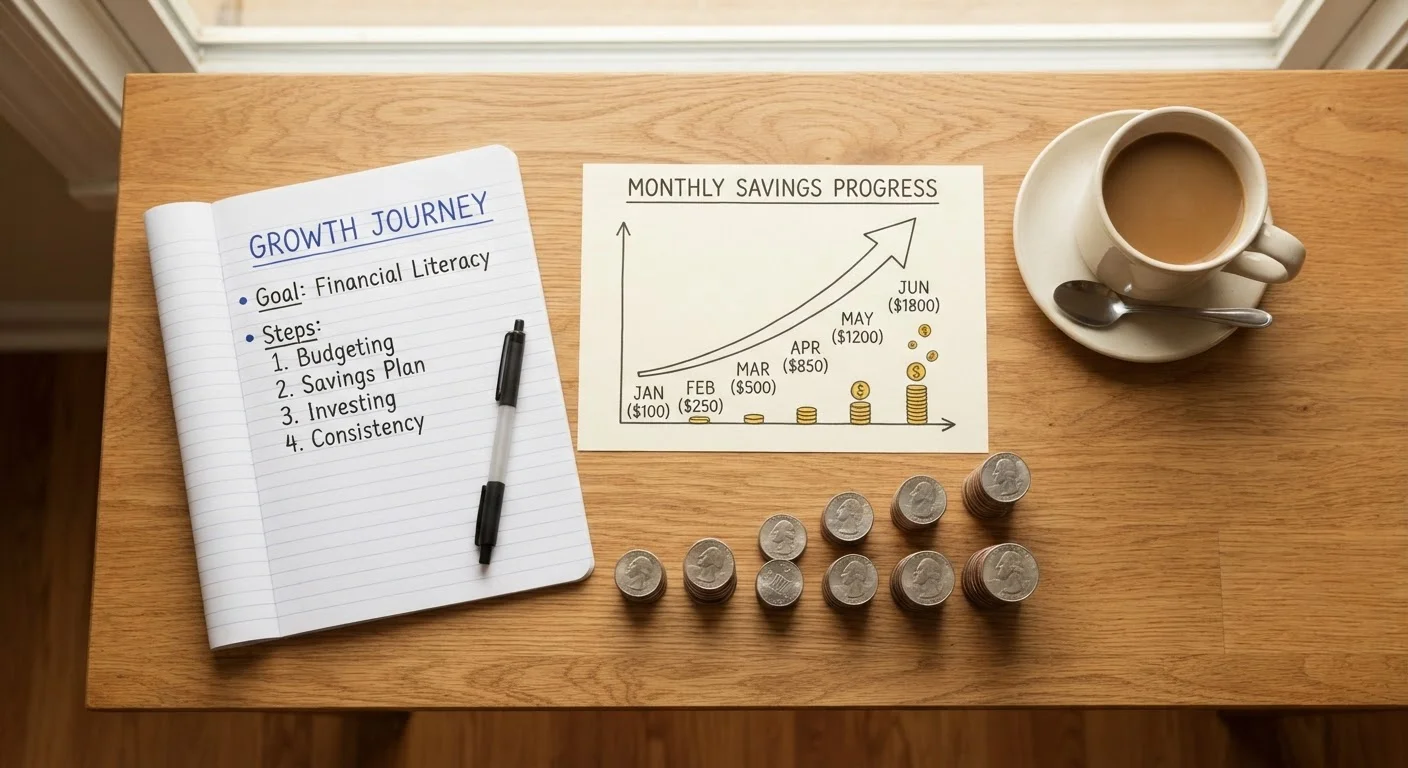
- A solid budget should come before serious investing - ensure your financial foundation is stable.
- Consulting a licensed financial adviser helps you make decisions suited to your personal situation.
Start here
Why Investing Matters for Everyday Americans
Build your foundation
Core Concepts Every Beginner Should Know
Explore your options
Common Asset Classes Explained
Choose the right wrapper
Account Types: Where Your Investments Live
Take your first step
How to Think About Getting Started
Why Investing Matters for Everyday Americans
Keeping money in a basic savings account is safe - but it rarely keeps pace with inflation over the long run. When prices rise faster than your savings earn interest, your purchasing power quietly shrinks. Investing is the mechanism most Americans rely on to grow wealth over time and stay ahead of that erosion.
Investing isn't just for the wealthy or financially sophisticated. With the right foundation, everyday earners can put their money to work toward goals like retirement, a home purchase, or financial security. But getting started means understanding a few core ideas before risking a dollar.
If you haven't yet built a monthly budget, that's the logical first step. See our plain-language budget walkthrough to lay the groundwork before you invest.
Build Your Budget Before You Invest
Investing works best when your monthly finances are already stable. Before committing money to the market, make sure you're tracking income and expenses, living within your means, and not carrying high-interest debt. A budget gives you clarity on how much you can genuinely afford to invest - and keeps you from needing to withdraw investments early.
Core Concepts Every Beginner Should Know
Three concepts underpin almost every investing decision a beginner will face:
- Risk and return: Higher potential returns generally come with higher risk. Understanding your own comfort with volatility - called risk tolerance - shapes every choice you make.
- Compounding: Earnings on your investments can themselves generate earnings over time. The longer your money stays invested, the more powerful this effect becomes. Time in the market matters.
- Diversification: Spreading investments across different asset types, industries, and geographies reduces the damage any single poor-performing investment can do to your overall portfolio.
These principles interact constantly. A long time horizon may allow you to absorb more risk because short-term losses have time to recover. A shorter horizon may call for more conservative choices. For a deeper look at the vocabulary you'll encounter, the financial terms every new investor should understand is a helpful companion resource.
Risk Tolerance
Your personal comfort level with the possibility that your investments may lose value in the short term. It's shaped by your financial situation, goals, and emotional response to market swings.
Compounding
The process by which investment earnings generate their own earnings over time. The longer your money stays invested, the larger this snowball effect becomes.
Diversification
Spreading money across different types of investments so that a loss in one area doesn't wipe out your entire portfolio. It reduces but does not eliminate risk.
Asset Class
A broad category of investments - like stocks, bonds, or real estate - that share similar characteristics and tend to behave similarly in market conditions.
Index Fund
A type of mutual fund or ETF that tracks a specific market index, like the S&P 500. Index funds typically carry lower fees than actively managed funds.
Tax-Deferred Growth
When investment gains are not taxed until you withdraw the money, usually in retirement. This allows more of your money to remain invested and compound over time.
Volatility
The degree to which an investment's price moves up and down over time. High volatility means larger swings in value; low volatility means more stable, predictable returns.
Expense Ratio
The annual fee a fund charges, expressed as a percentage of your investment. A lower expense ratio means more of your money stays working for you.
Common Asset Classes Explained
An asset class is a category of investment that behaves in broadly similar ways. Here are the ones beginners encounter most often:
- Stocks (Equities)
- Ownership shares in a company. Stocks offer higher long-term growth potential but can be volatile in the short term. Individual stock-picking carries concentration risk; many beginners use funds instead.
- Bonds (Fixed Income)
- Loans you make to a government or corporation in exchange for regular interest payments and return of principal at maturity. Generally lower risk than stocks, but also lower potential return.
- Mutual Funds and ETFs
- Pooled investment vehicles that hold many stocks, bonds, or other assets. They offer built-in diversification and are a common starting point. Index funds track a market index and tend to carry lower fees than actively managed funds.
- Real Estate Investment Trusts (REITs)
- Companies that own income-generating real estate. REITs let investors access real estate returns without buying property directly. For those also thinking about property ownership, our Housing & Property hub covers the fundamentals of buying and renting.
Account Types: Where Your Investments Live
The account you use matters as much as what you invest in - different accounts carry different tax treatments and rules.
- 401(k): Employer-sponsored retirement account funded with pre-tax dollars. Taxes are paid when you withdraw in retirement. Many employers offer matching contributions up to a set percentage.
- Traditional IRA: An individual retirement account where contributions may be tax-deductible, and growth is tax-deferred until withdrawal.
- Roth IRA: Funded with after-tax dollars; qualified withdrawals in retirement are tax-free. Particularly valuable if you expect to be in a higher tax bracket later.
- Taxable Brokerage Account: No special tax treatment, but no restrictions on withdrawal timing or contribution limits. Useful once tax-advantaged contribution limits are met.
Contribution limits, income eligibility, and withdrawal rules vary and can change with legislation. The IRS publishes current guidance at irs.gov, and a licensed financial adviser can help you determine which account structure fits your situation best.
Contribution Limits Change Periodically
The IRS adjusts annual contribution limits for IRAs and 401(k)s on a periodic basis, often tied to inflation. Always verify the current limits directly on irs.gov or through a licensed tax professional before making contribution decisions. Exceeding these limits can result in tax penalties.
How to Think About Getting Started
Before placing any investment, ask yourself three questions: Do I have an emergency fund covering three to six months of expenses? Do I have high-interest debt I should pay down first? Do I understand what I'm buying and why?
If you can answer yes to all three, you're in a strong position to begin. A structured approach often looks like this:
- Stabilise your budget and eliminate high-cost debt.
- Contribute enough to your employer's 401(k) to capture any matching - that match is part of your compensation.
- Build an emergency fund in a readily accessible account.
- Open an IRA and contribute up to the annual limit if eligible.
- Use a taxable account for additional investing once those limits are reached.
As you gain confidence, be mindful of the patterns that trip up new investors. Our companion article on early investing errors that slow wealth building outlines the missteps worth avoiding from the start.
This article is for general informational and educational purposes only and does not constitute personalised financial, investment, tax, or legal advice. Consult a qualified, licensed financial professional before making decisions based on your individual circumstances.
Investing Carries Real Risk of Loss
No investment strategy guarantees a positive return, and it is possible to lose money - including your original investment. Past market performance does not predict future results. Be cautious of any source that promises consistent gains or risk-free returns, as these claims are not realistic. Invest only money you can afford to leave untouched for your intended time horizon.