

Key Takeaways
- "Unlimited" data plans almost always include speed throttling thresholds that carriers can legally apply.
- Mobile hotspot data is typically a separate, smaller allotment - not part of your main data bucket.
- International roaming fees can accumulate within minutes of landing abroad without proper preparation.
- Auto-pay discounts and promotional rates often have hidden expiration conditions buried in plan terms.
- Family plan line limits and shared data rules are frequently misread, leading to unexpected overage fees.
Why Mobile Plan Confusion Is So Common
Mobile carriers use marketing language designed to sound simple while the underlying plan terms remain layered and conditional. Words like "unlimited," "included," and "free" rarely mean what most people assume at face value. The result is a gap between what customers expect and what actually appears on their bill.
Understanding how your plan really works doesn't require a technical background - it just requires reading past the headline and into the details. For a broader look at how mobile connectivity works from a technical standpoint, see this complete overview of internet and mobile connectivity.
Assuming "unlimited" means no restrictions on data speed or volume.
Why it happens: The word "unlimited" implies no ceiling, and carriers advertise it without prominently disclosing throttling thresholds in their marketing materials.
Treating mobile hotspot data as identical to your regular phone data.
Why it happens: Both come from the same device, so it feels logical that one unlimited plan would cover all usage equally, regardless of how data is consumed.
Using a domestic phone plan abroad without activating an international add-on.
Why it happens: Travelers assume their plan's coverage map extends overseas, or they don't realize roaming kicks in automatically the moment their phone connects to a foreign network.
Misunderstanding which lines or devices a family plan actually covers.
Why it happens: Promotional family plan pricing is often quoted per-line but requires a minimum number of lines, and data deprioritization rules apply differently across tiers within the same account.
Expecting a promotional or introductory rate to continue indefinitely.
Why it happens: Promotional language emphasizes the discounted price without making expiration dates equally visible, so customers set up auto-pay and stop monitoring their bill closely.
The Most Costly Assumptions - and How to Correct Them
Most surprise charges aren't random. They follow a predictable pattern tied to specific misconceptions. Knowing which assumptions are the riskiest puts you in a position to catch problems before they hit your bill.
1 in 3
Americans surprised by an unexpected phone bill charge
Consumer surveys conducted by the Consumer Financial Protection Bureau have consistently found that unexpected telecom charges are among the most commonly disputed billing issues reported by US households.
15-50 GB
Typical hotspot allotment before speed reduction
Most major US carriers cap full-speed mobile hotspot data at between 15 GB and 50 GB per billing cycle, regardless of whether the base plan is marketed as unlimited.
If you're also comparing home internet plans, many of the same evaluation principles apply - what to actually evaluate before signing up for an internet plan covers that ground in detail.
International Roaming Can Charge Instantly
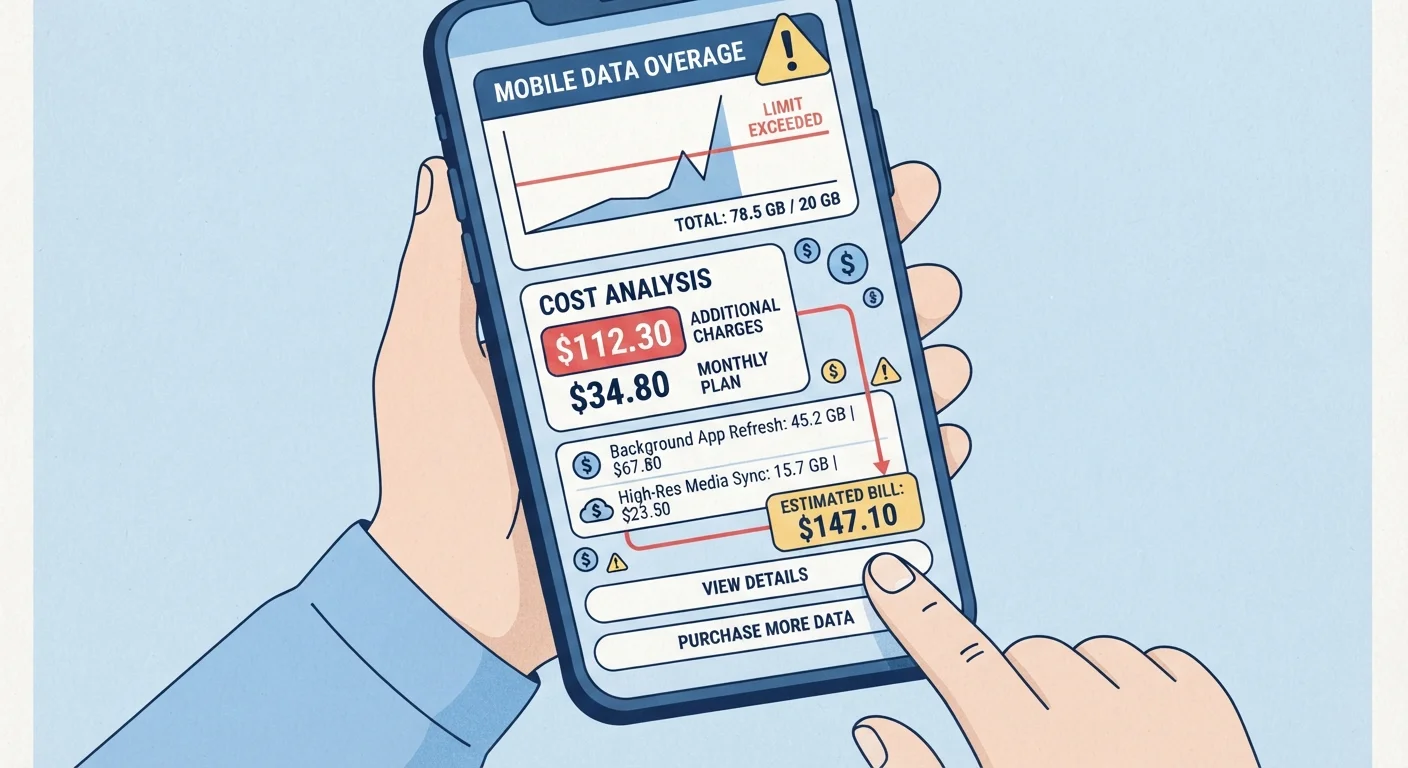
Your phone can begin accruing roaming charges the moment it connects to a foreign carrier's network - sometimes even before you've made a call or opened an app. Background app activity, system updates, and iMessage delivery can all consume roaming data silently. Put your phone in airplane mode immediately upon landing and re-enable only Wi-Fi until you've confirmed your international coverage or add-on is active.
Travelers face a compounded version of this problem. Before any international trip, your mobile plan terms deserve the same scrutiny you'd apply to travel logistics. International phone use is one of the planning gaps that quietly derails otherwise good trips.