

Key Takeaways
- Thailand offers the smoothest infrastructure and widest variety of experiences for first-time visitors.
- Vietnam rewards travelers who enjoy a strong cultural narrative woven through a north-to-south journey.
- Indonesia's scale demands more planning, but Bali provides a self-contained and accessible entry point.
- All three countries have clear dry and wet seasons that should drive your timing decisions.
- Visa-on-arrival or visa-free policies make entry relatively straightforward for most US passport holders, but always verify before travel.
Our Verdict
Thailand edges ahead as the most forgiving first destination thanks to its mature tourism infrastructure, variety of landscapes, and ease of movement. Vietnam suits travelers seeking a more immersive cultural journey with a clear geographic narrative. Indonesia, best entered through Bali for a first trip, rewards those willing to do slightly more logistical legwork in exchange for extraordinary natural scenery.
| Best for | Recommended |
|---|---|
| First-timers who want maximum variety with minimum logistical friction | Thailand |
| Culturally curious travelers comfortable with a longer, structured itinerary | Vietnam |
| Those drawn to volcanic landscapes, surf, and a relaxed island pace | Indonesia (Bali) |
Why These Three Countries Come Up First
Ask any seasoned Southeast Asia traveler where a newcomer should start, and Thailand, Vietnam, or Indonesia almost always tops the list. Each has developed enough tourist infrastructure to feel accessible while retaining the cultural richness that makes the region so compelling. But accessible doesn't mean identical-these are distinct countries with different rhythms, landscapes, and practical considerations that genuinely matter when you're planning a first international adventure.
Before committing, it helps to consult a solid planning foundation. Our first-time traveler's guide to planning a trip abroad covers the essential pre-departure checklist-visas, health prep, and realistic expectations-that applies regardless of which country you choose.
Thailand: The Benchmark for Accessibility
Thailand has spent decades refining its welcome for international visitors, and the results show. Bangkok's mass transit system, a dense network of guesthouses and hotels across every budget level, well-signposted national parks, and a reliable domestic airline network all lower the barrier for newcomers. The country also packs extraordinary variety into a manageable geography: northern mountains and temples around Chiang Mai, bustling urban energy in Bangkok, and an archipelago of islands in the south.
Culturally, Thailand rewards even light engagement. Buddhist temple etiquette is easy to learn, street food culture is approachable and broadly safe, and English is widely spoken in tourist areas. The main trade-off is that popular spots-Phi Phi Islands, Khao San Road, Doi Inthanon-can feel heavily touristed during peak season (roughly November through February).
Time Your Visit Around the Dry Season
Each country's weather window differs, so align your travel dates with the dry season for your specific destinations rather than the country as a whole. In Thailand, the southern islands and the north have different peak periods. Checking regional forecasts - not just national ones - prevents unexpected weather disruptions on a first trip.
Vietnam: A Country Best Read Like a Story
Vietnam's defining travel characteristic is its shape-a long, narrow country stretching from the Chinese border in the north to the Mekong Delta in the south. That geography creates a natural itinerary: Hanoi's chaotic old quarter, the limestone karsts of Ha Long Bay, the ancient trading port of Hoi An, and Ho Chi Minh City's frenetic modernity. Traveling north to south (or south to north) means you're constantly encountering a new chapter.
Infrastructure has improved significantly, particularly with the open-bus and train networks that connect major stops affordably. Vietnamese food culture is one of the most regionally varied in Southeast Asia, which is its own compelling reason to visit. The challenges are honest ones: traffic in major cities can be overwhelming to cross on foot, and the country's length means that covering it thoroughly in under two weeks involves meaningful compromises. Still, for travelers who enjoy a sense of narrative momentum, few destinations deliver it as vividly.
| Thailand | Vietnam | Indonesia (Bali focus) | |
|---|---|---|---|
| Infrastructure ease | Very well developed | Good, improving steadily | Good in Bali, variable elsewhere |
| Cultural diversity | High - mountains, coast, city | High - north-to-south variation | Distinct Hindu culture in Bali |
| Ideal trip length | 10-14 days | 12-16 days | 7-14 days (Bali-focused) |
| Language accessibility | English widely spoken | English moderate in cities | English solid in tourist areas |
| Best dry season | Nov-Feb (south) | Feb-Apr (overall) | May-Sep (Bali) |
| Navigation complexity | Low to moderate | Moderate | Moderate to high outside Bali |
Indonesia: Extraordinary Scale, Bali as the Entry Point
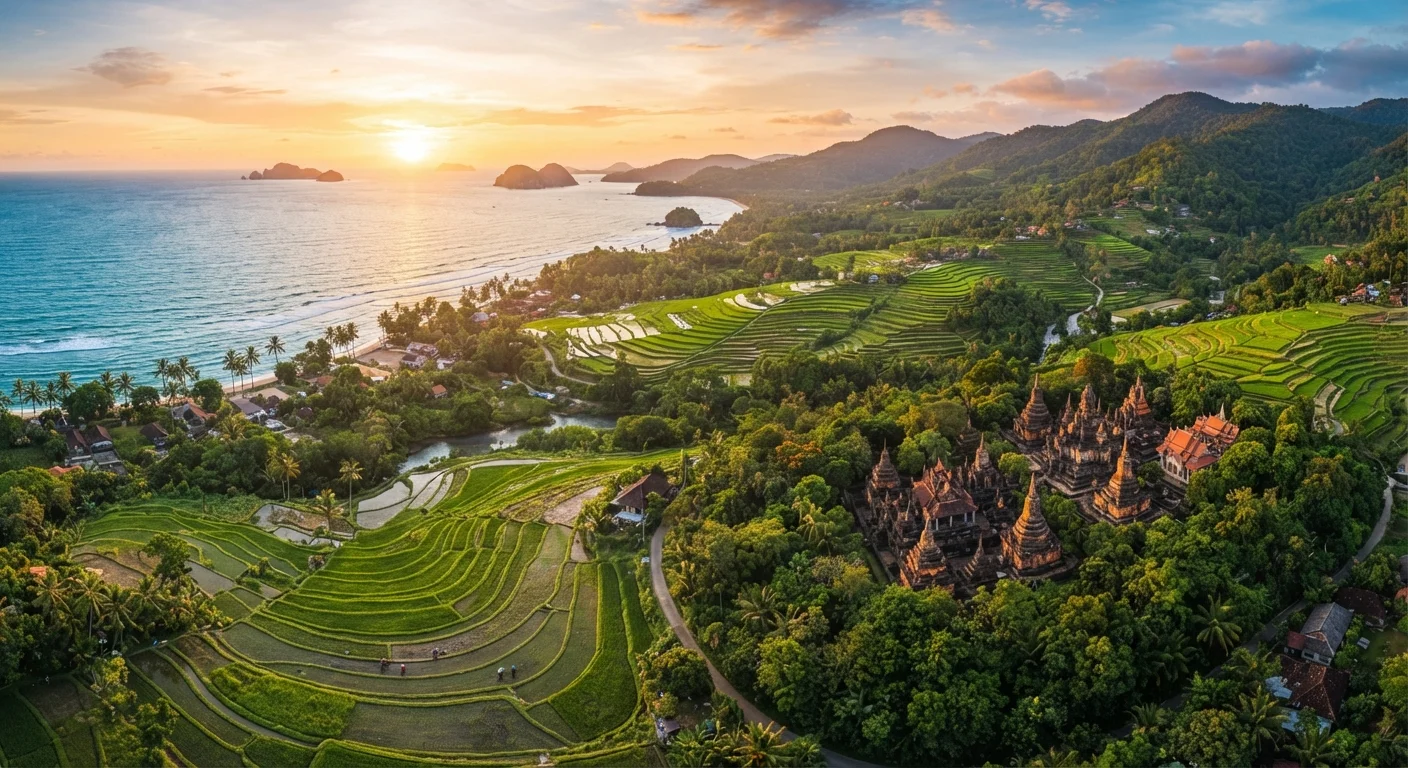
Indonesia is the world's largest archipelago-over 17,000 islands spanning a geographic distance roughly equivalent to the continental United States. For a first trip, that scale is both the draw and the challenge. Most first-timers wisely focus on Bali, which functions almost as a destination unto itself: terraced rice paddies, Hindu temple culture distinct from the rest of Southeast Asia, a developed surf scene, and a strong infrastructure for solo and group visitors alike.
Beyond Bali, Lombok and the Gili Islands are a short ferry or flight away and offer quieter alternatives. Java is home to Borobudur, one of the world's great Buddhist monuments, and is worth adding for history-focused travelers willing to extend their trip. The logistical note to carry: domestic flights between Indonesian islands are essential, and schedules and routes vary. Travelers who enjoy independent itinerary-building will find it rewarding; those who prefer less planning overhead may find Thailand or Vietnam smoother. Our trip planning tips hub has practical guidance on building flexible itineraries for any of these destinations.
If you're weighing whether to travel solo or join a group-especially relevant for Indonesia's more remote areas-our piece on solo travel vs. group travel planning lays out the key trade-offs worth considering before you book.
17,000+
Islands in the Indonesian archipelago
Indonesia's sheer scale makes destination focus essential for first-time visitors, according to geographic data.
~1,650 km
Length of Vietnam from north to south
Vietnam's elongated geography creates a natural multi-stop itinerary, roughly comparable to the US East Coast in length.
Practical Differences That Affect Your Decision
Timing matters enormously across all three countries, and the seasons don't always align. Thailand's islands are best visited November through April; Vietnam's central coast has its own wet season running roughly October through January; Bali's dry season runs May through September. Traveling outside peak dry season is possible and often cheaper, but planning around weather reduces friction considerably.
Entry requirements-visa-on-arrival, e-visa, or visa-free access-differ by country and can change. Always verify current policies through official government sources and your own country's travel advisory portal well before departure. Health considerations, including recommended vaccinations for the region, should be discussed with a travel medicine provider at least four to six weeks before you leave. For a useful contrast on what can go wrong when first-timers underestimate logistical complexity in a neighboring destination, our article on common mistakes on first trips to India is a worthwhile read.