

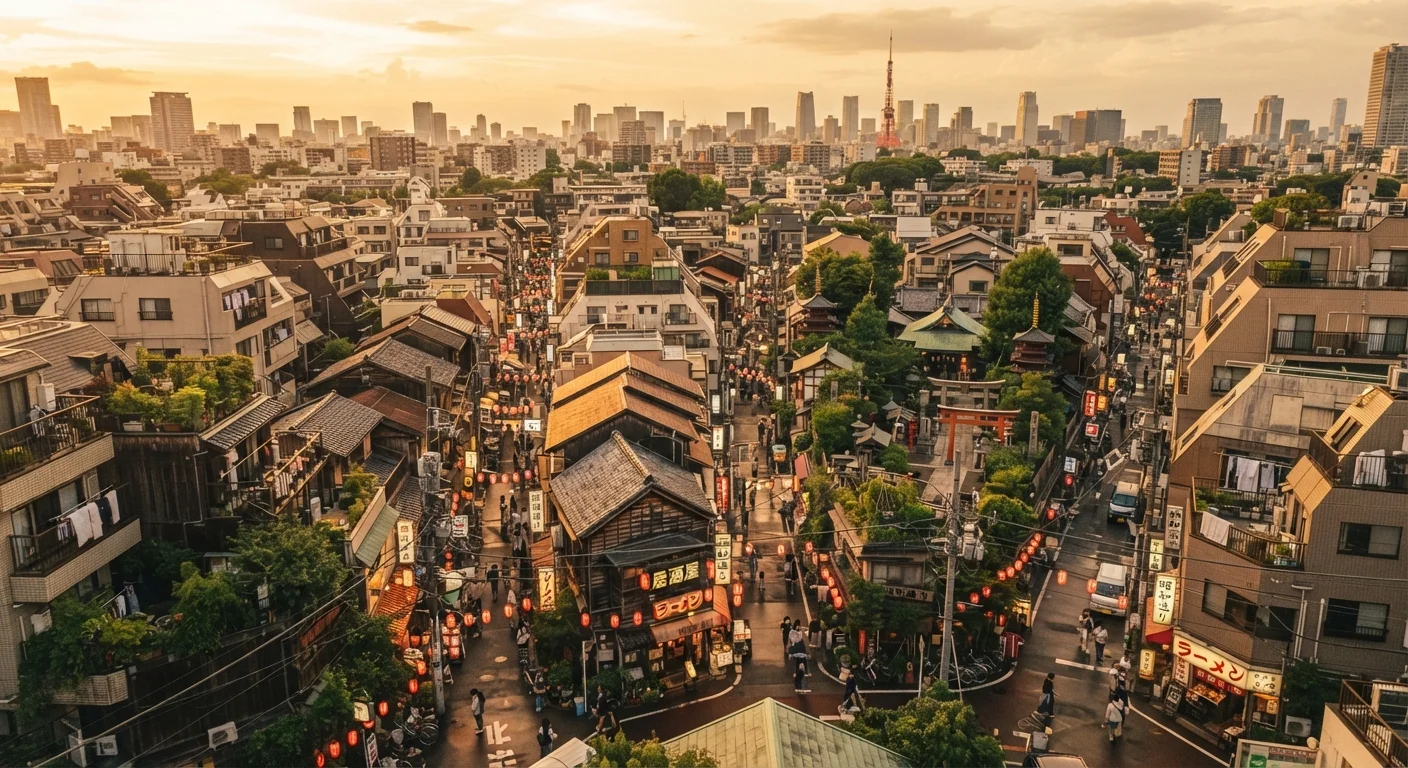
Key Takeaways
- Tokyo is a city of distinct neighborhoods - each with its own culture, pace, and personality.
- Yanaka preserves Shitamachi (old downtown) character largely missed by mainstream tourism.
- Shimokitazawa is Tokyo's hub for vintage fashion, live music, and independent theater.
- The Yanesen area clusters three historically rich neighborhoods within easy walking distance.
- Understanding local etiquette greatly enhances your experience across all of Tokyo's neighborhoods.
Why Tokyo's Neighborhoods Reward Exploration
Most first-time visitors to Tokyo concentrate on the obvious landmarks - Shibuya Crossing, Senso-ji in Asakusa, the neon corridors of Shinjuku. These are worth seeing, but they represent only the loudest notes in a far more complex city. Tokyo is actually a vast patchwork of machi (neighborhoods), each with its own social history, architectural character, and local economy. Understanding this structure changes how you experience the city entirely.
Rather than treating Tokyo as one massive destination, experienced travelers learn to approach it as a loose federation of small towns. The contrast between neighborhoods can be startling: a fifteen-minute train ride can transport you from a hyper-commercial district to a quiet street lined with wooden shophouses, temple gates, and the smell of freshly ground coffee. That variety is Tokyo's real offering.
23
Special wards (ku) making up central Tokyo
Tokyo's 23 special wards each function with their own local government, contributing to the city's neighborhood-first identity.
13.96M
Population of Tokyo's special ward area
According to Tokyo Metropolitan Government statistics, the 23-ward area alone is home to nearly 14 million residents.
Yanaka: Old Tokyo's Surviving Soul
Yanaka sits in the northeast of central Tokyo and is widely regarded as one of the few neighborhoods to have survived both the 1923 Great Kanto Earthquake and World War II's devastating air raids largely intact. Walking through its narrow lanes - lined with wooden machiya (traditional townhouses), family-run tofu shops, and a cemetery that doubles as a beloved park - you're seeing something genuinely rare: old Shitamachi (low city) Tokyo, not a reconstruction of it.
The main artery, Yanaka Ginza, is a short covered shopping street selling sembei rice crackers, handmade crafts, and grilled skewers. Locals actually shop here, which gives it a warmth that more tourist-oriented areas can struggle to replicate. The district's cemetery is the resting place of the last Tokugawa shogun and functions as a communal green space - a quiet, moss-covered pocket that feels removed from any major city.
Visit Yanaka on a weekday morning to experience the neighborhood at its most local - shopkeepers setting up, elderly residents doing their morning walks, and the cemetery almost completely empty.
Weekend afternoons bring more visitors, which changes the atmosphere considerably. The neighborhood's particular charm is its ordinariness, and that comes through most clearly before midday crowds arrive.
In Shimokitazawa, skip the main shopping drag on Saturday afternoons and duck into the side streets - that's where the smaller, more specialized vintage shops and basement music venues are hiding.
The side streets away from the central shopping zone carry far less foot traffic and house some of the neighborhood's most interesting independent operators.
Shimokitazawa: Vintage, Music, and Bohemian Energy
Southwest of central Tokyo, Shimokitazawa has cultivated a reputation as the city's countercultural heartland. Its streets are packed with second-hand clothing stores, independent record shops, and small live-music venues operating out of basement spaces. On weekends the area fills with students, musicians, and creatives browsing racks of vintage denim and jazz LPs.
What's notable about Shimokitazawa is how authentically local it feels despite growing international awareness. The commercial streets are intentionally narrow - closed to most vehicle traffic - which gives the whole neighborhood a pedestrian, unhurried quality. The area also has a thriving theater scene, with several small playhouses producing experimental and traditional productions. If you're interested in contemporary Japanese youth culture beyond the Harajuku surface level, this neighborhood offers real depth.
Best Time to Visit Shimokitazawa
Sunday afternoons bring the most street activity - pop-up markets, buskers, and open-air café seating overflow into the lanes. If you prefer a quieter visit, Friday evenings offer a local, post-work atmosphere with short queues at coffee shops and record stores.
Koenji: Underground Culture and Local Pride
A short ride west on the Chuo Line, Koenji operates on a similar wavelength to Shimokitazawa but with a rawer, less polished edge. The neighborhood built its identity around punk and alternative music in the 1970s and never quite let it go. Second-hand shops here lean toward military surplus, vintage workwear, and specialty subculture gear rather than curated fashion.
Koenji is also home to one of Tokyo's most beloved summer festivals - the Awa Odori dance festival held every August - which draws enormous crowds and transforms the shopping arcades into open-air dance floors. The neighborhood's covered shotengai (shopping arcades) are among the best-preserved in the city, offering a glimpse into how ordinary Tokyoites have traditionally shopped and socialized.
Nezu and Yanesen: Where Temples Meet Quiet Streets
Nezu sits adjacent to Yanaka and together with the nearby Sendagi area forms what locals call Yanesen - a portmanteau neighborhood that has become something of a cultural preservation project. The Nezu Shrine, with its tunnel of red torii gates winding up a forested hillside, is far less crowded than Fushimi Inari in Kyoto and arguably more atmospheric for it. The shrine's hydrangea festival in early summer draws Japanese visitors but remains well under the radar internationally.
The surrounding streets retain an almost village-like quality. Independent bookshops, pottery studios, and small galleries have set up in renovated townhouses. It is the kind of place where you might end up talking to a neighborhood artist over tea without particularly trying. Before visiting any of these areas, it's worth familiarizing yourself with local customs - see our guide to Japan's cultural norms for travelers for practical context on etiquette, temple behavior, and public conduct.
The Yanesen Area on Foot
Yanaka, Nezu, and Sendagi can be comfortably covered in a half-day walk. Starting at Nippori Station (served by the JR Yamanote Line) and ending at Nezu Shrine before exiting via Nezu or Sendagi subway stations is a well-worn route that covers most highlights without backtracking.
Nakameguro and Daikanyama: Design-Conscious Tokyo
If Yanaka represents Tokyo's past, Nakameguro and Daikanyama gesture toward its design-forward present. Nakameguro's canal - the Meguro River - becomes one of the city's most celebrated cherry blossom corridors in spring, but the neighborhood holds its appeal year-round. Independent cafés, architecture studios, and fashion boutiques cluster along the low-rise streets flanking the canal.
Daikanyama, a short walk away, has long been associated with creative professionals and international residents. The area's low building height limits and tree-lined streets give it an almost European residential feel - unusual in Tokyo's denser zones. The commercial district here rewards wandering rather than destination-hunting. Both neighborhoods exemplify how Tokyo manages to be simultaneously a megacity and a collection of deeply human-scale communities.
Practical Tips for Neighborhood Exploration
Tokyo's train network connects virtually all of these neighborhoods efficiently, and IC cards (reloadable transit cards accepted at station gates) make navigation straightforward. Many of the most rewarding areas - Yanaka, Nezu, Shimokitazawa - are best explored on foot once you arrive, so comfortable walking shoes matter more than complex transit planning.
Timing is worth thinking about. Yanaka Ginza and Shimokitazawa tend to be quieter on weekday mornings, while weekends bring a livelier but more crowded atmosphere. Koenji's shotengai shops typically open around midday. Most small independent shops across all these areas are closed on Mondays or Tuesdays - worth checking before planning a specific stop.
Finally, the experience of any Tokyo neighborhood is shaped by how you engage with it. Moving slowly, making small purchases at local shops, and observing rather than directing your experience will consistently yield more memorable moments than any fixed itinerary can promise.
Tokyo Metropolitan Government Tourism Guide
The official tourism resource from Tokyo's metropolitan government covers neighborhood profiles, seasonal events, and accessibility information across the city's wards.
Japan Tourism Agency Cultural Etiquette Resources
Practical cultural guidance for visitors to Japan, covering temple and shrine behavior, transit etiquette, and public space customs - directly relevant to neighborhood exploration.
This article is for general informational and travel inspiration purposes only. Conditions, opening hours, and local policies can change. Always verify current travel entry requirements and local guidelines through official government and tourism sources before planning your trip.