

Key Takeaways
- No monthly car payment is one of the biggest financial advantages of keeping an older vehicle.
- Repair frequency and costs typically increase as vehicles pass 100,000 miles.
- Insurance and registration costs are generally lower for older, depreciated vehicles.
- A reliable maintenance history matters more than age or mileage alone.
- Safety technology gaps between older and newer vehicles can be significant.
No monthly loan or lease payment
Once the vehicle is paid off, that budget line disappears entirely, which can represent hundreds of dollars per month in freed cash flow.
Lower insurance premiums in most cases
Older vehicles have lower market values, which typically reduces collision and comprehensive coverage costs - and some owners opt to drop those coverages entirely.
Depreciation has already occurred
New vehicles can lose a substantial portion of their value within the first few years; a high-mileage car has already absorbed that loss, meaning you're not paying for that drop.
Lower registration and tax costs
Many states base registration fees on vehicle age or assessed value, so older vehicles typically carry lower annual registration costs.
Familiarity with the vehicle's quirks and history
Knowing exactly how a car has been maintained and how it behaves can be a genuine advantage over buying an unfamiliar used vehicle at unknown condition.
Repair frequency and costs tend to increase
Wear-related components - belts, hoses, seals, suspension parts - have finite lifespans, and multiple failures arriving close together can quickly offset savings from no payment.
Parts availability may decline for older models
For vehicles more than 15-20 years old, certain components may become harder to source, driving up labor costs as mechanics spend more time locating or fabricating parts.
Reduced access to modern safety technology
Features like automatic emergency braking, rear cross-traffic alert, and lane departure warnings are absent on most older vehicles and cannot be retrofitted cost-effectively.
Fuel efficiency often lags newer vehicles
Older engine designs and worn components can mean higher fuel consumption than a comparable modern vehicle, adding to operating costs over time.
Unpredictable reliability can become a safety issue
A vehicle that breaks down unexpectedly - especially in isolated areas or during extreme weather - creates safety risks beyond the financial inconvenience.
Our Verdict
Keeping a high-mileage vehicle is a financially sound choice for many drivers - provided the car has been well maintained and repair costs remain predictable. The equation shifts when major systems begin to fail simultaneously or when reliability becomes a safety concern. There is no universal answer; the math depends heavily on the individual vehicle's condition, your access to affordable repairs, and your tolerance for uncertainty.
Drivers who own a well-maintained vehicle with a documented service history, have access to a trusted independent mechanic, and can manage occasional unplanned repair costs without serious financial strain.
Why Drivers Hold On to High-Mileage Cars
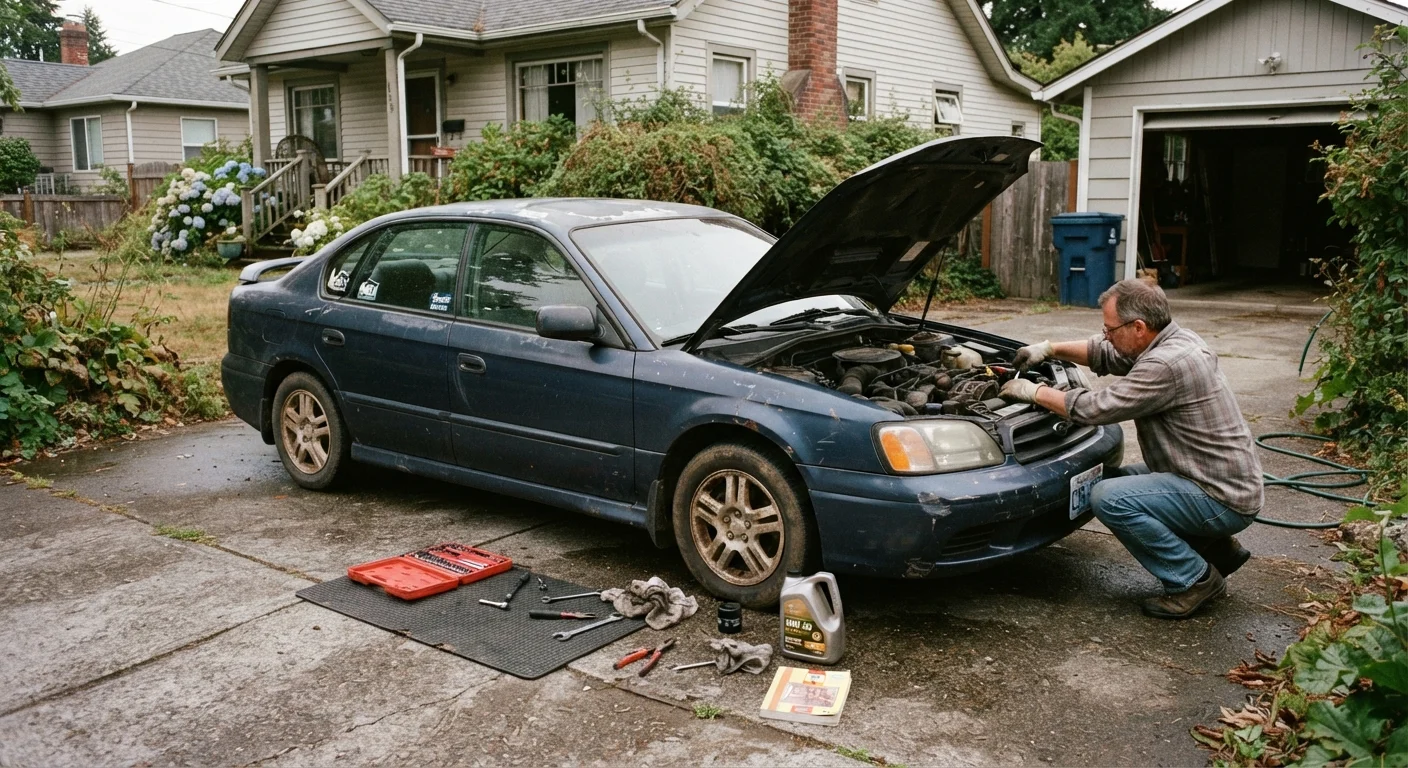
For many Americans, keeping an older vehicle well past 100,000 miles isn't a sign of financial stress - it's a deliberate choice. Once a car is paid off, the monthly cash flow picture changes considerably. That freed-up budget can go toward savings, other debt, or simply reducing financial pressure. Understanding what that decision actually involves, beyond the obvious payment relief, is what separates informed ownership from an expensive surprise.
As our overview of total car ownership costs explains, most drivers focus on the sticker price or monthly payment and miss the fuller picture. With older vehicles, that fuller picture cuts both ways.
No monthly loan or lease payment
Once the vehicle is paid off, that budget line disappears entirely, which can represent hundreds of dollars per month in freed cash flow.
Lower insurance premiums in most cases
Older vehicles have lower market values, which typically reduces collision and comprehensive coverage costs - and some owners opt to drop those coverages entirely.
Depreciation has already occurred
New vehicles can lose a substantial portion of their value within the first few years; a high-mileage car has already absorbed that loss, meaning you're not paying for that drop.
Lower registration and tax costs
Many states base registration fees on vehicle age or assessed value, so older vehicles typically carry lower annual registration costs.
Familiarity with the vehicle's quirks and history
Knowing exactly how a car has been maintained and how it behaves can be a genuine advantage over buying an unfamiliar used vehicle at unknown condition.
The Real Disadvantages: What High Mileage Actually Brings
The most significant shift in high-mileage ownership is predictability - or the loss of it. Wear-related failures on components like water pumps, timing belts, transmissions, and suspension parts tend to cluster as a vehicle ages, sometimes arriving in the same year. A single large repair bill can seem manageable; several arriving in sequence is where budgets break down.
It's also worth noting that older vehicles often lack safety features now standard on newer models - automatic emergency braking, blind-spot monitoring, and lane-keeping assist among them. This isn't a reason to panic, but it's a real consideration, especially for drivers who regularly travel in high-speed or high-traffic conditions. For a broader view of how newer vehicles compare on maintenance, see our piece on whether newer cars are always cheaper to maintain.
Repair frequency and costs tend to increase
Wear-related components - belts, hoses, seals, suspension parts - have finite lifespans, and multiple failures arriving close together can quickly offset savings from no payment.
Parts availability may decline for older models
For vehicles more than 15-20 years old, certain components may become harder to source, driving up labor costs as mechanics spend more time locating or fabricating parts.
Reduced access to modern safety technology
Features like automatic emergency braking, rear cross-traffic alert, and lane departure warnings are absent on most older vehicles and cannot be retrofitted cost-effectively.
Fuel efficiency often lags newer vehicles
Older engine designs and worn components can mean higher fuel consumption than a comparable modern vehicle, adding to operating costs over time.
Unpredictable reliability can become a safety issue
A vehicle that breaks down unexpectedly - especially in isolated areas or during extreme weather - creates safety risks beyond the financial inconvenience.
When the Financial Math Still Works
Depreciation is the single largest cost in vehicle ownership for most people, and older cars have already absorbed it. Vehicle depreciation explains how a new car can lose 20% or more of its value in the first year alone - a cost that simply doesn't apply once a vehicle is fully paid off and has stabilized in value.
Insurance premiums for older vehicles are typically lower, and in some cases, comprehensive and collision coverage can be reduced or dropped when the vehicle's market value no longer justifies the premium cost. Registration fees in most states are also tied to vehicle age or value, which generally means lower annual costs for older cars.
20%+
Typical first-year depreciation on new vehicles
Industry data consistently shows new cars lose a significant share of their purchase value within the first 12 months of ownership.
~$12,000
Average annual cost of new vehicle ownership
AAA's vehicle cost studies have estimated total new vehicle ownership costs - including depreciation, insurance, fuel, and maintenance - at roughly this level per year.
200,000+
Miles many well-maintained vehicles can achieve
Automotive reliability data indicates that vehicles from several mainstream manufacturers routinely reach 200,000 miles when maintenance schedules are followed consistently.
The calculus shifts when annual repair costs approach or exceed what a replacement vehicle's total ownership cost would be. Tracking actual repair spending year over year - not just per incident - gives a clearer picture than any single bill.
What Actually Predicts Reliability at High Mileage
Age and mileage are rough proxies for condition, not precise predictors. A vehicle with 150,000 miles and a complete service record, consistent oil changes, and timely fluid replacements can be significantly more dependable than one with 80,000 miles and an unknown history. When evaluating whether to keep or replace a high-mileage vehicle, the maintenance record matters more than the odometer reading alone.
When to Get a Professional Inspection
If you're deciding whether to keep a high-mileage vehicle for another two to three years, a pre-emptive inspection by a qualified independent mechanic can surface what's likely to fail in the near term. This gives you a realistic cost estimate to weigh against replacement options. Ask for a written summary of findings prioritized by urgency - not all needed repairs are equally time-sensitive.
Independent mechanics with experience in your specific make and model are often more economical than dealerships for older vehicles, and can give an honest assessment of what's likely to need attention in the near term. Getting a pre-emptive inspection - sometimes called a vehicle health check - is a practical step before committing to keeping a car for another few years. For a fuller picture of what drivers spend annually, including on older vehicles, see the true annual cost of owning a car in America.