

Key Takeaways
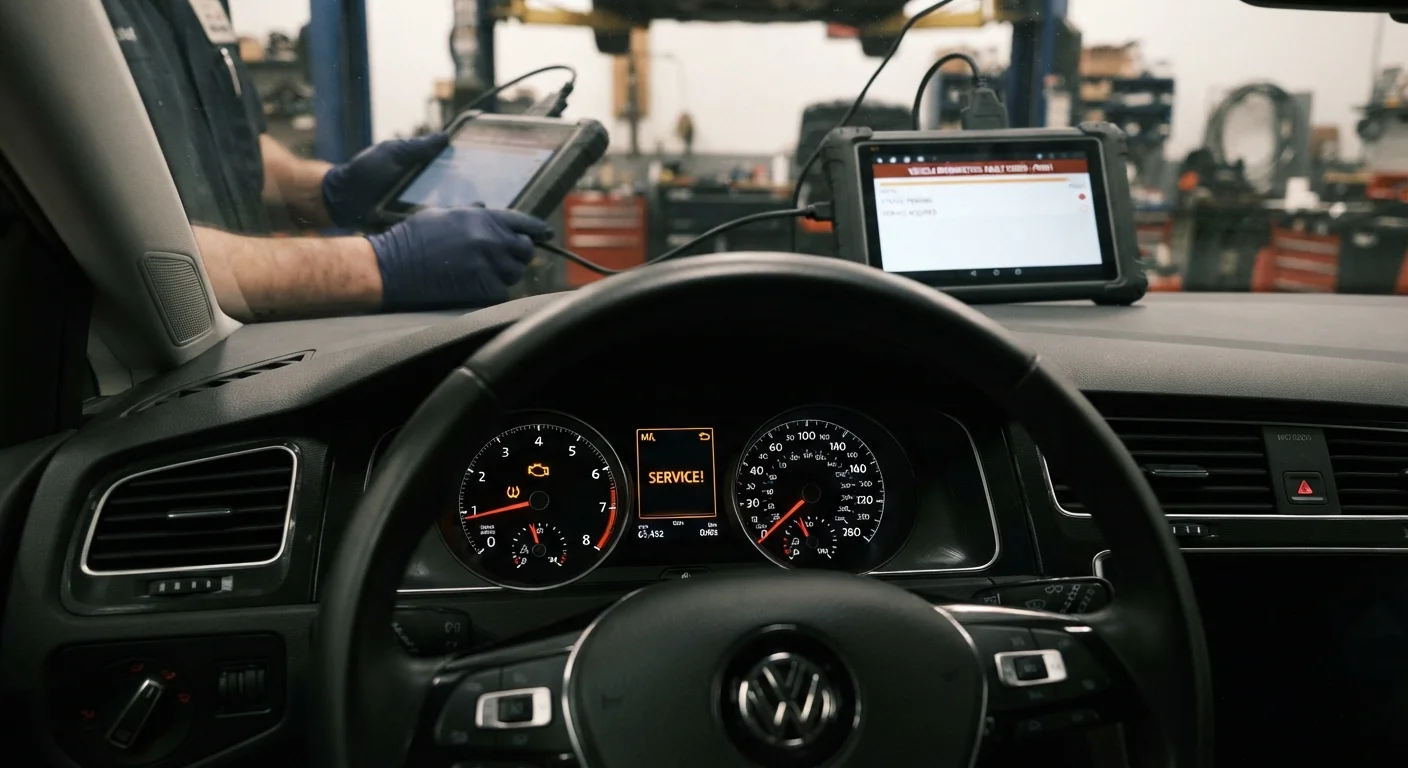
- Newer vehicles often require dealer-specific diagnostic tools unavailable at independent shops.
- Manufacturer warranties have coverage limits that leave many common repairs on the owner's tab.
- Advanced driver-assistance and infotainment systems introduce new, often expensive failure points.
- Extended intervals between routine services don't eliminate costs - they concentrate them.
- Out-of-warranty EV and hybrid battery replacement can run into the thousands of dollars.
Where the 'Newer Is Cheaper' Assumption Comes From
It's a reasonable first instinct: a car with zero miles has nothing worn out, so surely it should need less work than a vehicle with 80,000 miles on the clock. Dealership sales conversations often reinforce this framing by emphasizing warranty coverage without detailing its limits. For drivers upgrading from an aging vehicle that was generating frequent repair bills, the contrast feels obvious.
The assumption also draws some support from reality - you're unlikely to need a transmission rebuild on a two-year-old car. But maintenance costs and repair costs are two different things, and newer vehicles have introduced a set of service demands that older generations simply didn't carry. Understanding that distinction is what separates confident ownership from budget surprises. See our overview of what first-time owners often discover for related insights.
Myth
A new car means I won't have significant repair bills for years.
Fact
Warranties cover manufacturing defects but exclude wear items, accidental damage, and many electronics failures - all of which can arise early in ownership.
A bumper-to-bumper warranty typically spans 3 years or 36,000 miles. Within that window it covers defects in materials or workmanship, but not brake pads, tires, wiper blades, or the growing list of sensors and cameras that wear or get damaged through normal use. Drivers are frequently caught off guard when a forward-collision sensor - costing several hundred dollars to replace - is deemed outside coverage because of a minor parking-lot tap.
The powertrain warranty extends longer (often 5 years/60,000 miles), but it covers the engine and transmission, not the electrical architecture or infotainment hardware that generates a large share of modern dealership service visits.
Myth
I can take a new car to any mechanic and keep the warranty intact.
Fact
U.S. federal law (the Magnuson-Moss Warranty Act) generally prohibits manufacturers from voiding warranties solely because an independent shop performed maintenance - but documentation requirements still apply.
Many owners believe they must use a dealership for every oil change or risk losing warranty coverage. In practice, the Magnuson-Moss Warranty Act prohibits manufacturers from voiding a warranty simply because the owner used a non-dealer shop, provided the work was performed correctly and documented. However, the key word is documented. Independent shops must use equivalent parts and keep detailed records - gaps in that paper trail can complicate warranty claims. See our guide to keeping maintenance records for what to save and how to organize it.
For newer vehicles with proprietary software calibration requirements - such as recalibrating radar after a windshield replacement - independent shops may lack the manufacturer-specific tools, making dealer service genuinely necessary rather than just convenient.
Myth
Longer service intervals on new cars make them cheaper to maintain overall.
Fact
Extended intervals mean less frequent visits, but each visit typically costs more, and skipping or delaying services can create expensive downstream problems.
Many modern vehicles specify oil changes at 7,500-10,000 miles rather than the old 3,000-mile standard. That sounds like savings, but synthetic oil capable of those intervals costs more per quart, and modern engines have tighter tolerances that make contaminated or degraded oil more damaging. Miss an interval and you may face accelerated wear on turbocharger components - increasingly common even in non-luxury vehicles - rather than a simple tune-up bill.
For a clearer picture of scheduled vs. unscheduled costs, reading your car's maintenance schedule explains what manufacturers actually require and why the intervals exist.
Myth
Electric and hybrid vehicles are cheaper to maintain because they have fewer moving parts.
Fact
EVs and hybrids do eliminate many traditional powertrain services, but battery degradation, high-voltage system repairs, and regenerative brake recalibration introduce costs that don't exist on conventional vehicles.
No oil changes and fewer brake replacements are genuine advantages. However, if a hybrid or EV battery pack degrades outside its warranty period, replacement costs can range from roughly $5,000 to $15,000 or more depending on the vehicle, according to industry repair estimates - a cost category that simply doesn't exist for a gasoline-only car. High-voltage system repairs also require specialized certification, meaning fewer shops can perform the work, which limits price competition.
These trade-offs don't make EVs a poor choice, but they do mean the maintenance calculus is different rather than universally cheaper. The true annual cost of owning a car in America covers how these factors roll into overall ownership spending.
Myth
New cars with advanced safety systems cost no more to repair after a minor collision.
Fact
Cameras, radar modules, and ultrasonic sensors embedded in bumpers and windshields can turn a low-speed fender-bender into a repair bill several times larger than the equivalent damage on an older vehicle.
A bumper on a vehicle equipped with parking sensors, adaptive cruise radar, and a rear cross-traffic camera is not just a bumper - it's a housing for multiple electronic components. Industry body-shop data has shown that even moderate-speed impacts that cause superficial cosmetic damage can require sensor replacement and recalibration, pushing repair costs on late-model vehicles significantly higher than equivalent damage on older cars. Insurance premiums on newer vehicles often reflect this reality.
Drivers who focus only on the monthly loan payment often miss how these factors shape the full ownership picture. Why car ownership costs catch people off guard explores other common blind spots.
What the Data and Real-World Costs Actually Show
Newer vehicles do tend to have lower unscheduled repair frequency in the first two to three years - that part of the conventional wisdom holds. But when repairs do occur on modern vehicles, the presence of advanced driver-assistance systems (ADAS), proprietary software, and integrated electronics means the per-incident cost is often substantially higher than on simpler older models.
$1,100+
Average annual vehicle maintenance and repair cost per U.S. driver
AAA's annual Your Driving Costs study has consistently placed average maintenance and repair spending above $1,000 per year for typical U.S. vehicle owners.
3x
Relative cost increase for ADAS sensor repair vs. standard bumper repair
Industry body-shop analyses have found that bumpers housing radar and camera systems can cost roughly three times more to repair after low-speed impacts than equivalent non-sensor bumpers.
$5K-$15K
Estimated out-of-warranty EV battery replacement range
Repair industry estimates place full EV and plug-in hybrid battery pack replacement in this range depending on vehicle size and chemistry, representing a cost category absent from conventional vehicles.
Owners comparing notes on a used certified pre-owned purchase versus keeping a well-maintained older vehicle will often find the math less clear-cut than expected. The real trade-offs of owning an older high-mileage vehicle explores when that equation tips in either direction.
Don't Assume Warranty Coverage Without Reading It
Many drivers discover coverage gaps only after a service visit. Before assuming a repair is covered, locate your warranty documentation and verify whether the specific component and failure type are included. Wear items, cosmetic damage, and software-related issues are commonly excluded. When in doubt, ask the service advisor to confirm coverage in writing before authorizing any work.