

Key Takeaways
- Skin is roughly 64% water, and adequate hydration supports its basic barrier function.
- Mild to moderate dehydration can make skin look duller and feel tighter, but chronic dryness has other causes too.
- Drinking water alone won't erase wrinkles or cure dry skin - it's one piece of a larger picture.
- Diet, sleep, stress, and topical skincare all work alongside hydration to influence your skin's appearance.
- Most healthy adults benefit from consistently sipping water throughout the day rather than forcing large amounts at once.
Skin Hydration from Within
Skin hydration from within refers to how the water you drink supports your skin's moisture levels, elasticity, and overall function. Your skin is largely made up of water, and when your body is consistently well-hydrated, it has the resources it needs to maintain its protective barrier. This is different from applying a moisturizer - internal hydration works through your body's circulatory and cellular systems.
The outermost skin layer, the stratum corneum, requires adequate water content to remain pliable and functional; systemic dehydration can reduce this moisture level, though the relationship is more nuanced than a simple "drink more, glow more" equation.
What Water Actually Does for Your Skin
Your skin isn't just a cosmetic surface - it's a living organ, and like every organ in your body, it depends on water to function properly. Skin cells need adequate moisture to support processes like cell turnover, nutrient delivery, and waste removal. When your body is running low on fluids, your skin is rarely the priority; your vital organs get first claim on available hydration.
This is why consistently mild dehydration - the kind most of us barely notice - can show up on your face before anywhere else. Skin may look slightly duller, feel tighter, or appear less "springy" when pressed. Researchers refer to this quality as skin turgor, a rough measure of skin elasticity that can decrease noticeably with dehydration.
That said, it's important to keep expectations grounded. Drinking water isn't a substitute for sunscreen, a good moisturizer, or a balanced diet. Think of it as the foundation that makes everything else work better - not a standalone solution.
Hydration and Skin Aren't a Simple Equation
It's tempting to think that more water automatically means better skin, but your kidneys regulate fluid balance carefully, and excess water is simply excreted. The goal is consistent, adequate hydration - not extreme intake. Skin appearance is also shaped by genetics, environment, and skincare practices, so water is one important input, not the only one.
What the Research Actually Supports
The beauty world loves bold claims, and "drink more water for glowing skin" is one of the most repeated. So what does science actually back up?
A small but notable study published in the journal Clinical, Cosmetic and Investigational Dermatology found that increasing daily water intake in participants who had lower baseline consumption led to measurable improvements in skin density and thickness. Importantly, the effect was most pronounced in people who had been chronically under-hydrating - not in those who were already well-hydrated.
In other words: if you're already drinking enough, adding more water isn't likely to give you visibly better skin. But if you're routinely running dry, topping up your intake may make a real difference in how your skin looks and feels.
~64%
Water content of human skin
According to body composition research, skin is approximately 64% water, underlining why fluid intake matters for its function.
~75%
Adults who may be chronically mildly dehydrated
Various nutrition surveys have estimated that a significant proportion of US adults do not meet recommended daily fluid intake guidelines on a consistent basis.
Hydration is just one variable among many. Factors like sleep quality, chronic stress, UV exposure, and your skincare routine all play their own roles in skin health.
Practical Ways to Stay Consistently Hydrated
Consistency beats intensity when it comes to hydration. Chugging a large glass of water once in the morning and then forgetting about it the rest of the day is less effective than sipping steadily throughout. Here are some approachable ways to build better habits:
- Anchor water to existing routines - drink a glass when you wake up, before each meal, and before bed.
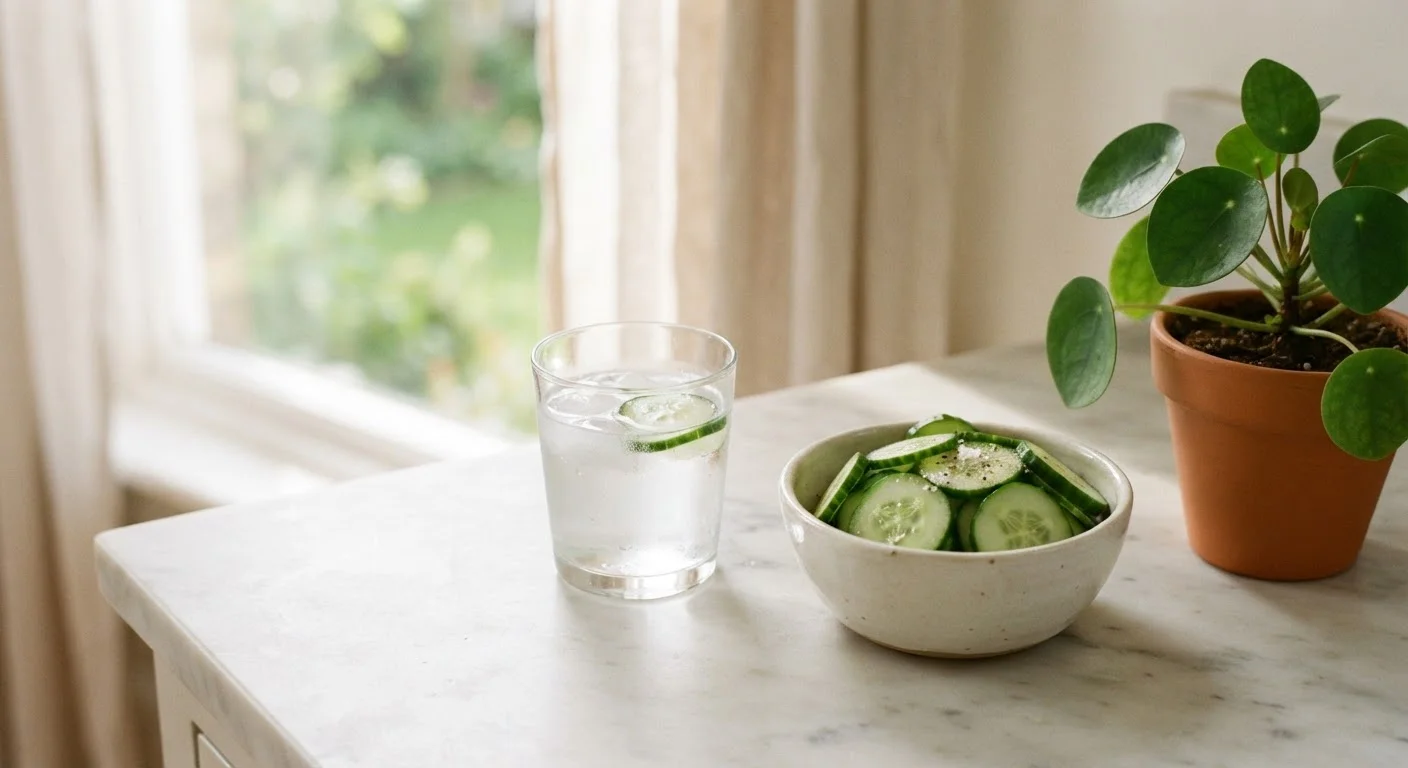
- Eat your water - fruits and vegetables like cucumbers, watermelon, and strawberries have high water content and contribute meaningfully to daily fluid intake.
- Watch for subtle signs - pale yellow urine generally signals good hydration; dark yellow is a cue to drink more.
- Adjust for activity and heat - exercise, hot weather, and air conditioning all increase fluid needs.
Make Hydration Automatic, Not Effortful
Keep a reusable water bottle at your desk, in your bag, or on your kitchen counter - somewhere you'll see it throughout the day. Visual cues are one of the most reliable nudges for building consistent habits. You don't have to count every ounce; simply making water the default within reach goes a long way.
For a broader look at how hydration connects to nutrition and overall wellness, our guide on hydration and nutrition is worth a read.
Hydration Works Best as Part of a Bigger Picture
If you're working toward healthier-looking skin, water intake is a genuinely worthwhile habit - but it works best when paired with other supportive practices. A consistent morning skincare routine that includes moisturizer helps lock in the hydration your body delivers from within. Good sleep, stress management, and a nutrient-rich diet complete the picture.
Understanding the difference between skin that is dehydrated (lacking water) versus dry (lacking oil) also matters - because the remedies aren't identical. Our article on dry vs. dehydrated skin breaks this down clearly.
The bottom line: drinking enough water is one of the simplest, most accessible things you can do for your overall health - and your skin is likely to reflect that over time. No need to overcomplicate it.
This article is for general informational purposes only and is not a substitute for professional medical or dermatological advice. Consult a qualified healthcare provider for concerns about your skin or health.