

Key Takeaways
- Product order matters because it affects ingredient absorption and effectiveness.
- Sunscreen is the single most evidence-supported step in any morning routine.
- Cleansing in the morning removes overnight sebum and residue without stripping the skin.
- Moisturizer helps maintain the skin's protective barrier throughout the day.
- A minimal three-step routine can deliver most of the same benefits as a longer one.
Morning Skincare Routine
A morning skincare routine is a set of skincare steps performed after waking up, designed to cleanse overnight buildup, protect the skin's barrier, and shield it from daytime stressors like UV radiation and pollution. Each step serves a specific biological purpose, and applying products in the right order matters - it affects how well active ingredients absorb and work. A solid routine doesn't need to be lengthy to be effective.
Skin pH, lipid barrier integrity, and transepidermal water loss (TEWL) are among the key physiological factors that a well-ordered morning routine helps regulate.
Why Order and Timing Actually Matter
A morning skincare routine is more than a collection of products - it's a sequence. The order you apply things determines how well each ingredient reaches the skin and does its job. Applying a thick moisturizer before a lightweight serum, for example, creates a physical barrier that can prevent the serum from absorbing properly.
The guiding principle most dermatologists point to is simple: go from thinnest to thickest consistency. Water-based products like toners and serums go on first because they contain smaller molecules that penetrate more readily. Moisturizers and sunscreens, which tend to be denser, go on last to lock everything in and provide a protective layer.
Skin also has a slightly acidic pH, typically between 4.5 and 5.5. Harsh cleansers can disrupt this balance temporarily, which is part of why gentleness matters in the morning - and why giving skin a moment to settle before layering actives can be worthwhile.
Give Products a Moment to Settle
After cleansing, waiting 30 to 60 seconds before applying the next step allows your skin to return closer to its natural pH and gives products a better foundation to absorb. It doesn't need to be a long wait - just enough time to avoid diluting or mixing freshly applied layers.
What Each Step Is Actually Doing
Cleansing kicks things off by removing the sebum, sweat, and product residue that accumulates overnight. Morning cleansing doesn't need to be aggressive - in fact, over-cleansing can damage the skin's lipid barrier, leaving it more vulnerable to irritation and moisture loss. A gentle, pH-balanced cleanser is often enough.
Serums are where targeted ingredients come in. Vitamin C, for instance, is one of the few antioxidants with solid research behind its daytime use - it helps neutralize free radicals generated by UV light and environmental pollution. It's worth noting that not all actives play well together in the morning lineup; for a closer look at that, some ingredient combinations are worth keeping separate.
Moisturizer works to support the skin's barrier - a multilayered structure made up of cells and lipids that keeps water in and irritants out. When that barrier is compromised, skin can feel tight, look dull, or react more easily. A moisturizer doesn't add water to the skin so much as help it retain what's already there.
Sunscreen is the step that most dermatologists would call non-negotiable. UV exposure is a well-established driver of premature aging and skin damage. Broad-spectrum SPF 30 or higher is the general guidance from major dermatological organizations for daily use.
SPF 30
Minimum daily sunscreen strength recommended
Major dermatology organizations including the American Academy of Dermatology recommend broad-spectrum SPF 30 or higher for everyday use.
~90%
Skin aging attributed to UV exposure
Research published in peer-reviewed dermatology literature estimates that UV radiation accounts for roughly 90% of visible skin aging, underscoring the importance of daily SPF.
Keeping It Simple Without Losing Effectiveness
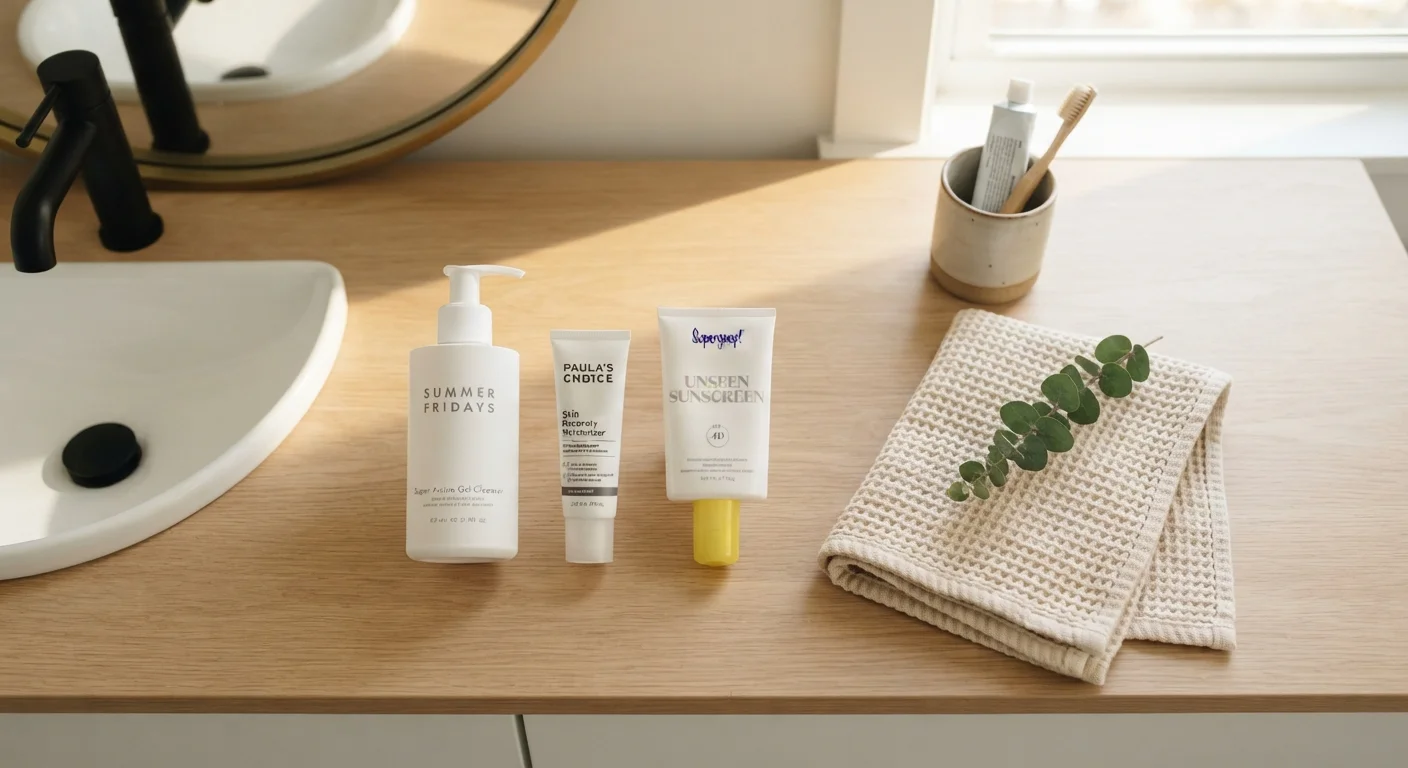
The good news is that you don't need ten steps to get real results. A cleanser, a moisturizer, and an SPF cover the essentials that science consistently supports. A serum can add meaningful value - especially vitamin C in the morning - but it's optional rather than essential, particularly for someone just getting started.
If you're building your first routine from scratch, starting with the basics and adding from there tends to be the most sustainable approach. That way you can see how your skin responds to each addition, rather than introducing several things at once and having no idea what's helping - or what's causing a reaction.
It's also worth remembering that topical routines work alongside other factors. Internal hydration plays a role - the relationship between daily water intake and skin health is more nuanced than the old "drink eight glasses" rule suggests, but adequate hydration does support overall skin function. Sleep quality matters too: what happens to your skin during inconsistent sleep is genuinely worth understanding alongside any topical routine.
Skincare is cumulative. Consistency over weeks and months matters far more than perfection on any single morning. Starting simple, learning what works for your skin type, and adjusting gradually is a reasonable, evidence-grounded approach - and one that's a lot easier to stick with.
This article is for general informational and educational purposes only. It is not a substitute for professional medical or dermatological advice. If you have skin concerns, persistent reactions, or questions about your specific skin type or conditions, please consult a qualified healthcare or skincare professional.