

Key Takeaways
- A basic skincare routine needs only three steps: cleanse, moisturize, and apply sunscreen.
- Consistency matters far more than complexity - a simple routine done daily beats an elaborate one done rarely.
- Introduce new products one at a time to make it easier to spot what works or causes irritation.
- Sunscreen is the single most evidence-supported step for protecting skin health long-term.
- Trending actives like retinol and acids are best added later, once your skin is used to the basics.
Start here
Why Keeping It Simple Actually Works
Next
The Three Products Every Beginner Needs
Then
How to Apply Your Routine in the Right Order
When you're ready
What to Skip Until You're Ready
Ongoing
Listening to Your Skin as You Go
Why Keeping It Simple Actually Works
If you've ever stood in a drugstore aisle feeling completely overwhelmed by serums, toners, essences, and exfoliants, you're not alone. The skincare industry can make it feel like you need a ten-product regimen just to have decent skin. The truth? A stripped-back routine done consistently is genuinely effective - and it's the right place to start.
More products mean more variables. When you pile on five new things at once, you have no way of knowing which one helped, which one caused a breakout, or which one your skin simply doesn't agree with. A minimal approach gives you a clear baseline. As the fuller breakdown of minimal vs. multi-step routines explores, simplicity often wins on both results and sustainability.
Consistency Beats Complexity Every Time
The best skincare routine is one you'll actually do every day. Even the most carefully chosen products won't work if they're sitting unused on a shelf. Start with something manageable, build the habit, and expand from there only when you're ready.
The Three Products Every Beginner Needs
Before anything else, these three form the core of any functional routine:
Skin barrier
The outermost layer of your skin that acts like a protective shield, keeping moisture in and irritants, bacteria, and pollutants out. A healthy barrier is the foundation of comfortable, resilient skin.
Broad-spectrum SPF
A sunscreen that protects against both UVA rays (which contribute to aging and skin damage) and UVB rays (which cause sunburn). 'SPF 30 or higher' refers to the level of UVB protection it provides.
Cleanser
A wash-off product designed to remove surface impurities like dirt, oil, and pollution without stripping the skin's natural moisture.
Moisturizer
A leave-on product that helps the skin retain water and stay soft. It typically contains a mix of humectants (which attract water) and occlusives (which seal it in).
Active ingredient
A skincare ingredient with a specific, targeted function - like exfoliating, brightening, or reducing fine lines. Actives are generally more potent and can cause irritation if overused or combined incorrectly.
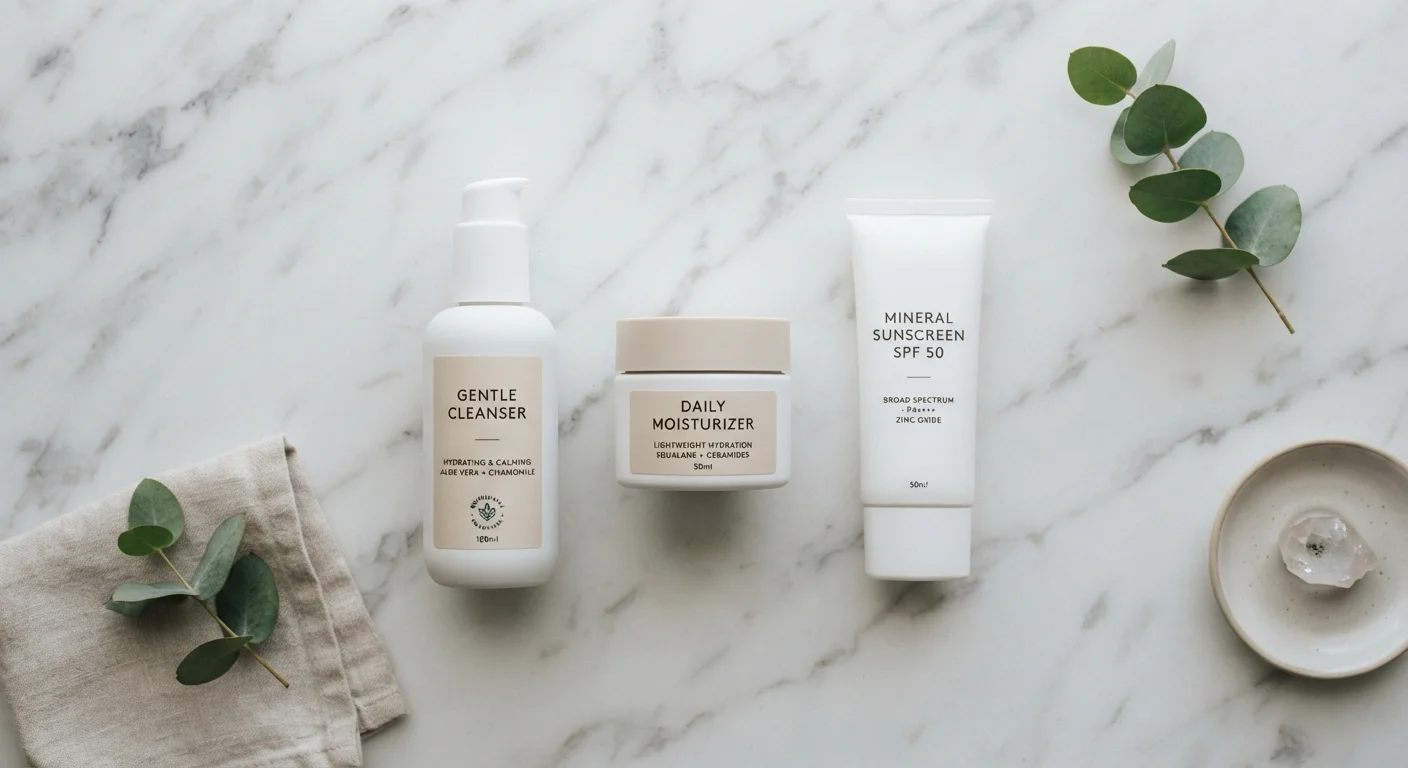
- A gentle cleanser. This removes dirt, excess oil, and environmental residue. Look for something labeled mild or suitable for sensitive skin - anything too stripping can disrupt your skin's natural balance.
- A basic moisturizer. Moisturizer helps maintain the skin barrier, the outermost layer that keeps hydration in and irritants out. Even oily skin benefits from a lightweight option.
- A broad-spectrum sunscreen (SPF 30 or higher). Applied every morning, sunscreen is the most consistently evidence-backed step for protecting skin from UV-related damage over time. This one is non-negotiable.
That's genuinely it for now. Three products, two minutes morning and night, and you have a real routine.
How to Apply Your Routine in the Right Order
Order matters in skincare - mainly because you want lighter, water-based products to absorb before heavier ones seal things in. Here's the simple sequence:
- Cleanse - start with a clean surface.
- Moisturize - apply while skin is slightly damp to help lock in hydration.
- Sunscreen - always the last step in the morning. At night, skip sunscreen and stop after moisturizing.
Morning and evening routines are nearly identical at this stage, with sunscreen only appearing in the morning. That's it. No complicated layering rules to memorize yet.
Nighttime Routine Is Slightly Different
At night, your skin is in repair mode, so a moisturizer is especially useful before bed. You don't need sunscreen after dark. If you're only going to do one routine, most dermatologists consider a thorough evening cleanse the higher priority, since it removes the day's buildup.
What to Skip Until You're Ready
Retinol, vitamin C serums, AHAs, BHAs, niacinamide - these are all popular ingredients with real research behind them, but they're not starter products. Many are potent enough to cause irritation if introduced too quickly or layered incorrectly. Some combinations can even work against each other, as detailed in our guide to skincare ingredients that shouldn't be layered together.
Physical and chemical exfoliants also fall into the "later" category. When you're ready to explore them, our guide to physical vs. chemical exfoliation walks through how each approach differs by skin type. For now, resist the urge to experiment and let your skin settle into the basics first.
Don't Add Too Much Too Soon
Introducing several new products at once is one of the most common skincare mistakes. If your skin reacts, you won't know which product is responsible. Add one new item at a time and wait at least one to two weeks before introducing the next.
Listening to Your Skin as You Go
Your skin is always giving you feedback - the challenge is learning to read it without panicking. Some initial purging or minor dryness as your skin adjusts is common. Persistent redness, burning, or breakouts that don't settle within two weeks are worth paying attention to.
If something doesn't feel right, pull back to the simplest possible version of your routine and re-introduce products one at a time with at least a week in between. And if you have specific skin concerns - like chronic acne, eczema, rosacea, or significant changes in your skin - a dermatologist is the right person to guide your next steps. This article is for general informational purposes and isn't a substitute for professional advice tailored to your skin's needs.
Starting from zero is actually a gift. You get to build good habits without undoing bad ones. Keep it simple, stay consistent, and give yourself time.
This article is for general informational purposes only and is not medical or dermatological advice. Consult a qualified healthcare professional for concerns about your skin health.