
Physical Exfoliation vs. Chemical Exfoliation: Which Approach Suits Your Skin

Key Takeaways
- Physical exfoliation uses manual friction to buff away dead skin cells from the surface.
- Chemical exfoliation uses acids or enzymes to dissolve the bonds holding dead cells together.
- Sensitive and acne-prone skin types generally respond better to gentle chemical options.
- Over-exfoliating - with either method - is one of the most common skincare mistakes.
- Most skin types do well with exfoliating just one to three times per week.
Our Verdict
Neither physical nor chemical exfoliation is universally superior - the right choice depends on your skin type, sensitivity level, and how consistent you are with follow-up care like SPF. Chemical exfoliation tends to offer more precise, even results with less risk of micro-tears, while physical exfoliation can work well for those who prefer a tactile, straightforward routine. Many people find that a thoughtful combination of both, used sparingly, gives them the smoothest outcome.
| Best for | Recommended |
|---|---|
| Sensitive, acne-prone, or easily irritated skin | Chemical exfoliation (low-concentration AHA or PHA) |
| Normal to oily skin seeking quick surface smoothness | Physical exfoliation (fine-grained, gentle formula) |
| Uneven tone, dark spots, or texture concerns | Chemical exfoliation (AHA such as glycolic or lactic acid) |
| First-timers building a minimal routine | Chemical exfoliation (enzyme-based or low-strength lactic acid) |
What Each Method Actually Does
Exfoliation is the process of removing dead skin cells from the outer layer of your skin. That turnover happens naturally - but it can slow down with age, stress, or environmental factors, leaving skin looking dull or feeling rough. That's where exfoliants come in.
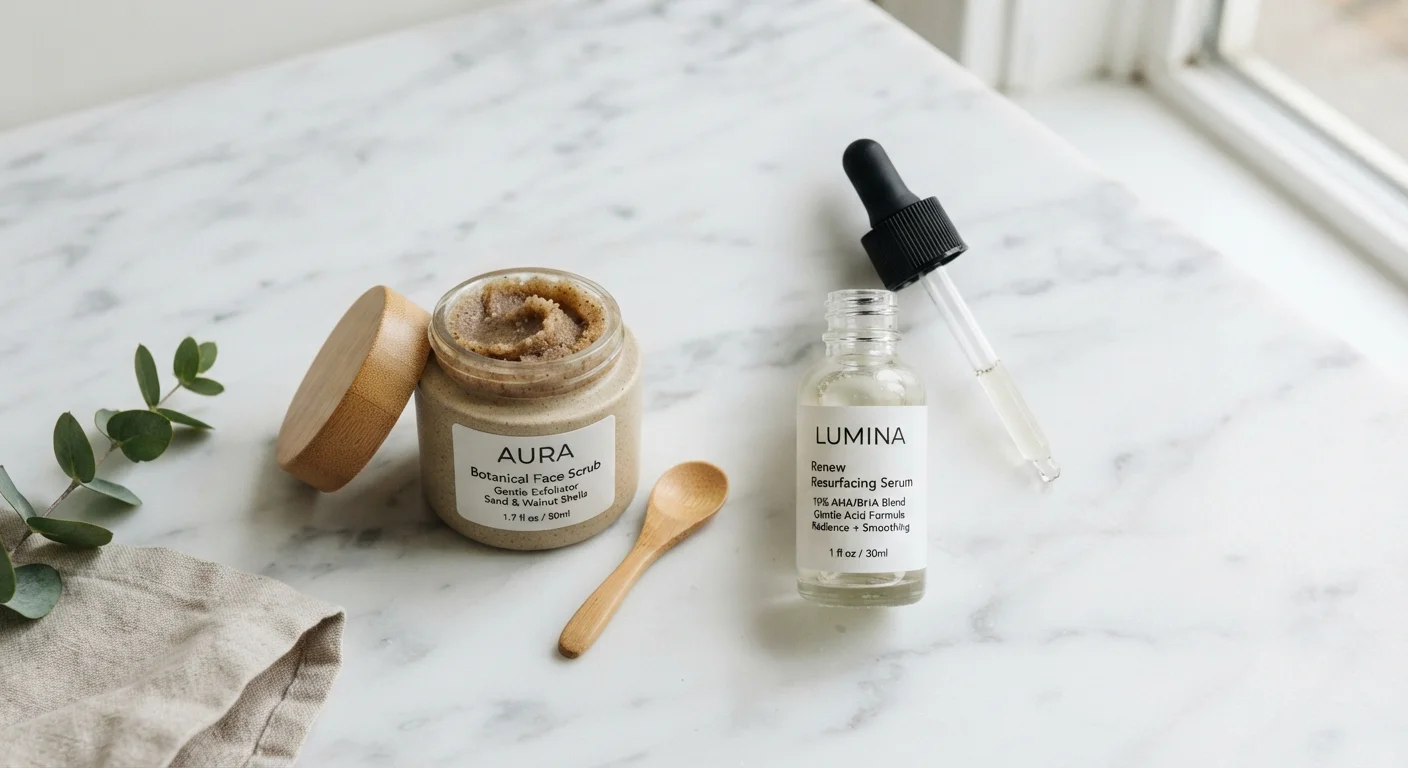
Physical exfoliation works through friction. Think scrubs with small granules, facial brushes, or cleansing cloths. You manually buff the surface, and the dead cells come off with the motion.
Chemical exfoliation works through chemistry. Acids or enzymes loosen the bonds between dead skin cells and the healthy skin below, allowing the old cells to shed on their own - no scrubbing required. The most common chemical exfoliants are:
- AHAs (alpha-hydroxy acids) - like glycolic and lactic acid, which work on the skin's surface and are well-suited to dull or sun-damaged skin
- BHAs (beta-hydroxy acids) - like salicylic acid, which are oil-soluble and can penetrate pores, making them popular for oily and acne-prone skin
- PHAs (polyhydroxy acids) - a gentler, larger-molecule option that works more slowly and suits sensitive skin
- Enzymes - derived from fruits like papaya or pineapple, these are among the mildest options and are great for beginners
For more on how these ingredients fit into a full routine, see the science behind a morning skincare routine.
How the Two Approaches Compare
It helps to see both methods side by side before deciding which one fits your lifestyle and skin.
| Physical Exfoliation | Chemical Exfoliation | |
|---|---|---|
| How it works | Manual friction removes surface cells | Acids/enzymes dissolve cell bonds |
| Ease of use | Intuitive, hands-on application | Requires reading instructions carefully |
| Speed of results | Immediate smoothness after use | Gradual improvement over several uses |
| Risk of irritation | Higher if granules are coarse | Lower with gentle formulas, dose-dependent |
| Best skin type fit | Normal to oily, non-sensitive | Sensitive, acne-prone, mature |
| Targets deeper concerns | Surface texture only | Tone, pores, fine lines (AHAs/BHAs) |
| Recommended frequency | 1-2 times per week | 1-3 times per week depending on strength |
One key distinction worth noting: physical exfoliation gives immediate, visible feedback - you can feel when your skin is smoother. Chemical exfoliation often works more gradually, with results building over several uses. Neither is a quick fix, and both require sunscreen use afterward, since freshly exfoliated skin is more vulnerable to UV damage.
Matching the Method to Your Skin Type
Your skin type is probably the most useful guide when choosing between the two approaches.
Sensitive or reactive skin
Physical scrubs can cause micro-tears or redness, especially with coarser particles or heavy pressure. Low-strength chemical options - PHAs or enzyme-based formulas - are generally a gentler starting point. If you're unsure whether your skin is truly dry or simply dehydrated, our guide to dry vs. dehydrated skin can help clarify that before you exfoliate.
Oily or acne-prone skin
Salicylic acid (a BHA) is a classic choice here - it works inside pores to clear congestion and reduce breakouts. Some physical scrubs can irritate active acne, so they're generally better for non-inflamed skin.
Normal or combination skin
You have the most flexibility. Many people with this skin type rotate between methods, using a mild chemical exfoliant a couple of times per week and an occasional gentle scrub when they want that immediate smooth feeling.
Mature or sun-damaged skin
AHAs like lactic and glycolic acid have the most research supporting their role in addressing uneven tone and fine lines. Physical scrubs don't reach deeper layers the way AHAs can.
Patch-Test Before Committing
Whether you're trying a new scrub or a chemical exfoliant for the first time, apply a small amount to a discreet area - like the inner forearm or the side of your neck - and wait 24 hours before using it on your face. This is especially useful with higher-concentration acids, which can cause stinging or redness if your skin isn't accustomed to them. Starting with a low-strength product and building up slowly is the most reliable way to find your skin's tolerance.
Common Mistakes and How to Avoid Them
The biggest error people make with exfoliation - regardless of method - is doing too much of it. Over-exfoliation strips the skin barrier, leading to redness, tightness, breakouts, and even increased sensitivity. Signs you've overdone it include stinging when you apply moisturizer, persistent redness, or skin that feels raw.
A few practical guidelines:
- Start with once or twice per week and see how your skin responds before increasing frequency.
- Don't layer a physical scrub and a chemical exfoliant on the same day - that's double the disruption.
- Always follow up with a moisturizer and, during the day, sunscreen - this is non-negotiable after any form of exfoliation.
- Pay attention to what else is in your routine. Some actives don't layer well with exfoliants. The ingredients that don't belong together in a skincare routine is worth a read before experimenting.
Skip Exfoliation on Compromised Skin
If your skin is sunburned, visibly broken, or having an active flare-up of a condition like eczema or rosacea, hold off on all forms of exfoliation until things have calmed down. Exfoliating irritated or compromised skin worsens inflammation and can delay healing. When in doubt, a dermatologist can give you a clearer picture of what's safe for your specific situation.
If you're just getting started and want a no-fuss approach, building a minimal skincare routine from zero lays out a sensible, low-risk framework.
This article is for general informational purposes only and is not a substitute for advice from a licensed dermatologist or skincare professional. If you have a skin condition, sensitivity, or are unsure which products are appropriate for you, consult a qualified healthcare provider before making changes to your routine.