

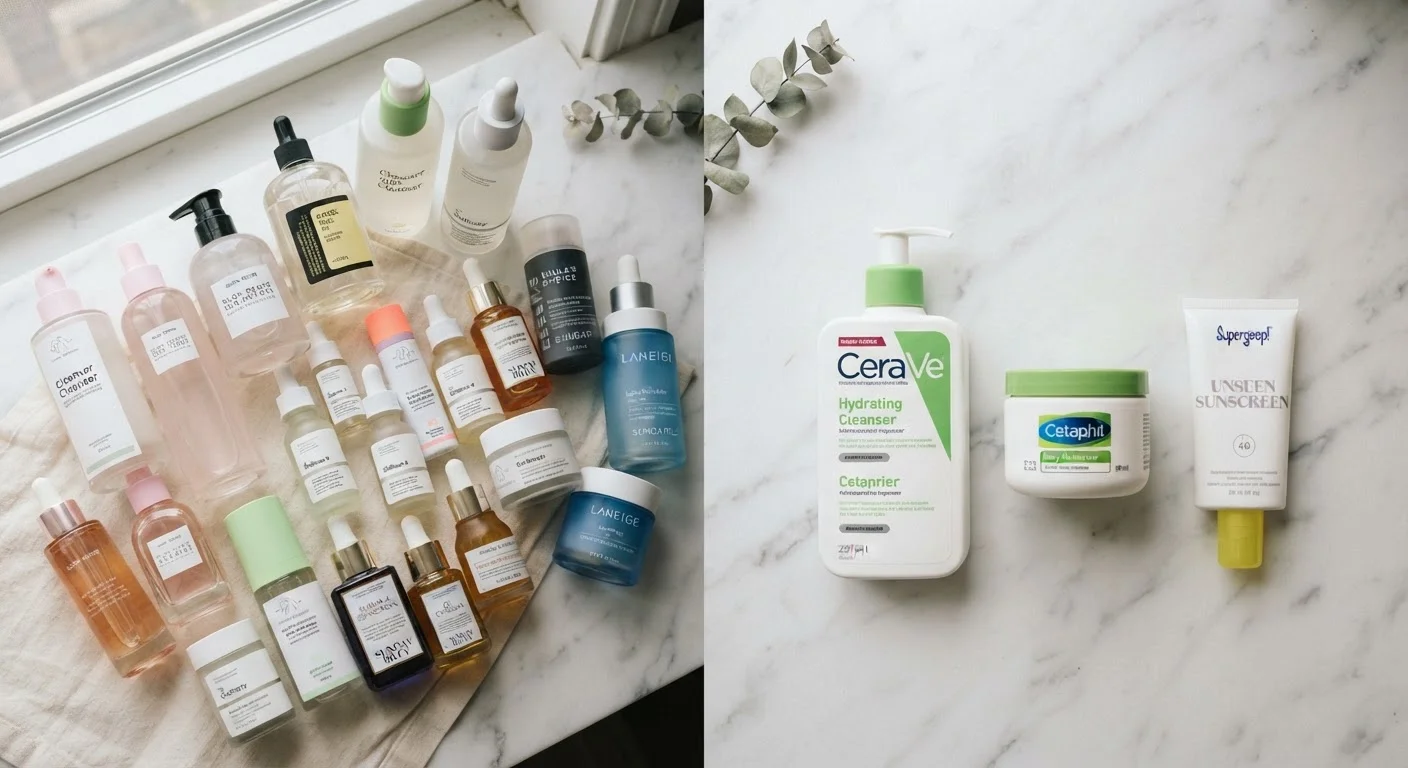
Key Takeaways
- A 10-step routine can target multiple skin concerns simultaneously but takes time and consistency to manage.
- Simple routines are easier to stick with and reduce the risk of ingredient overload or irritation.
- Skin type, lifestyle, and personal goals should shape how many steps you actually need.
- Layering too many active ingredients can sometimes worsen skin rather than improve it.
- Both approaches can be effective - the best routine is the one you'll realistically follow.
Addresses multiple skin concerns simultaneously
A multi-step routine can layer targeted ingredients for hydration, brightening, anti-aging, and acne control in a single session, something a three-product routine may not fully achieve.
Encourages deliberate skin awareness
Going through multiple steps prompts people to pay close attention to their skin's texture, tone, and reaction over time, which can lead to smarter product choices.
Maximises the benefits of layering
When products are applied in the correct sequence - from lightest to richest texture - each layer can enhance absorption and effectiveness of the next, particularly for serums and essences.
Allows customisation for changing skin needs
A longer routine gives you more levers to pull seasonally or as your skin shifts with age, hormones, or environment, without overhauling your entire approach.
Can feel like meaningful self-care ritual
For many people, a structured skincare routine provides a calming bookend to the day - a personal habit that supports mental wellbeing alongside physical skin health.
Risk of ingredient overload and irritation
Stacking multiple active ingredients like retinoids, acids, and antioxidants can overwhelm or compromise the skin's natural barrier, leading to redness, peeling, or breakouts rather than improvement.
Time-consuming and hard to sustain
A 10-step routine done twice daily can take upwards of 30 minutes - a commitment that often erodes under the pressure of busy schedules, making consistency difficult.
Significantly higher ongoing cost
Ten quality skincare products represent a real financial investment, and replacing them regularly adds up quickly, putting the approach out of reach for many households.
Harder to identify problem products
When skin reacts badly mid-routine, isolating which of ten products is responsible is genuinely difficult, often requiring a full reset and slow reintroduction.
More steps can displace the most critical one
In lengthy routines, broad-spectrum SPF - the single most evidence-supported skin-protective step - is sometimes rushed or skipped when time runs short.
Our Verdict
Neither a 10-step routine nor a minimal one is universally superior - each suits a different person, lifestyle, and set of skin goals. A detailed multi-step routine can deliver meaningful results for people tackling specific concerns, provided it's done with patience and ingredient awareness. A streamlined approach, on the other hand, often wins on consistency, which is the single most reliable driver of skin improvement over time.
A 10-step routine is best for skincare enthusiasts willing to invest time and research, while a simple routine suits busy beginners or anyone prone to sensitivity or overwhelm.
Why the Number of Steps Even Matters
The 10-step skincare routine - popularized in part by Korean beauty culture - introduced many Western consumers to layering products in a specific sequence: oil cleanser, water cleanser, exfoliator, toner, essence, serum, sheet mask, eye cream, moisturizer, and SPF. It reframed skincare as a ritual rather than a chore.
But as with most wellness trends, the question isn't whether the approach works in theory - it's whether it works for you, in your actual life. Understanding the trade-offs honestly can save you money, time, and potentially a lot of skin frustration.
To get a clearer picture of what the science and experience actually say, it helps to look at both sides side by side. See also: how ingredient order affects your morning routine.
Addresses multiple skin concerns simultaneously
A multi-step routine can layer targeted ingredients for hydration, brightening, anti-aging, and acne control in a single session, something a three-product routine may not fully achieve.
Encourages deliberate skin awareness
Going through multiple steps prompts people to pay close attention to their skin's texture, tone, and reaction over time, which can lead to smarter product choices.
Maximises the benefits of layering
When products are applied in the correct sequence - from lightest to richest texture - each layer can enhance absorption and effectiveness of the next, particularly for serums and essences.
Allows customisation for changing skin needs
A longer routine gives you more levers to pull seasonally or as your skin shifts with age, hormones, or environment, without overhauling your entire approach.
Can feel like meaningful self-care ritual
For many people, a structured skincare routine provides a calming bookend to the day - a personal habit that supports mental wellbeing alongside physical skin health.
Where the 10-Step Approach Falls Short
A longer routine is not automatically a smarter one. The biggest practical risk is ingredient overload - layering too many actives (think retinol, vitamin C, AHAs, niacinamide, and BHAs all in one regimen) can cause irritation, breakouts, or barrier damage, especially for sensitive skin types. More product doesn't mean more benefit; it can mean more conflict.
There's also the matter of knowing which ingredients shouldn't share shelf space in your routine. Some popular skincare actives cancel each other out or cause irritation when layered - something a minimal routine sidesteps almost by default.
Cost and time are real barriers too. Ten products used twice daily add up quickly, and a routine that takes 20-30 minutes per session is one many people quietly abandon within weeks.
Risk of ingredient overload and irritation
Stacking multiple active ingredients like retinoids, acids, and antioxidants can overwhelm or compromise the skin's natural barrier, leading to redness, peeling, or breakouts rather than improvement.
Time-consuming and hard to sustain
A 10-step routine done twice daily can take upwards of 30 minutes - a commitment that often erodes under the pressure of busy schedules, making consistency difficult.
Significantly higher ongoing cost
Ten quality skincare products represent a real financial investment, and replacing them regularly adds up quickly, putting the approach out of reach for many households.
Harder to identify problem products
When skin reacts badly mid-routine, isolating which of ten products is responsible is genuinely difficult, often requiring a full reset and slow reintroduction.
More steps can displace the most critical one
In lengthy routines, broad-spectrum SPF - the single most evidence-supported skin-protective step - is sometimes rushed or skipped when time runs short.
The Case for Keeping It Simple
A minimal routine - cleanser, moisturizer, and broad-spectrum SPF - gives your skin what it genuinely needs without the noise. Dermatologists consistently point out that sunscreen alone is the most evidence-backed step for preventing premature skin aging, and it often gets skipped in elaborate routines because people run out of time or patience.
Simplicity also makes it easier to identify what's working (or causing a problem). If you're using three products and your skin flares up, troubleshooting is straightforward. With ten products, pinpointing the culprit is a real challenge.
If you're starting from scratch, a minimal routine built from basics is often the most skin-safe and sustainable place to begin. And sustainability matters more than most skincare content acknowledges - the routines that actually stick long-term are rarely the most complicated ones.
3 steps
Core routine most dermatologists recommend
Many board-certified dermatologists publicly advocate for a cleanser, moisturizer, and SPF as the non-negotiable baseline for most skin types.
~90%
Of visible skin aging linked to UV exposure
According to research published in dermatology literature, the majority of premature skin aging - including fine lines and pigmentation - is attributed to cumulative sun exposure.
Finding Your Personal Middle Ground
The most practical takeaway isn't "do more" or "do less" - it's do what you'll keep doing. A well-chosen four- or five-step routine that includes a targeted serum or exfoliant can offer most of the benefits of a 10-step approach without the complexity or cost. If you want to explore exfoliation options, understanding physical versus chemical exfoliation is a helpful next step.
Consider building incrementally: start simple, then add one product at a time, giving your skin two to four weeks to adjust before layering anything new. That patience pays off in clearer signals and healthier skin.
Sensitive Skin Needs Extra Caution
If you have sensitive, reactive, or compromised skin, a lengthy routine with multiple actives carries a higher risk of triggering flares or barrier damage. Dermatologists often recommend that people with rosacea, eczema, or chronic sensitivity stick to a short, fragrance-free regimen and introduce any new product slowly. Always consult a skin care professional before adding actives like retinoids or exfoliating acids to your routine.
This article is for general informational purposes only and is not a substitute for advice from a licensed dermatologist or skincare professional. Individual skin concerns and conditions vary - consult a qualified professional before making significant changes to your routine.