

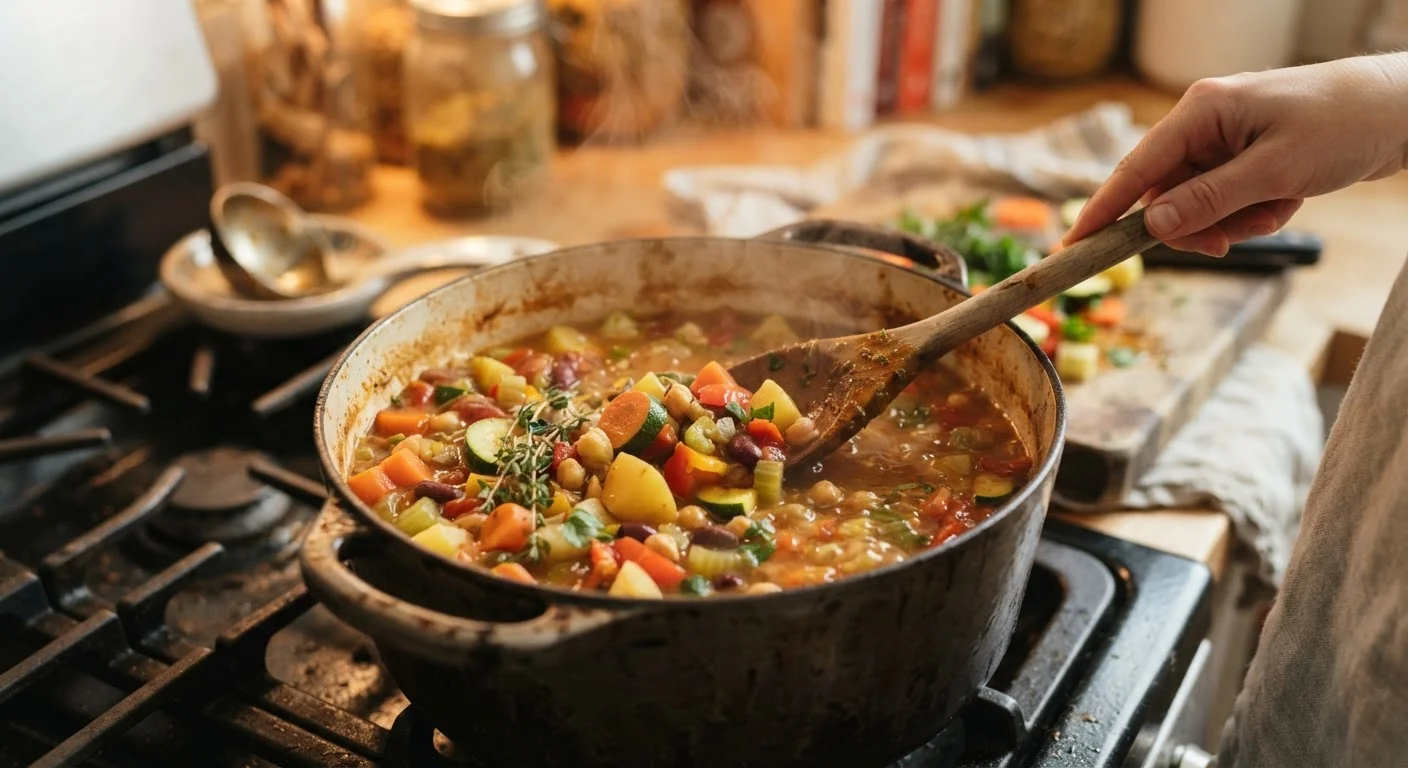
Key Takeaways
- Tasting throughout cooking - not just at the end - is the single most reliable way to improve a dish.
- Most flavor problems are fixable mid-cook; waiting until plating leaves far fewer options.
- Seasoning is a process, not a one-time step - salt, acid, and heat each change how a dish tastes.
- Trained tasting means pausing to identify what's missing: brightness, salt, richness, or depth.
- Even beginner cooks can build this habit quickly by tasting at every major stage of a recipe.
Why Tasting Is a Skill, Not an Instinct
Most of us taste food to decide if we like it. Professional cooks taste food to diagnose it - to figure out what it needs next. That small shift in mindset is the real difference between following a recipe and actually cooking.
Recipes are written for an average ingredient, an average stove, and an average palate. Your tomatoes might be more acidic than the recipe writer's. Your broth might be saltier. Your skillet might run hotter. None of those variables are accounted for on the page, which is part of why recipes sometimes fail even when you follow them exactly.
Tasting as you go is how you bridge that gap. It puts your actual senses - not the printed instructions - in the driver's seat.
“Seasoning is not something you do once. It's something you do throughout the entire cooking process. Every time you add an ingredient, you need to taste and adjust.”
— Samin Nosrat, Culinary author and cooking educator
Best Practices for Tasting Throughout a Cook
Building a tasting habit doesn't require formal training. It just requires intention. Here are the practices that make the biggest difference:
Taste at every major transition - not just at the end
Flavor develops and changes as ingredients cook, reduce, and combine. Tasting only at the finish means catching problems when they're hardest to fix. Tasting at each stage - after aromatics soften, after liquid is added, after simmering - gives you multiple correction windows.
Season in layers, not all at once
Adding all your salt at the end concentrates flavor on the surface without developing it throughout the dish. Salting at multiple points - with onions, after adding liquid, before serving - integrates seasoning into the dish's structure.
Use a clean spoon each time you taste from a shared pot
This is basic food safety and good kitchen hygiene. It also prevents cross-contamination of flavors between your mouth and the dish, keeping your palate assessment accurate.
Let very hot food cool for a few seconds before evaluating it
Heat suppresses your ability to detect salt and subtler flavors. Tasting something scalding-hot often makes a dish taste less seasoned than it is, leading to over-salting.
Taste the components separately before combining them
A grain, a sauce, and a garnish that all taste perfect alone may together taste over-seasoned or imbalanced. Checking each part helps you predict how the whole will land.
What to Actually Listen For When You Taste
Tasting blindly - just confirming "yep, that's food" - won't help much. The goal is to ask yourself four simple questions each time you taste:
- Is it salty enough? Not "is it salty," but does the flavor feel complete and present?
- Does it have brightness? A flat dish often needs a splash of acid - lemon juice, vinegar, or even a bit of tomato - rather than more salt.
- Is there enough richness? Soups and grains sometimes taste thin; a small amount of fat (butter, olive oil) rounds them out.
- Is there depth? If it tastes one-dimensional, it may need more time, more aromatics, or a pinch of something savory like a splash of soy or Worcestershire.
Understanding how acids and fats shape flavor can make these diagnoses much easier - even for beginners.
Train Your Palate With a Simple Test
Try this once: make a small pot of plain vegetable broth and taste it at four stages - plain water, after aromatics are added, mid-simmer, and fully reduced. You'll directly experience how flavor builds and concentrates over time. It's a low-stakes way to understand what 'needs something' actually feels like before applying it to a real dish.
Making It a Habit Starting Today
Tasting regularly is one of those habits that feels slightly awkward at first - grabbing a spoon every few minutes - and then becomes second nature fast. The cooks who skip it are almost always the ones surprised by a bland or over-salted dish at the table.
A few ways to lock it in:
If you want to go deeper on building a confident, intuitive kitchen practice, reading a recipe like a cook covers the habits professionals build before they even light the stove.