

Key Takeaways
- Every habit is built from three elements: a cue, a routine, and a reward.
- Your brain automates repeated behaviors to conserve mental energy.
- Changing a habit is easier when you keep the cue and reward but swap the routine.
- Environment plays a powerful role in triggering habitual cues without conscious thought.
- Understanding the loop helps you build new habits intentionally, not just accidentally.
The Habit Loop
The habit loop is a three-part neurological cycle that underlies almost every automatic behavior: a cue (a trigger), a routine (the behavior itself), and a reward (the payoff your brain receives). Once this loop is established through repetition, your brain begins to anticipate the reward the moment it detects the cue. This is why habits feel almost effortless to repeat - and surprisingly difficult to break.
The habit loop concept was popularized by researcher Charles Duhigg drawing on MIT neuroscience research, which showed that the basal ganglia - a region involved in procedural learning - plays a central role in encoding habitual behavior.
What the Habit Loop Actually Is
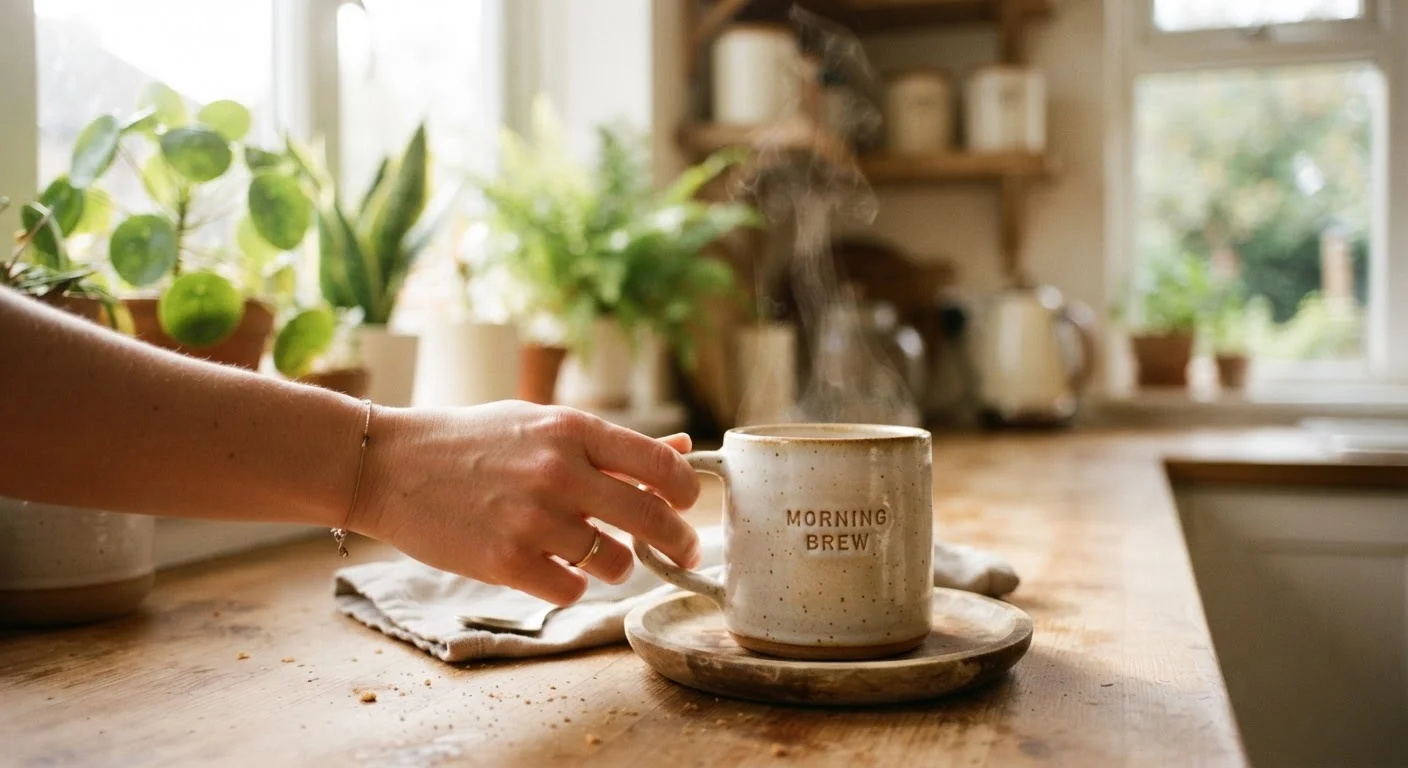
Picture your morning. You wake up, shuffle to the kitchen, and the coffee maker is already on before you've made a single conscious decision. That seamless sequence isn't luck - it's your brain running a well-worn program.
The habit loop describes how the brain automates repeated behaviors. It works in three stages:
- Cue: A trigger - internal or external - that tells your brain to initiate a behavior. This could be a time of day, a location, an emotion, or the presence of certain people or objects.
- Routine: The behavior itself, which can be physical, mental, or emotional.
- Reward: The positive signal your brain receives after completing the routine - pleasure, relief, a sense of accomplishment, or even just the reduction of discomfort.
Each time the loop completes, the neural pathway linking cue to reward strengthens. Over time, the brain stops deliberating and simply executes. This is energy-efficient - your brain can handle far more across a day by automating the predictable parts of life.
The Loop Applies to Both Good and Bad Habits
The brain doesn't distinguish between beneficial and harmful behaviors - it simply reinforces whatever loop it has run most often. A sugar craving after lunch and a post-dinner walk both follow the same cue-routine-reward architecture. This is a neutral mechanism; understanding it is what allows you to use it deliberately.
Why Your Brain Is Wired to Love Routine
The human brain is, among other things, a prediction machine. It is constantly looking for patterns it can offload from conscious attention. Habits are the result of that optimization: behaviors that reliably produce a reward get encoded so they require less mental effort each time they run.
Neuroscience research has identified the basal ganglia - a set of structures deep in the brain - as central to this process. As a behavior becomes habitual, neural activity associated with it shifts from the prefrontal cortex (deliberate, effortful thinking) toward the basal ganglia, where it can fire more automatically.
This is why interrupting even unwanted habits feels so difficult. The brain has quite literally restructured itself around the loop. As one framing from behavioral science puts it: you can't truly erase a habit - you can only overwrite it with a competing one.
“The Golden Rule of Habit Change: you can't extinguish a bad habit, you can only change it. Keep the old cue and the old reward, but insert a new routine.”
— Charles Duhigg, Author of 'The Power of Habit,' drawing on MIT neuroscience research
Understanding this wiring is actually empowering. It means that once a good habit is established, it too becomes automatic. Your future self benefits from the work your present self puts in now.
Real-Life Examples of the Loop at Work
The habit loop appears across every area of daily life - not just in the dramatic behaviors we often think of as "habits."
Notice that in each case, the cue doesn't have to be dramatic to be powerful. Subtle environmental signals - the smell of a gym bag, the sight of a fruit bowl on the counter - can reliably trigger routines without any conscious intention. That's the loop at work.
For a deeper look at how your physical surroundings quietly steer your choices, see how your home environment shapes everyday habits more than willpower does.
Using the Loop to Build Habits That Stick
Once you understand the three-part structure, you can engineer it intentionally rather than waiting for habits to form by accident.
- Define a clear cue. Tie a new behavior to something that already happens reliably - a time, an existing habit, or a recurring situation. This is sometimes called habit stacking.
- Make the routine specific and achievable. Vague intentions collapse under friction. "I'll do five minutes of stretching right after I pour my morning coffee" is far more likely to stick than "I'll stretch more."
- Build in an immediate reward. The reward doesn't have to be large, but it must be timely. A brief moment of self-acknowledgment, a favorite podcast episode, or even just noticing how good a stretch feels - these signal to your brain that the loop is worth repeating.
Start With Tiny Rewards
When building a new habit, don't wait for long-term results to feel rewarding - they're too distant to reinforce the loop effectively. Choose an immediate, small reward you can deliver right after completing the routine, even if it's just a moment of noticing how you feel. This bridges the gap while the habit is still forming.
It's equally useful to understand why existing habits resist change. The two-week drop-off pattern in habit change is predictable - and knowing what drives it can help you plan around it. For a broader look at what makes wellness routines sustainable, explore why healthy habits often slip after a few weeks.
If you're looking to apply these principles to movement specifically, building a workout habit that actually sticks walks through the behavioral and environmental factors that make exercise routines last.
This article is for general informational and educational purposes only. It is not a substitute for professional medical, psychological, or behavioral health advice. If you have concerns about compulsive behaviors or mental health, please consult a qualified healthcare professional.