
Mindfulness Meditation vs. Deep Breathing: Two Calming Tools, Different Purposes

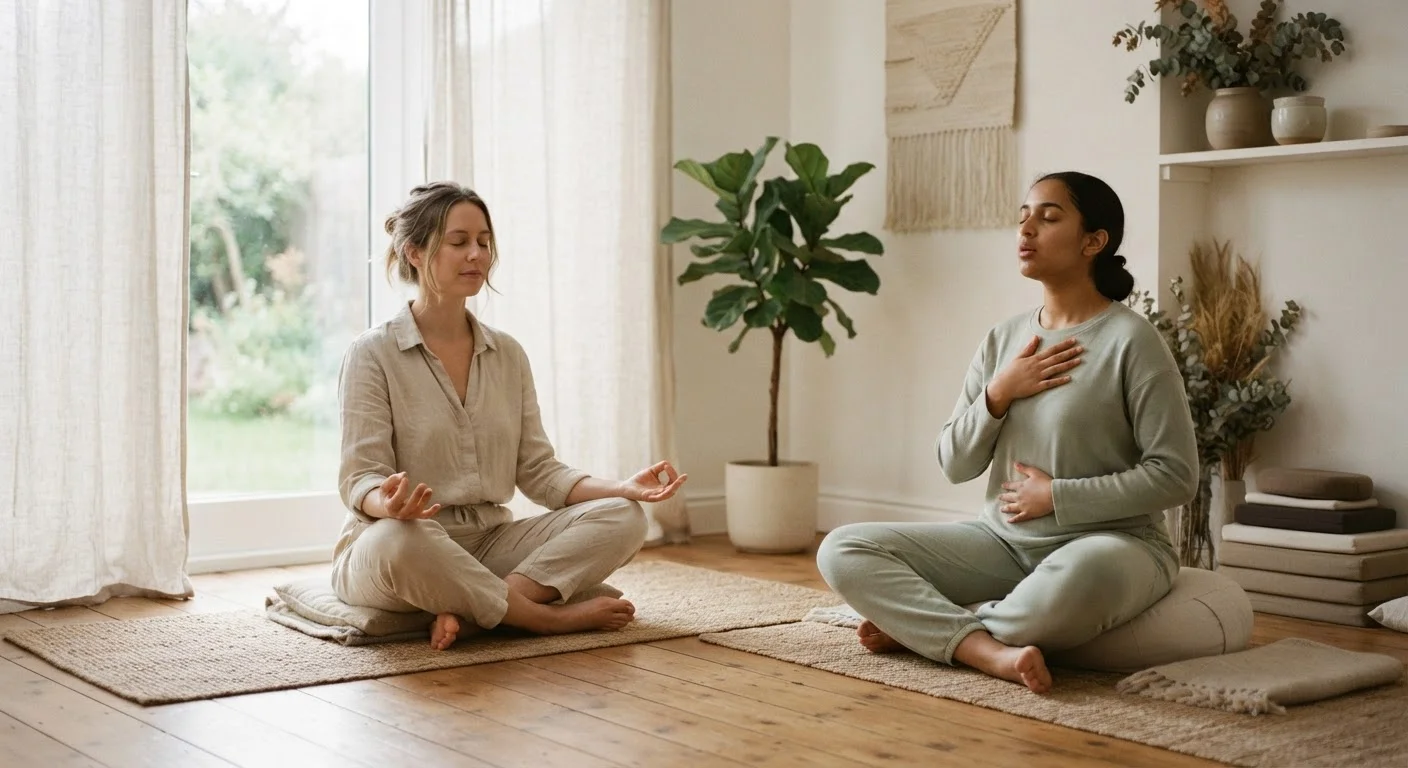
Key Takeaways
- Mindfulness meditation trains sustained attention and emotional awareness over time, not just in the moment.
- Deep breathing directly activates the parasympathetic nervous system, producing rapid physiological calm.
- Both practices reduce stress, but they operate through different mechanisms and timeframes.
- Deep breathing can be done in under two minutes; mindfulness typically requires dedicated session time.
- The two approaches complement each other well and are not mutually exclusive.
Option A
Mindfulness Meditation
The sustained, awareness-building practice.
Best for: Building long-term emotional resilience and developing a non-reactive relationship with thoughts and feelings over time.
Option B
Deep Breathing
The fast-acting, physiological reset.
Best for: Quickly calming an activated nervous system in high-stress moments, such as before a presentation or during acute anxiety.
If you need immediate relief from acute stress or anxiety
Deep Breathing
Controlled breathing techniques engage the body's parasympathetic response within minutes, making them ideal for on-the-spot situations.
If you want to build long-term emotional resilience and self-awareness
Mindfulness Meditation
Regular mindfulness practice restructures how you relate to stress over time, producing durable changes in attention and emotional regulation.
If you are a complete beginner with limited time each day
Deep Breathing
Breathing exercises require no prior experience, no equipment, and can fit into moments throughout the day - making them highly accessible as a starting point.
If you experience chronic stress or recurring anxious thought patterns
Mindfulness Meditation
Mindfulness helps interrupt habitual thought cycles by cultivating meta-awareness, which research suggests is valuable for managing persistent psychological stress.
If you want a practice that supports both mind and body simultaneously
Deep Breathing
Slow, controlled breathing measurably affects heart rate, blood pressure, and cortisol levels, bridging physical and mental calming in one simple technique.
How Each Practice Actually Works
Mindfulness meditation and deep breathing are both widely recommended for stress management - but understanding how they work reveals why they serve different purposes. Knowing the distinction helps you use each one more intentionally, rather than treating them as interchangeable.
Mindfulness meditation is a mental training practice. At its core, it involves deliberately directing attention - often to the present moment - and observing thoughts, sensations, and emotions without judgment. Regular practice is thought to strengthen neural pathways associated with self-regulation and emotional processing. Research published in clinical psychology literature suggests that sustained mindfulness practice can reduce reactivity to stressors over weeks and months, rather than in a single session.
Deep breathing, by contrast, works primarily through the body. Slow, controlled breathing - such as diaphragmatic breathing or techniques like box breathing - activates the vagus nerve, which signals the parasympathetic nervous system (the body's "rest and digest" state) to override the stress response. This produces measurable, fairly rapid changes: lower heart rate, reduced muscle tension, and a decrease in the stress hormone cortisol. For context on why managing the stress response matters physiologically, see what stress actually does to your body and brain.
| Criterion | Mindfulness Meditation | Deep Breathing |
|---|---|---|
| Primary mechanism | Attention training, cognitive awareness | Parasympathetic nervous system activation |
| Speed of effect | Builds over weeks of consistent practice | Noticeable within minutes |
| Ideal timing | Dedicated daily session | Anytime, including mid-stress moments |
| Beginner accessibility | Moderate - benefits from guidance | High - intuitive and immediate |
| Physical effect | Indirect, through reduced stress reactivity | Direct - lowers heart rate, reduces cortisol |
| Session length | Typically 10-30 minutes | 2-5 minutes sufficient |
| Long-term goal | Emotional resilience and meta-awareness | Reliable acute stress relief |
Key Differences in Practice and Timing
One of the most practical distinctions between the two is when you can use them.
Deep breathing is highly portable and immediate. Techniques like 4-7-8 breathing or slow diaphragmatic breathing can be performed discreetly at a desk, in a waiting room, or before a difficult conversation. The calming effect is often noticeable within two to five minutes. This immediacy makes deep breathing a go-to tool for acute stress situations.
Mindfulness meditation generally requires a dedicated time window - even if only ten minutes - and a degree of mental intention that is harder to access in the middle of a stressful event. Its benefits accumulate with consistency. Many practitioners and researchers describe it less as a quick fix and more as an ongoing practice that gradually changes how the mind responds to difficulty. That shift takes time, but it can be meaningful and lasting.
~8 weeks
Time for measurable mindfulness-related brain changes
Studies including a well-known Massachusetts General Hospital trial found structural brain changes after approximately eight weeks of mindfulness-based stress reduction (MBSR) practice.
~2 min
Time for slow breathing to reduce heart rate
Research in autonomic neuroscience indicates that slow, paced breathing (around 6 breaths per minute) can produce measurable parasympathetic activation within two minutes.
36%
Reduction in anxiety symptoms with mindfulness programs
A meta-analysis published in JAMA Internal Medicine found mindfulness meditation programs produced a moderate reduction in anxiety symptoms across multiple studies.
Neither approach requires special equipment, both are free to practice, and both have substantial bodies of research supporting their role in psychological well-being. They also pair naturally - many mindfulness practitioners use intentional breathing as the anchor point for their meditation sessions, blurring the line in practice even while the concepts remain distinct.
Choosing What Fits Your Life
The most useful framing isn't "which is better" - it's "which serves this moment or this goal." For many people, the answer involves both.
If you're new to either practice, deep breathing may be the more accessible entry point. It requires no background knowledge, produces noticeable results quickly, and can be layered into existing routines. Over time, as you build comfort with intentional self-regulation, mindfulness meditation offers a deeper layer of practice.
Mindfulness in particular fits well alongside other deliberate wellness habits. Small daily rituals - such as a consistent morning routine or a wind-down practice before bed - can create natural slots for brief mindfulness sessions without requiring dramatic lifestyle changes.
It's also worth noting that chronic stress doesn't only affect mood and cognition. As explored in our piece on how stress affects skin health, the body's stress response has wide-ranging effects. Consistent stress management practices - whether breathing-based or mindfulness-based - may support overall well-being in ways that go beyond the mental.
These Practices Are Not Medical Treatments
Mindfulness meditation and deep breathing are wellness practices with a growing evidence base, but they are not clinical treatments for anxiety disorders, depression, or other mental health conditions. They may complement professional care, but should not replace it. If you are managing a diagnosed condition, speak with a qualified healthcare provider about what approaches may be appropriate for your situation.
For a broader framework on building and sustaining mental well-being, a complete overview of mental well-being covers practical strategies across multiple dimensions of emotional health.
This article is for general informational and educational purposes only and is not a substitute for professional medical or mental health advice. If you are experiencing significant distress, anxiety, or related symptoms, please consult a qualified healthcare professional.