

Key Takeaways
- Protein quality depends on amino acid completeness and digestibility, not just grams per serving.
- Animal proteins are generally complete sources, while most plant proteins benefit from dietary variety.
- Mixing plant protein sources throughout the day can cover all essential amino acids effectively.
- Digestibility varies by source; cooking and preparation methods can meaningfully improve protein absorption.
- Most adults can meet protein needs through multiple dietary patterns with thoughtful food choices.
Why protein sources - not just totals - matter
Most nutrition conversations about protein focus on how much to eat. But the source of that protein shapes how useful it actually is to the body. Two people consuming the same number of protein grams can end up with very different outcomes depending on the amino acid composition and digestibility of what they're eating.
Protein is made up of amino acids - nine of which are classified as essential because the body cannot produce them independently. Foods differ considerably in which of these they supply and how readily the body can absorb them. This is the foundation of what nutrition scientists call protein quality.
What 'protein quality' actually means
Protein quality is assessed by two main factors: amino acid completeness and digestibility. The DIAAS score, recommended by the FAO, accounts for both - making it a more precise measure than older metrics like biological value (BV). A food can be high in total protein grams but still rank lower in quality if certain essential amino acids are scarce or poorly absorbed. Understanding this distinction helps contextualize why variety matters more than chasing a single high-protein food.
Whether someone eats meat every day, follows a fully plant-based pattern, or falls somewhere in between, protein adequacy is achievable - but requires some awareness of where gaps might appear. Signs of dietary shortfalls aren't always obvious, which is why understanding your sources matters before problems arise.
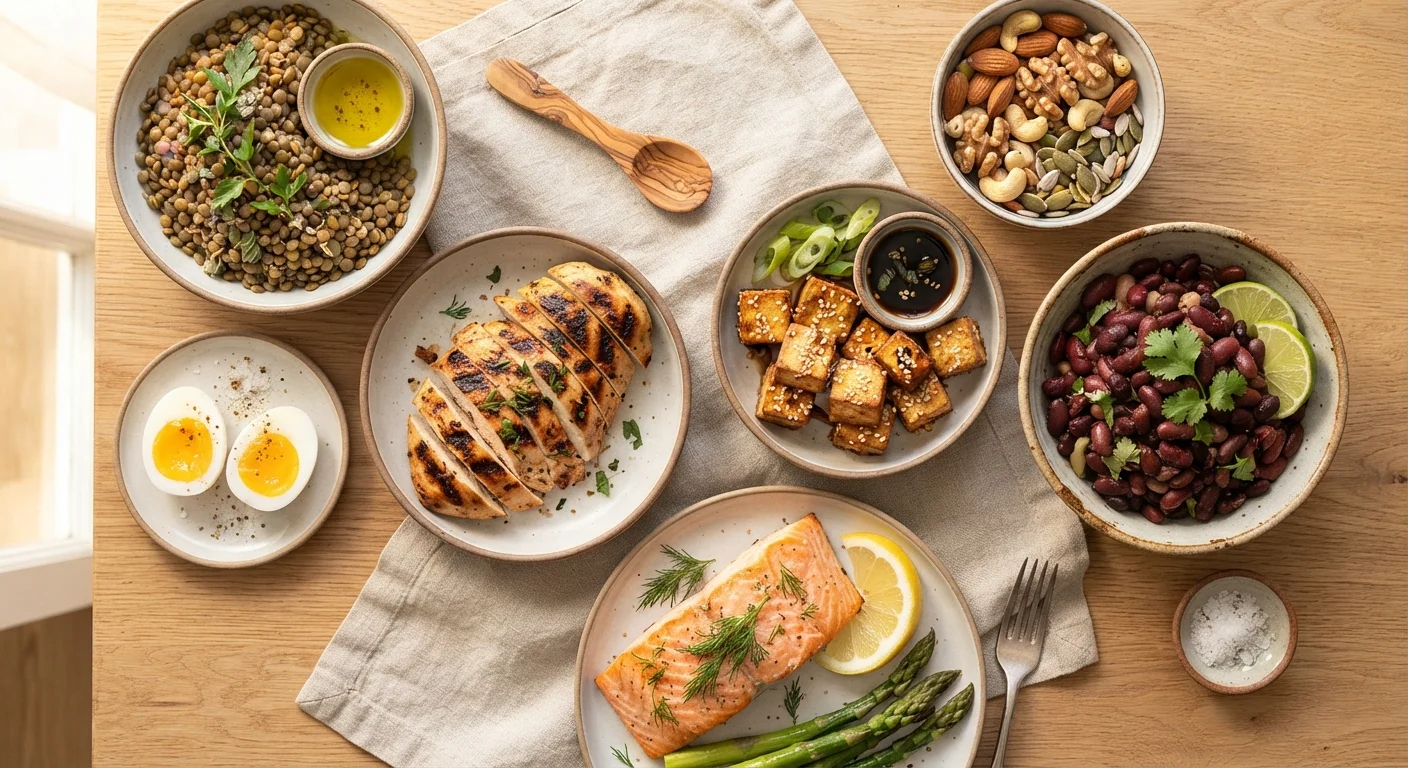
Six protein sources across the dietary spectrum
Animal proteins: complete and highly digestible
Meat, poultry, seafood, eggs, and dairy are considered complete proteins - each contains all nine essential amino acids the body cannot synthesize on its own. They also score well on DIAAS, a measure of how efficiently the body can actually use the protein consumed. Eggs and dairy, for instance, are among the most bioavailable protein sources studied. Lean meats and oily fish bring additional nutrients - iron, zinc, B12, and omega-3s - that complement their protein content. Portion awareness and cooking methods matter, as heavily processed or high-fat preparations can offset some nutritional benefits.
Animal proteins deliver all nine essential amino acids and score among the highest in bioavailability research.
Legumes: the plant kingdom's protein workhorses
Lentils, chickpeas, black beans, edamame, and other legumes are calorie-efficient, protein-dense, and rich in fiber. While most are incomplete on their own - relatively low in methionine - they're high in lysine, an amino acid that grains tend to lack. Pairing legumes with grains (rice and beans, for example) across meals fills this gap naturally. Digestibility can be lower than animal sources, but soaking, sprouting, and thorough cooking help reduce antinutrients like phytates and lectins that can inhibit absorption. For plant-based eaters, legumes often form the foundation of daily protein intake.
Legumes are high in lysine, making them an ideal complement to grains in plant-forward diets.
Soy: the plant protein closest to animal sources
Soybeans and soy-derived foods - tofu, tempeh, edamame, and miso - are among the few plant proteins classified as nutritionally complete. Their amino acid profile is close enough to animal protein that soy scores highly on standardized protein quality measures. Tempeh, a fermented soy product, may offer improved digestibility compared to whole soybeans due to the fermentation process partially breaking down antinutrients. Soy is versatile and widely accessible, making it a practical anchor for vegan and vegetarian diets. Concerns about soy and hormonal effects are frequently overstated in popular media; scientific consensus does not support adverse effects at typical dietary intakes.
Soy is one of the only plant proteins with an amino acid profile comparable to animal sources.
Whole grains, nuts, and seeds: supporting players that add up
Quinoa is a notable exception among grains - it contains all essential amino acids and is often cited as a complete plant protein. Other grains like oats, farro, and amaranth contribute meaningful protein alongside complex carbohydrates. Nuts and seeds - hemp seeds, pumpkin seeds, almonds, and peanuts - provide protein alongside healthy fats, though in smaller per-serving amounts. The real value of this category is cumulative: across a full day of eating, these foods collectively contribute significantly to total protein intake, especially when dietary variety is prioritized. They also bring complementary micronutrients like magnesium, vitamin E, and selenium.
Quinoa stands out among grains as a complete protein source, containing all nine essential amino acids.
Dairy and eggs: accessible and versatile across diet types
For lacto-ovo vegetarians - people who avoid meat and fish but include dairy and eggs - protein adequacy is rarely a nutritional concern. Greek yogurt, cottage cheese, and hard cheeses are concentrated protein sources that also supply calcium and, in fermented forms, beneficial probiotics. Eggs remain one of the most studied and nutritionally efficient whole-food protein sources, offering a complete amino acid profile with high digestibility. Their flexibility in cooking makes them easy to incorporate across meals. For those with lactose intolerance or egg allergies, targeted alternatives are available, though individual needs should be discussed with a healthcare provider.
Greek yogurt and eggs offer some of the most complete and digestible protein available from whole foods.
Mixed dietary patterns: flexibility as a practical advantage
Flexitarian and omnivore eating patterns - which draw from both animal and plant sources - offer the broadest range of protein options and the easiest path to amino acid completeness. The evidence suggests that dietary variety, rather than any single "optimal" source, is key to meeting protein needs consistently. Building a balanced plate with varied protein sources across meals reduces dependence on any one food and spreads micronutrient benefits. For a deeper comparison of plant-forward and omnivore approaches, see how plant-based and omnivore diets compare on key nutritional measures.
Dietary variety across protein sources is more reliably effective than optimizing any single food choice.
You don't need to pair proteins at every meal
Older nutrition guidance suggested combining complementary proteins - like beans and rice - within the same meal to achieve completeness. Current understanding is more flexible: as long as a variety of protein sources are consumed across the day, the body can assemble the amino acids it needs. This makes meal planning simpler and less rigid, particularly for plant-based eaters.
Putting it into practice
No single dietary pattern has a monopoly on good protein intake. The common thread across well-nourished populations is variety and consistency - not adherence to one food or category. For plant-based eaters, this means regularly rotating legumes, soy, grains, and seeds rather than relying heavily on any one source. For omnivores, it means not defaulting exclusively to meat while overlooking plant proteins that bring fiber and additional micronutrients.
Protein needs also shift across life stages - requirements differ for growing children, pregnant individuals, active adults, and older adults experiencing muscle loss. How nutritional needs change across life stages offers more context on how protein priorities evolve over time.
If you're uncertain whether your current eating pattern is meeting your protein needs - especially if you're managing a health condition, following a restrictive diet, or in a high-demand life phase - consulting a registered dietitian is the most reliable next step.
This article is for general informational and educational purposes only and is not a substitute for professional medical or dietary advice. Always consult a qualified healthcare provider for guidance specific to your health needs.