

Key Takeaways
- Choosing plants adapted to your local climate is the single most effective way to reduce outdoor maintenance.
- Mulch suppresses weeds, retains soil moisture, and reduces the need for frequent watering.
- Ground covers and native plantings can replace high-maintenance turf in many parts of the yard.
- Hardscaping elements like gravel paths and stone borders cut down on mowing and edging time.
- Grouping plants by water needs makes irrigation more efficient and prevents overwatering.
Why Most Yards Demand More Than They Should
A well-designed landscape should work with your schedule, not against it. Yet many American yards are set up for maximum effort - vast lawns that need weekly mowing, annual flower beds that require replanting every season, and irrigation systems running more than necessary. The result is a yard that looks great only when someone is constantly managing it.
The good news: with some deliberate choices upfront, it's possible to create an outdoor space that stays attractive throughout the year without consuming every weekend. The ideas below are practical, regionally adaptable, and grounded in how plants and landscapes actually behave - not just how they look in a showroom photo. Whether you're starting from scratch or reworking a corner of an existing yard, these approaches can meaningfully reduce upkeep over time.
Start Small and Expand Gradually
You don't need to overhaul your entire yard at once. Choosing one high-effort zone - a frequently weeded bed, a dry corner, an awkward slope - and redesigning just that area lets you test what works for your soil and climate before committing more broadly. Small wins build confidence and provide real data about which plants and materials perform best in your specific conditions.
Low-Maintenance Strategies Worth Trying
Layer mulch across beds and borders
A 2-3 inch layer of organic mulch - shredded bark, wood chips, or pine straw - is one of the simplest interventions in low-maintenance landscaping. Mulch suppresses weed germination by blocking light at the soil surface, retains soil moisture by slowing evaporation, and moderates soil temperature through seasonal swings. It also breaks down gradually, improving soil structure over time.
Apply mulch in spring after the ground warms, and refresh it every one to two years rather than completely replacing it. Keep mulch a few inches away from plant stems and tree trunks to prevent rot. This single habit can dramatically reduce the number of hours spent weeding and watering through summer.
A few inches of mulch does more for a bed than almost any other single intervention.
Replace high-maintenance turf with ground covers
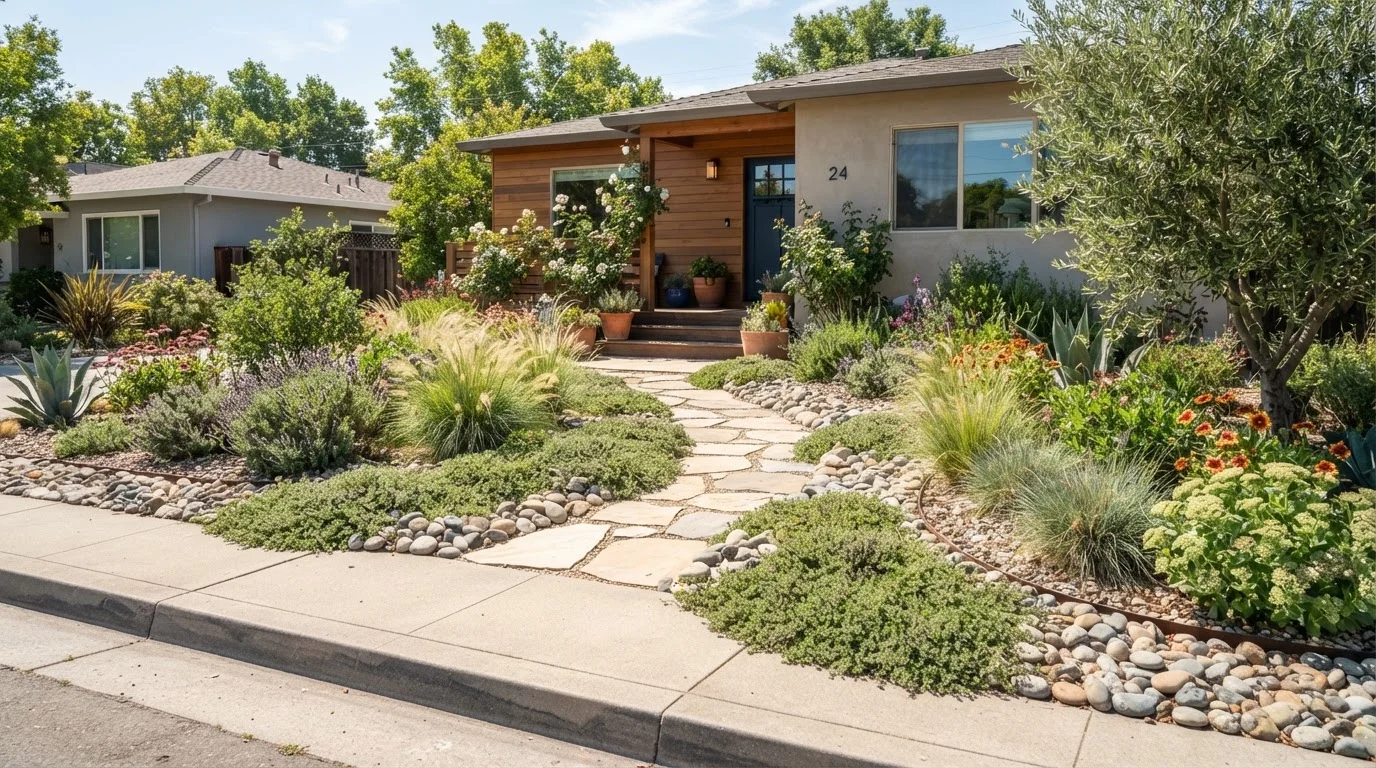
Traditional grass lawns are resource-intensive - they need regular mowing, edging, fertilizing, and often supplemental irrigation. In areas of the yard where foot traffic is light or the slope makes mowing awkward, ground cover plants are a practical substitute. Creeping thyme, clover, mondo grass, and native sedges are examples commonly used across different US climate zones.
Ground covers typically establish within one to two growing seasons and then spread on their own, filling in gaps and crowding out weeds. Many are drought-tolerant once established and require little to no fertilization. For guidance on how native options specifically support your ecosystem, see why ecologists keep recommending native plants.
Ground covers can replace grass in low-traffic areas while nearly eliminating mowing and edging.
Plant drought-tolerant and climate-adapted species
Plants that are well-matched to your local climate, soil type, and average rainfall are inherently lower maintenance because they aren't fighting to survive. Drought-tolerant perennials - ornamental grasses, lavender, coneflower, black-eyed Susan, yarrow - return each year without replanting and typically require little supplemental watering once established.
Matching plants to your USDA Hardiness Zone and your region's typical moisture patterns is a good starting point. Extension programs through land-grant universities in each state offer regionally specific plant recommendations and are a reliable free resource for homeowners. Plants that are already adapted to your conditions won't need coaxing - they simply grow.
Climate-adapted plants rarely need supplemental watering or coaxing once they establish.
Use hardscaping to reduce planted area
Gravel paths, flagstone borders, dry-stack stone walls, and paver patios are permanent features that require essentially no ongoing care beyond occasional weeding at joints or hosing off debris. Strategically placed hardscaping reduces the total planted area that needs tending, creates clean visual structure, and can improve drainage in problem spots.
When adding gravel or decomposed granite paths, laying a permeable landscape fabric underneath slows weed intrusion without blocking water. Hardscaping also pairs well with drought-tolerant plantings - together, they form a landscape that looks intentional rather than neglected. For a broader look at how surface choices affect maintenance and usability, the outdoor living spaces trade-off guide covers this in depth.
Replacing planted sections with hardscaping permanently eliminates that area's upkeep needs.
Group plants by water and sun requirements
Hydrozoning - grouping plants with similar water needs in the same bed or zone - makes irrigation more targeted and prevents the inefficiency of overwatering drought-tolerant plants alongside thirsty ones. It also means you can hand-water or run drip irrigation only where it's actually needed, rather than running overhead sprinklers across mixed plantings.
The same principle applies to sun exposure. Planting shade-lovers in sunny spots forces them to struggle; planting sun-lovers in shade produces weak, disease-prone growth. Taking time at the planning stage to match plant requirements to actual site conditions translates directly into less remediation work later - fewer replacements, fewer pest problems, and less intervention overall.
Grouping plants by water needs is the planning step that prevents the most future problems.
Choose slow-growing shrubs and perennials over annuals
Annual flowers demand replanting every season and often need consistent deadheading and fertilization to stay tidy. Perennials and shrubs, by contrast, return each year from established root systems and generally require only occasional pruning. Slow-growing shrubs in particular maintain their shape with minimal trimming and rarely need replacement.
In mixed beds, a backbone of structural shrubs - boxwood, dwarf varieties of spirea, or native choices like inkberry - provides year-round form even when perennials die back in winter. Filling gaps between shrubs with spreading perennials rather than annuals reduces the replanting cycle entirely. The initial setup takes more thought, but the ongoing maintenance is a fraction of what an annual-heavy border demands.
Perennials and shrubs are a long-term investment that pay off in seasons of reduced replanting.
These strategies aren't all-or-nothing. You can apply one or two in targeted areas - a shady side yard, a dry slope, a high-traffic path - and see measurable results in how much time and effort that zone demands. For more on reducing your outdoor workload from a design perspective, see how different outdoor layouts compare on maintenance.
Local Conditions Always Override General Advice
What's low-maintenance in a Pacific Northwest climate may be high-maintenance in a Texas summer, and vice versa. Before selecting plants or materials, consider your region's average rainfall, soil type, and temperature range. Your local cooperative extension service - typically affiliated with your state's land-grant university - offers free, regionally specific plant lists and landscape guidance that will serve you better than any generic national list.
Building a Yard That Sustains Itself
Low-maintenance landscaping isn't about neglect - it's about designing a system where inputs are minimal because conditions are right from the start. Plants that are suited to your soil, sun, and rainfall won't struggle; they'll settle in and hold their own. Ground covers will close in and crowd out weeds. Mulch will keep doing its job season after season with only occasional topping off.
Over time, the initial investment in planning and planting pays dividends in hours saved. Consider pairing these landscape strategies with smarter watering habits - our guide on watering principles every home gardener should know covers timing and depth in practical terms. The goal is a yard you genuinely enjoy, not one you're perpetually catching up with.