

Key Takeaways
- Overwatering is the leading cause of plant death in home gardens - more than drought.
- Watering deeply and infrequently encourages stronger, deeper root systems than frequent shallow watering.
- Morning is the best time to water, reducing evaporation and limiting fungal disease risk.
- Soil type, plant variety, and season all affect how much and how often your garden needs water.
- Simple tools like a soil moisture probe or the finger test can prevent guesswork and overwatering.
Why Most Watering Mistakes Happen Before You Turn on the Hose
The most common gardening error isn't forgetting to water - it's watering without a plan. Many gardeners follow a calendar schedule rather than reading what their plants and soil are actually telling them. The result is predictable: shallow roots, yellowing leaves, and plants that never quite thrive despite regular attention.
Understanding a few core principles can transform your approach. Whether you're starting your first garden or refining a routine you've followed for years, the fundamentals of smart watering apply at every level.
Water moves through soil differently depending on its composition. Sandy soil drains fast; clay holds moisture but can suffocate roots when saturated. Before adjusting how often you water, it helps to understand what you're working with. Our guide on common soil problems and fixes is a useful companion here.
Water deeply and infrequently rather than shallowly every day.
Shallow, frequent watering keeps moisture at the surface, training roots to stay shallow. When heat or drought strikes, those shallow roots are the first to suffer. Deep watering draws roots downward, building resilience and reducing overall water needs.
Always check soil moisture before watering, using the finger test or a probe.
Overwatering causes root rot, depletes soil oxygen, and is responsible for more plant deaths than drought. Checking moisture first eliminates guesswork and prevents the 'water by routine' trap.
Apply water at the base of plants, not overhead.
Wet foliage is a primary trigger for fungal diseases including powdery mildew and blight. Directing water to the root zone also means less evaporative loss and more efficient use of every gallon.
Match your watering schedule to your soil type.
Sandy soils drain quickly and may need more frequent watering than clay-heavy soils, which retain moisture longer but can become compacted and waterlogged. A one-size schedule rarely fits both.
Mulch beds to reduce moisture loss between watering sessions.
Bare soil loses moisture rapidly to evaporation, especially in summer heat. A consistent mulch layer can cut evaporative loss significantly and also suppresses weeds that compete for water.
Timing, Depth, and Technique: The Three Pillars of Effective Watering
Improving your watering routine doesn't require expensive equipment. Adjusting when, how deep, and how you apply water makes the biggest practical difference.
Check Your Soil Before Every Session
A basic soil moisture probe costs very little and removes all guesswork from your watering decisions. Insert it near the root zone of the plants you're evaluating - not just at the surface. If you prefer a no-tool method, the finger test (2 inches deep) is just as reliable for most home gardens.
Timing: Water in the early morning, ideally before 10 a.m. Cooler temperatures and lower wind speeds reduce evaporation, and foliage dries naturally as the day warms - limiting conditions that promote fungal disease. Evening watering leaves leaves wet overnight, which can invite problems.
Depth: Most vegetable and perennial roots grow 6-12 inches deep. Water should reach that zone - not just the top inch of soil. A slow, thorough soak once or twice a week typically outperforms a quick spray every day.
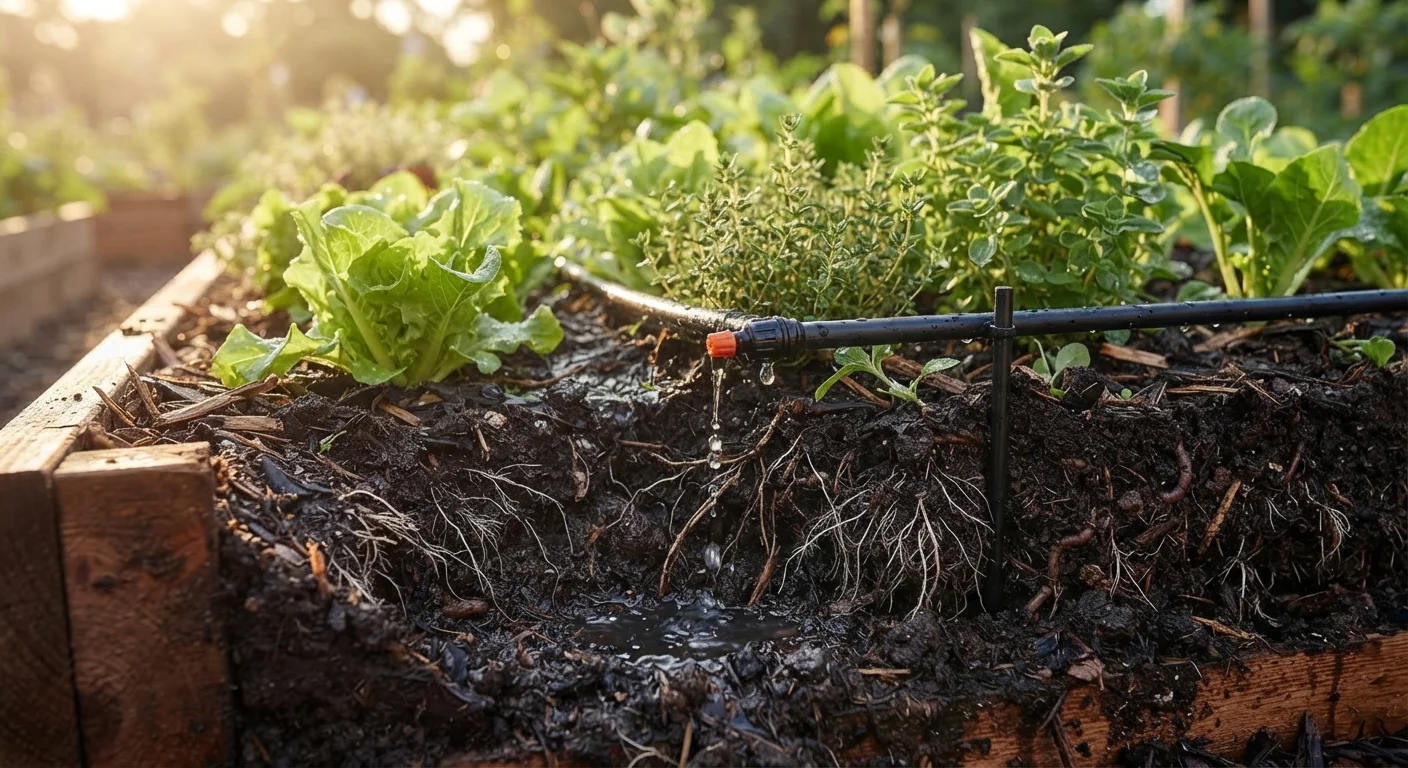
Technique: Directing water at the base of plants rather than overhead keeps foliage dry and puts moisture exactly where roots can access it. Soaker hoses and drip systems do this well. Hand-watering with a wand held low is a low-cost alternative.
50%
Outdoor water wasted through inefficient use
The U.S. Environmental Protection Agency estimates that roughly half of outdoor residential water is wasted due to overwatering, runoff, and evaporation from inefficient practices.
6-12 in
Root depth most vegetables need water to reach
University cooperative extension programs generally recommend that garden irrigation penetrate 6 to 12 inches to adequately support the root zones of common vegetables and perennials.
Seasonal and Plant-Specific Adjustments That Make a Difference
Water requirements shift considerably across the growing season and between plant types. Newly transplanted seedlings need more frequent watering until their roots establish - often daily during dry spells. Established shrubs and perennials generally need far less intervention once rooted.
During summer heat, container plants may need water daily because pots dry out much faster than in-ground beds. In cooler weather, the same containers may need watering only once or twice a week. The soil's appearance and the 'finger test' - pressing a finger 2 inches into the soil to check for moisture - are more reliable guides than any fixed schedule.
Mulching around plants is one of the most effective ways to reduce how often you need to water. A 2-3 inch layer of organic mulch (shredded leaves, straw, wood chips) slows evaporation significantly and also moderates soil temperature. It's a core recommendation in low-maintenance landscaping approaches for good reason.
Seasonal transitions also shift watering needs. As temperatures drop in fall, plants require less water overall - and overwatering during this period can damage roots heading into dormancy. Our fall garden prep checklist covers how to adjust your routine as the season winds down.