

Key Takeaways
- Observing your yard's sun, drainage, and access patterns before planting saves costly mistakes.
- Soil quality matters more than plant selection - most beginner failures trace back to poor soil.
- Start with a small, manageable area so you can build skills without feeling overwhelmed.
- Forgiving, fast-growing plants like lettuce, radishes, and herbs are ideal for first-year gardeners.
- Consistent, appropriate watering is more important than any fertilizer or gadget.
Start here
Assess Your Space Before You Buy Anything
Next
Choose the Right Garden Format
Then
Build Your Soil First
Almost ready
Selecting Plants for Your First Season
Ongoing
Watering, Maintenance, and What to Expect
Assess Your Space Before You Buy Anything
The most common beginner mistake is heading to the garden center before spending any time observing the actual yard. Before buying seeds, soil, or tools, spend a week watching how sunlight moves across your outdoor space at different times of day. Note which areas get full sun, which are shaded by buildings or trees, and where water pools after rain.
Also consider access: Where are the hose connections? How far will you be carrying a watering can? A garden that's inconvenient to reach tends to get neglected. Choosing a spot that's both sunny and easy to get to sets you up for consistency.
Full sun
A gardening term for areas that receive 6 or more hours of direct, unfiltered sunlight per day. Most vegetables and many flowering plants require full sun to grow well.
Soil amendment
Any material mixed into existing soil to improve its structure, drainage, fertility, or pH. Common amendments include compost, perlite, and lime.
Hardiness zone
A geographic classification system used in the US (published by the USDA) that indicates what plants can survive winter temperatures in a given area. Knowing your zone helps you choose plants that will actually survive your climate.
Last frost date
The approximate date in spring after which freezing temperatures are unlikely in your area. It's used to time when it's safe to plant cold-sensitive crops outdoors.
Transplant
A young plant that has already been started from seed, usually in a nursery or greenhouse, and is sold ready to plant directly into garden soil.
pH (soil)
A measure of how acidic or alkaline your soil is, on a scale from 0 to 14. Most vegetables grow best in slightly acidic to neutral soil, roughly between pH 6.0 and 7.0.
Once you've chosen a location, measure the area and sketch a rough diagram. Even a simple hand-drawn map helps you visualize spacing and avoid overcrowding - one of the most common reasons first-year gardens underperform.
Choose the Right Garden Format
New gardeners have two primary options: in-ground beds or raised beds. In-ground planting works with your existing soil and costs less to set up, but requires more initial soil work and is prone to drainage challenges. Raised beds offer better drainage, fewer weeds, and easier access - but they involve more upfront effort and expense to build or purchase.
For most beginners, starting with a single raised bed (4 feet by 8 feet is a practical size) or one small in-ground plot is preferable to starting large. You can always expand in year two once you understand what your space and schedule can realistically support. See our comparison of raised beds and in-ground gardening for a detailed breakdown of both approaches.
Smaller is smarter in year one
A 4×8 foot bed is genuinely enough to grow a meaningful amount of food and gain real experience. Gardeners who start too large often get overwhelmed by weeding and watering, and they burn out before the season ends. You can always add more space in year two once you know what you enjoy growing.
Build Your Soil First
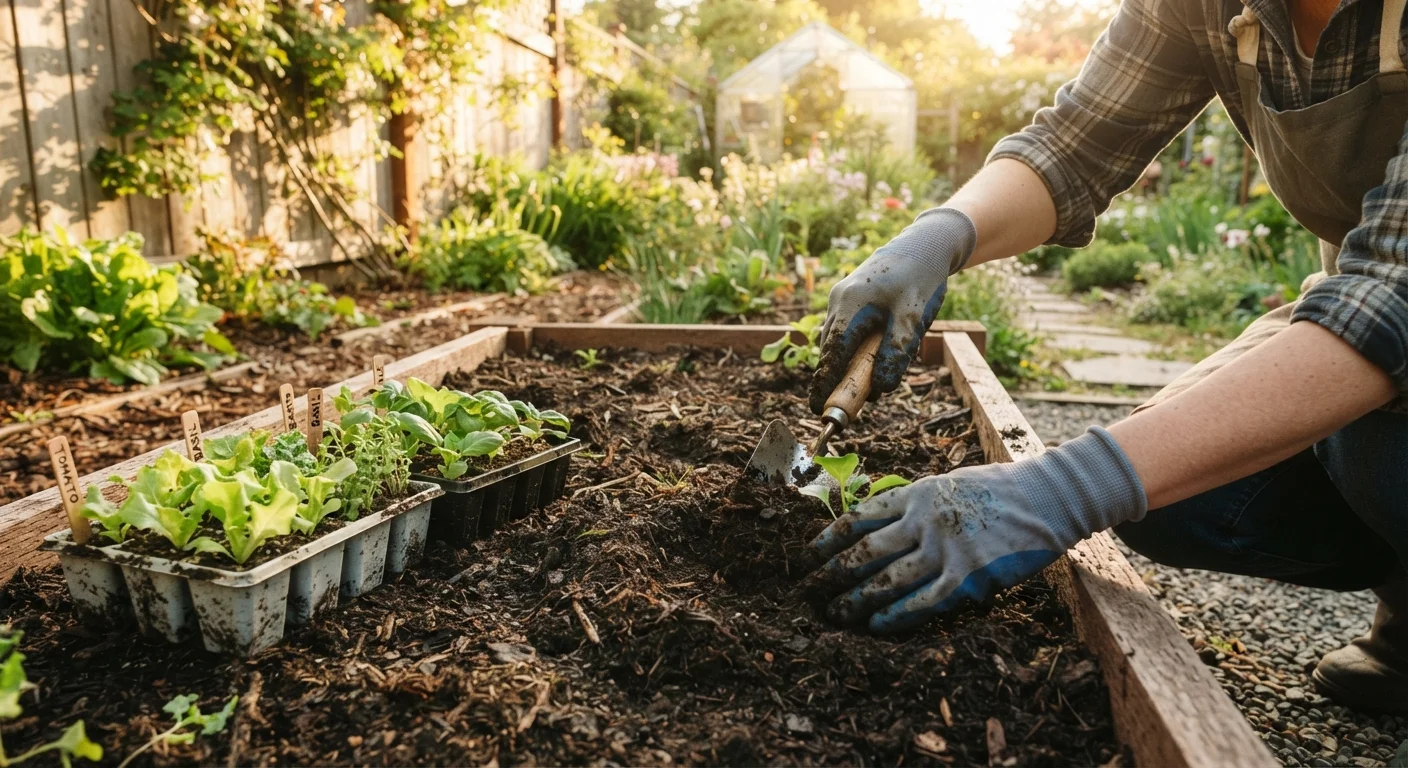
Experienced gardeners often say you should grow your soil before you grow your plants - and that's sound advice. Even if you're working with native ground soil, it almost certainly needs improvement before it can support a productive garden. Dense, compacted soil prevents roots from spreading; soil that drains too fast can't retain moisture long enough for plants to absorb it.
For most US yards, adding 2-4 inches of finished compost worked into the top 8-10 inches of soil is a reliable starting point. You can also get a basic soil test through your local cooperative extension office - they'll tell you the pH and nutrient levels and recommend specific amendments. Building a home compost system is a long-term strategy worth starting now, even if you use purchased compost for this season.
Selecting Plants for Your First Season
Resist the urge to grow everything at once. A focused plant list makes your first year manageable and teaches you what actually grows well in your specific conditions. Start with three to five crops or plant types that suit your climate, sun availability, and how much you'll use what you harvest.
Fast-maturing crops - radishes, lettuce, spinach, and green beans - are satisfying because they produce results quickly and show you what's working. Herbs like basil, parsley, and chives are low-maintenance and immediately useful in the kitchen. If you have a sunny spot and want a showpiece crop, cherry tomatoes are one of the most productive and forgiving options available.
Always buy transplants from reputable local nurseries rather than starting everything from seed in your first year - it's simpler, reduces failure points, and gets you growing faster. As you build confidence, you can start incorporating seed-starting in future seasons. Consider exploring companion planting strategies once you have a few crops chosen - some pairings can naturally discourage pests and improve yields.
Watering, Maintenance, and What to Expect
More plants are lost to improper watering than to any pest or disease. Overwatering is at least as common as underwatering, and shallow, frequent watering encourages roots to stay near the surface - making plants more vulnerable to heat and drought. Aim to water deeply and less often, allowing the soil to partially dry between sessions. A general guideline is approximately 1 inch of water per week, but this varies by plant type, soil, and weather.
Check on your garden every day or two, especially in the first month. Look for signs of stress: wilting during cooler parts of the day, yellowing leaves, or unusual spots. Early attention makes problems much easier to address. For guidance on developing a smarter watering routine, see watering principles every home gardener should know.
Don't skip pest and disease monitoring
Small problems - a few aphids, early signs of powdery mildew - become large ones if ignored for a week or two. Walk your garden every couple of days and look closely at leaf undersides and stems. Catching issues early usually means simple solutions; waiting too long can mean losing the crop entirely.
Your first year will involve surprises - plants that thrive unexpectedly, crops that disappoint, and weather that doesn't cooperate. That's entirely normal. Keep simple notes about what you planted, when you watered, and what worked. Those observations are the foundation for a stronger second season. When you're ready to plan ahead, a year-round seasonal gardening reference can help you stay ahead of each planting window.