

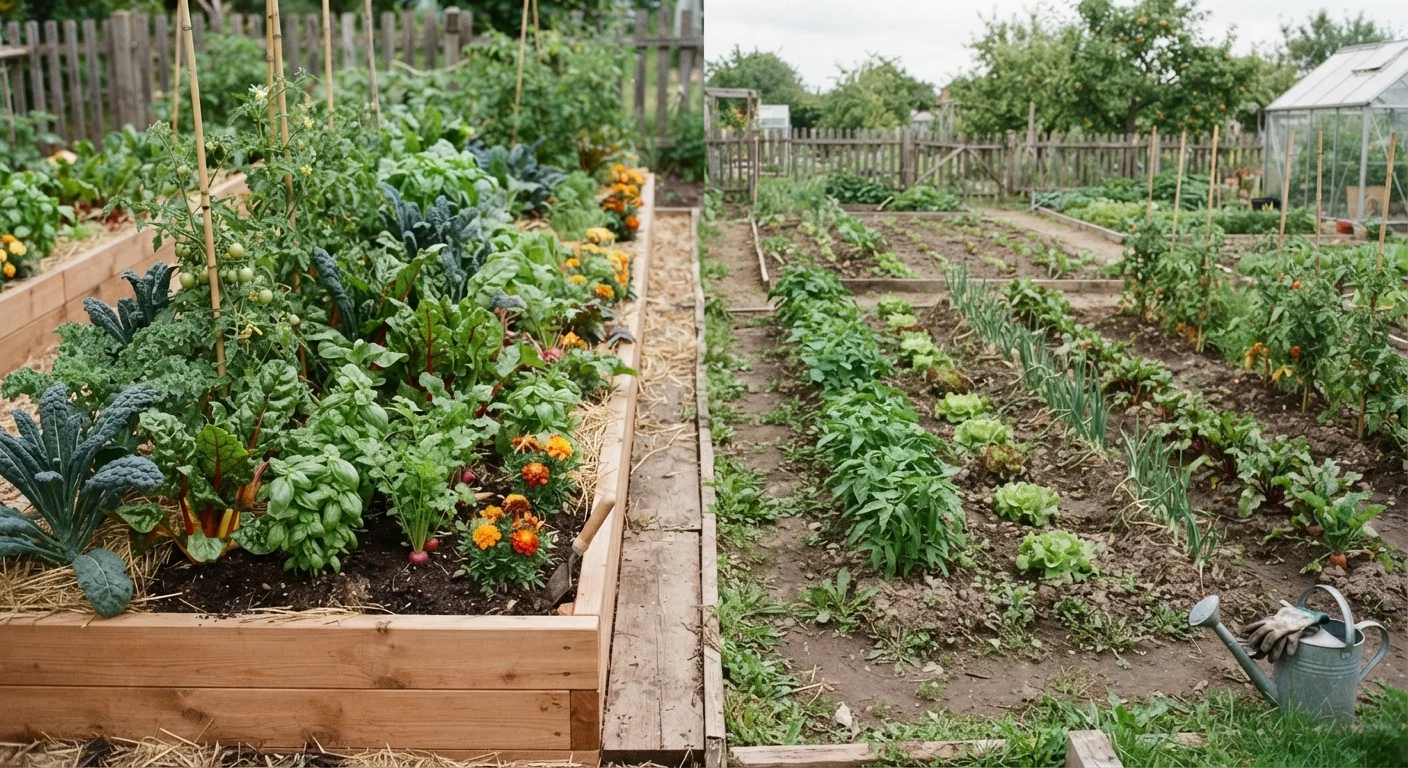
Key Takeaways
- Raised beds offer better drainage and soil control but require higher upfront investment.
- In-ground gardening is lower cost to start and suits large-scale or deep-rooted crops well.
- Your existing soil quality, yard space, and physical comfort all influence which method works best.
- Both approaches can thrive long-term when soil health and plant selection are prioritized.
Our Verdict
Neither raised beds nor in-ground gardening is universally superior - the right choice depends on your site conditions, budget, and what you want to grow. Raised beds deliver faster results and greater control, especially on challenging sites, while in-ground growing scales more economically and suits crops that need deep root runs. Many experienced gardeners use a combination of both.
| Best for | Recommended |
|---|---|
| Gardeners with poor native soil, limited mobility, or small urban spaces | Raised Beds |
| Those growing large volumes of crops or working with naturally good soil | In-Ground Gardening |
| First-time gardeners who want predictable results and manageable scale | Raised Beds |
| Gardeners prioritizing low startup cost and a long-term perennial planting strategy | In-Ground Gardening |
The Core Difference Between the Two Approaches
Raised bed gardening means growing plants in a contained structure - typically a wooden, metal, or composite frame - filled with a custom soil mix and positioned above the existing ground. In-ground gardening uses your yard's native soil directly, amended as needed, with plants growing in dug-out beds or rows at ground level.
The distinction matters because it shapes almost everything downstream: how much you spend upfront, how much control you have over soil conditions, which plants thrive, and how physically demanding maintenance becomes. If you're planning your first garden, understanding this trade-off early helps you avoid costly restarts later.
Cost, Setup, and Long-Term Investment
In-ground gardening has a clear cost advantage at the start. Digging, amending, and planting a ground-level bed requires minimal materials - primarily soil amendments, compost, and seeds or transplants. There's no structure to build or buy.
Raised beds carry higher initial costs. Lumber, galvanized metal, or composite materials, plus enough quality growing mix to fill the bed, add up quickly - especially for multiple beds or larger dimensions. A single 4×8-foot bed can easily require several cubic feet of blended growing medium.
Over time, the gap narrows. Raised bed soil tends to stay loose and productive with lighter annual top-dressing. In-ground beds often need more frequent and more intensive soil improvement, particularly if the underlying ground is compacted or clay-heavy. For more on diagnosing and fixing native soil, see common soil problems and corrections.
| Raised Beds | In-Ground Gardening | |
|---|---|---|
| Startup Cost | Moderate to high (materials + fill) | Low (amendments only) |
| Soil Control | High - custom mix from day one | Dependent on native soil quality |
| Drainage | Excellent - drains freely above grade | Variable - can pool on clay or compacted ground |
| Weed Pressure | Lower, especially early on | Higher - requires consistent mulching |
| Accessibility | Easier - less bending required | More bending and kneeling needed |
| Scalability | Limited by frame size and cost | Easily expanded at low cost |
| Best Crop Types | Compact vegetables, herbs, greens | Deep-rooted or sprawling crops |
Drainage, Soil Control, and Root Performance
One of the strongest arguments for raised beds is drainage. Because the growing medium sits above grade and is never walked on, it stays loose and well-aerated - conditions most vegetables strongly prefer. In heavy-rainfall regions or on clay-dominant sites, in-ground beds can become waterlogged quickly, stressing plant roots and promoting fungal issues.
Raised beds also let you dial in soil composition from the start. A well-blended mix of compost, topsoil, and coarse material gives you immediate control over texture, pH, and nutrient availability - factors that take years to achieve in native ground. To understand what's happening at the microbial level in any garden soil, our soil health explainer goes deep on the topic.
In-ground beds have their own advantage for root depth. Crops like parsnips, sweet potatoes, or sprawling squash benefit from unrestricted downward growth that a shallow raised bed can't always provide. If your native soil is workable, these crops often do better in the ground.
Test Native Soil Before Deciding
Before committing to either approach, consider getting an inexpensive soil test through your local cooperative extension service. If your native soil tests well for drainage, pH, and organic matter, in-ground gardening may serve you just as well at a fraction of the cost. If results show compaction, heavy clay, or contamination concerns, raised beds become a much more practical solution.
Maintenance, Accessibility, and Pest Pressure
For gardeners with back pain, limited mobility, or anyone who prefers less bending, raised beds are a significant ergonomic improvement. An 18- to 24-inch bed height substantially reduces strain during planting, weeding, and harvesting. This single factor drives many gardeners toward raised beds regardless of other considerations.
Weed pressure is typically lower in raised beds because you're starting with a weed-seed-free growing mix and the defined edges create a clear boundary. In-ground beds require more consistent weeding, particularly in the first two or three seasons before you've established good mulching habits. Mulching well - a technique covered in low-maintenance landscaping strategies - reduces this burden considerably in either system.
Soil pests like voles or gophers can be excluded from raised beds by lining the bottom with hardware cloth before filling. In-ground gardeners don't have this option and may need to rely on other deterrent strategies. Above-ground pests like aphids or caterpillars affect both systems equally.
Which Plants Perform Best in Each Setting
Raised beds excel for compact, high-yield crops: lettuce, herbs, tomatoes, peppers, radishes, carrots, and most brassicas. The controlled environment and good drainage suit these plants particularly well, and the defined space encourages intensive planting strategies like companion planting that maximize every square foot.
In-ground beds work well for larger sprawling crops - pumpkins, melons, corn, and climbing beans that need more horizontal or vertical space than a confined bed comfortably allows. Established perennial plantings like asparagus, rhubarb, and many berry bushes also integrate more naturally into the ground, where they can expand year after year. For guidance on mixing annual and perennial crops in your overall plan, see annual vs. perennial plant selection.
12-18 inches
Recommended raised bed depth for most vegetables
University cooperative extension programs generally recommend this depth range to support healthy root development in raised beds.
4 feet
Maximum recommended raised bed width
A 4-foot width allows most gardeners to reach the center from either side without stepping into the bed and compacting soil.