

Key Takeaways
- Healthy soil is a living ecosystem, not just an inert growing medium.
- Soil structure, pH, organic matter, and microbial life all interact to support plant health.
- Compaction, low organic matter, and pH imbalances are among the most common soil problems home gardeners face.
- Adding compost regularly is one of the most effective ways to improve soil across all three dimensions.
- Soil type varies by region and yard - testing your soil before amending it saves time and effort.
Soil Health
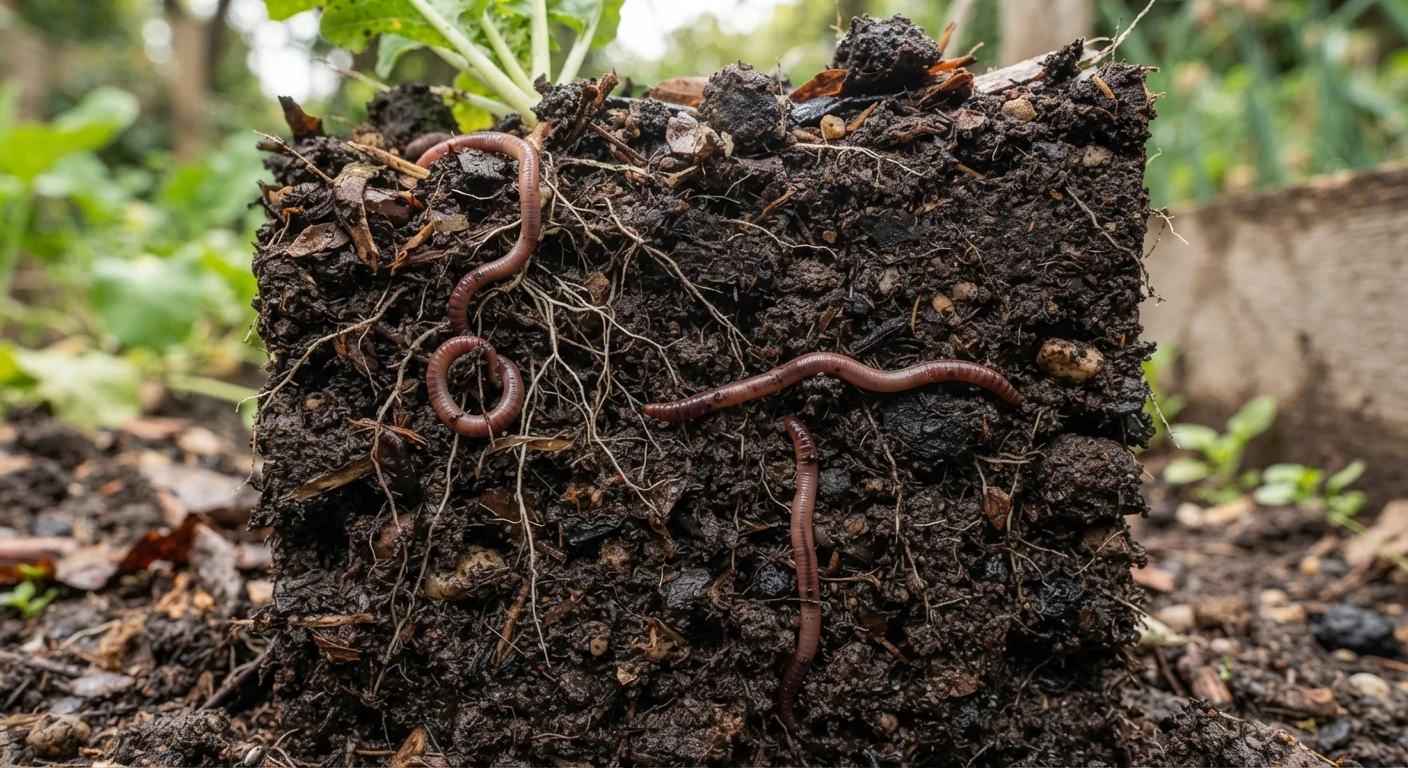
Soil health refers to the ongoing capacity of soil to function as a living ecosystem - supporting plant growth, filtering water, cycling nutrients, and sustaining the organisms that live within it. Healthy soil isn't just dirt; it's a complex community of minerals, organic matter, water, air, and billions of microorganisms working in concert. The goal of soil health in gardening is to maintain and improve that living system over time.
Soil scientists often define soil health through three interrelated dimensions: biological (microbial diversity and activity), chemical (pH, nutrient availability, organic matter content), and physical (structure, texture, drainage, and aeration).
The Living System Beneath Your Feet
Most gardeners think about soil as background - the stuff plants grow in. But soil is more accurately described as a dense, active ecosystem in which plants are participants, not residents of an empty medium. A single tablespoon of healthy garden soil can contain more microorganisms than there are people on Earth.
Understanding what soil actually does - and what it needs to keep doing it - is the most leveraged knowledge any gardener can have. If you're just getting started, our practical first-year gardening guide walks through how soil preparation fits into the broader picture of setting up a new garden.
~1 billion
Bacteria in one teaspoon of healthy soil
Estimates from soil science research consistently place bacterial counts in the billions per gram of productive agricultural or garden soil.
5%
Organic matter in ideal garden soil
Many soil scientists suggest that healthy garden soil contains roughly 3-5% organic matter by weight, though many US garden soils fall well below that threshold.
6.0-7.0
Optimal pH range for most vegetables
University extension programs across the US consistently cite this range as ideal for nutrient availability in most common vegetable and flower gardens.
Three Dimensions of Soil Health
Soil scientists evaluate soil health across three overlapping dimensions. Understanding them separately makes it easier to diagnose problems and choose the right solutions.
Physical Structure
Soil structure describes how individual particles - sand, silt, and clay - clump together into aggregates. Well-structured soil has pore spaces that allow air and water to move freely, which roots need to grow and breathe. Compacted soil collapses those pore spaces, making the environment hostile to both roots and beneficial organisms. Overworking wet soil and heavy foot traffic are two of the fastest ways to compact a garden bed.
Chemical Balance
Soil chemistry governs which nutrients are available to plants and in what quantities. pH is the most commonly discussed chemical factor - it controls whether nutrients like iron, calcium, and phosphorus stay soluble and accessible or become chemically locked. Most garden plants prefer a pH between 6.0 and 7.0. Beyond pH, levels of nitrogen, phosphorus, and potassium - along with secondary nutrients like calcium and magnesium - directly affect how plants grow, flower, and produce fruit.
Biological Activity
Bacteria, fungi, protozoa, nematodes, and arthropods form a food web entirely underground. Mycorrhizal fungi, for example, extend the effective reach of plant roots by orders of magnitude, trading water and minerals for carbon. Bacteria fix atmospheric nitrogen into forms plants can absorb. This biological layer is enormously productive - and enormously fragile when exposed to synthetic chemicals, physical disturbance, or prolonged drought.
Test Before You Amend
Resist the urge to add lime, sulfur, or heavy fertilizer without first running a soil test. Over-correcting pH or over-applying nutrients can create new imbalances. Most US cooperative extension services offer affordable tests, and many provide specific amendment recommendations for your region and crop type.
Organic Matter: The Common Thread
Organic matter - decomposed plant and animal material - is the ingredient that improves soil across all three dimensions simultaneously. It binds soil particles into stable aggregates (improving structure), releases nutrients slowly as it breaks down (improving chemistry), and feeds the microbial community that drives biological activity.
Compost is the most practical and accessible source of organic matter for home gardeners. Our guide to composting at home covers exactly how to build and maintain a system that turns kitchen and yard waste into a genuine soil amendment.
Mulching with wood chips, straw, or shredded leaves on top of garden beds serves a similar purpose - as surface mulch breaks down, it adds organic matter from above while also suppressing weeds and moderating soil temperature.
Common Problems and Where to Start
Most soil problems fall into recognizable patterns: compaction that prevents drainage and root penetration, pH imbalance that locks out nutrients, and low organic matter that leaves soil biologically depleted. These issues often compound each other - compacted soil tends to have poor aeration, which suppresses microbial life, which slows organic matter breakdown.
The single most useful first step for any gardener is a basic soil test. Cooperative extension offices in most US states offer low-cost testing, and results typically include recommendations tailored to your specific conditions. Without that baseline, amendments - lime, sulfur, compost, fertilizer - are essentially guesswork.
For a closer look at what goes wrong and how to systematically correct it, see our article on common soil problems and their fixes.
Soil Varies More Than You Might Expect
Soil composition can shift significantly even within a single yard - between a shaded north-facing bed and a sunny south-facing border, or between areas with different drainage histories. Testing multiple spots rather than a single sample gives you a more accurate picture of what you're actually working with.
Your choice of garden setup also affects how you manage soil. Raised beds vs. in-ground gardening each involve different soil management trade-offs worth considering before you commit to a layout.