

Key Takeaways
- Companion planting uses strategic plant pairings to naturally support garden health and productivity.
- Some combinations deter pests, while others attract pollinators or fix nitrogen in the soil.
- Not all pairings are beneficial - some plants actively inhibit each other's growth.
- The Three Sisters method (corn, beans, squash) is one of the most historically proven companion systems.
- Research supports some pairings; others are rooted in tradition and may vary by garden conditions.
Companion Planting
Companion planting is the practice of growing different plants in close proximity so they support each other's growth, health, or productivity. Certain plant combinations can naturally deter pests, attract beneficial insects, improve soil nutrients, or make better use of garden space. It's a time-tested gardening strategy used in both small home gardens and larger-scale growing operations.
Some companion planting benefits are well-documented through horticultural research, while others are based on long-standing traditional practice with less formal scientific backing - it's worth distinguishing between the two when evaluating specific pairings.
Why Plant Pairings Matter in the Garden
Gardens are ecosystems, not just collections of individual plants. The plants you grow influence each other through root chemistry, canopy shade, scent, and the insects they attract or repel. Companion planting takes advantage of these natural relationships to create conditions where plants support each other rather than compete.
For gardeners looking to grow food or flowers with fewer chemical inputs, thoughtful plant pairings offer a practical starting point. Whether you're working with a small raised bed or a larger in-ground plot, the underlying principle is the same: placing the right plants together can make your whole garden more resilient. If you're just getting started with a new garden space, our practical first-year garden guide covers how to plan and prepare your space before you plant.
Not All Companion Planting Claims Are Equal
Some companion planting combinations are backed by replicated horticultural research, while many others come from traditional gardening lore passed down over generations. Both have value, but it's worth noting when a pairing is well-documented versus anecdotal. Treat less-tested combinations as experiments worth observing rather than guaranteed outcomes.
How Companion Planting Works: The Core Mechanisms
Companion planting works through several distinct mechanisms, and understanding them helps you choose pairings with intention rather than guesswork.
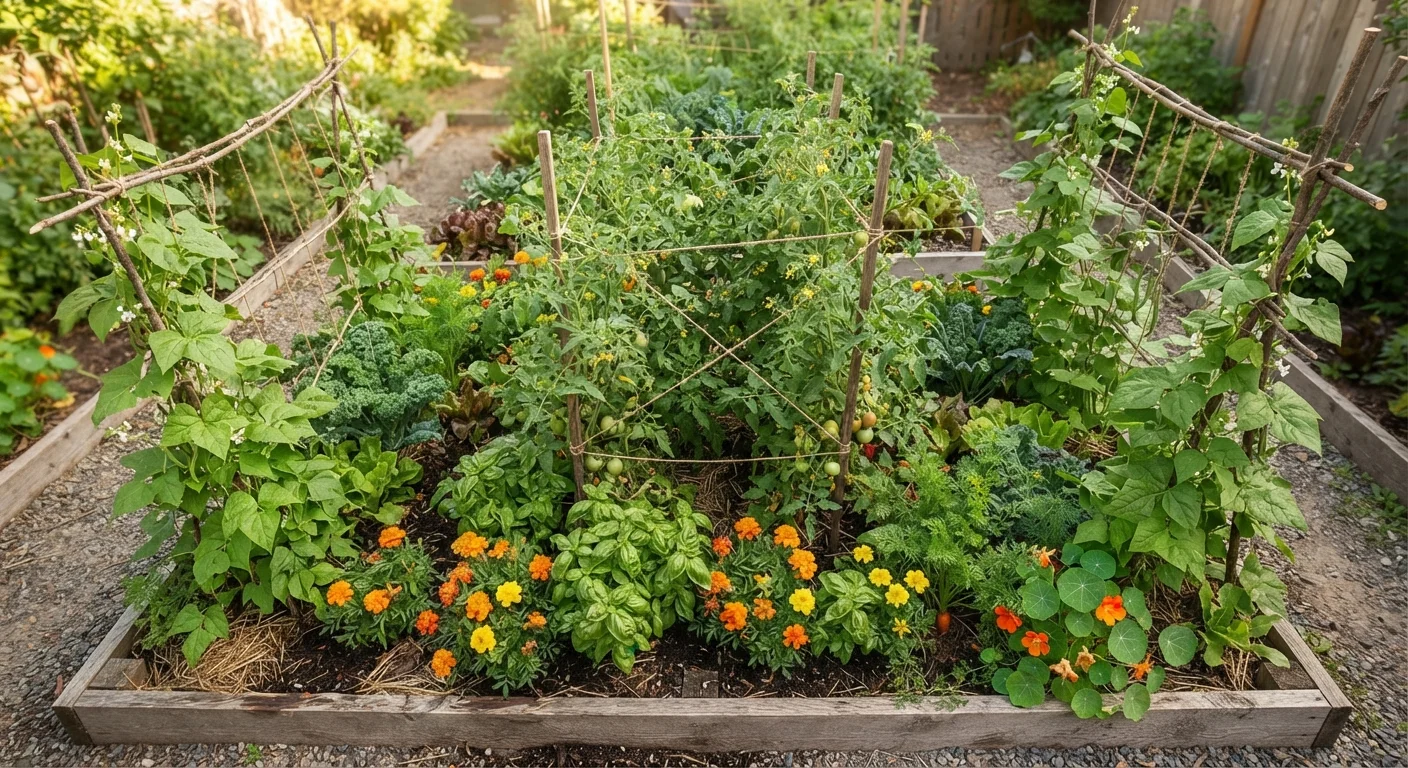
- Pest deterrence: Strongly scented plants like marigolds, basil, and nasturtiums can confuse or repel insects that locate host plants by smell. This doesn't guarantee pest-free results, but it can reduce pressure on vulnerable crops.
- Nitrogen fixation: Legumes - beans, peas, clover - host bacteria in their roots that convert atmospheric nitrogen into a form available to nearby plants. Growing legumes alongside heavy feeders like corn or squash is one of the most evidence-supported benefits in companion planting.
- Pollinator attraction: Flowering companions like borage, phacelia, and sweet alyssum draw bees and beneficial insects into the garden, which supports fruit set on vegetable crops.
- Physical support and space efficiency: Tall plants can shade low-growing neighbors that prefer cooler conditions, while sprawling plants can act as living mulch, reducing moisture loss and weed germination.
~80%
Of flowering plants depend on insect pollination
According to the USDA, the vast majority of flowering plants - including many food crops - rely on pollinators, making pollinator-attracting companions especially valuable.
Up to 30%
Potential reduction in pest damage with diversified plantings
Research published in horticultural and agroecology journals suggests that intercropping and plant diversity can meaningfully reduce pest pressure compared to monoculture plantings, though results vary by crop and pest type.
Classic Companion Planting Combinations
Some pairings have been refined over centuries of agricultural practice. The most famous is the Three Sisters - corn, beans, and squash - developed by Indigenous peoples of North America. Corn provides a structure for beans to climb, beans fix nitrogen that feeds the corn, and squash spreads across the ground, shading out weeds and retaining soil moisture. It remains one of the most complete and tested companion systems available to home gardeners.
Other commonly referenced pairings include:
- Tomatoes + basil: A classic kitchen garden combination. Basil is thought to repel aphids and whiteflies, though evidence is mostly observational.
- Carrots + onions: Onion scent may deter carrot fly, while carrot scent may confuse onion fly - a mutually protective pairing in theory.
- Roses + garlic: Garlic planted at the base of roses is a traditional method for discouraging aphids and black spot fungal issues.
- Brassicas + dill or chamomile: These flowering herbs attract predatory wasps that prey on cabbage worms and other brassica pests.
Plants That Don't Get Along
Companion planting is as much about avoiding poor pairings as it is about creating beneficial ones. Allelopathy - the process by which some plants release chemicals that suppress the growth of others - is a real phenomenon, though its effects in garden settings vary widely.
Fennel is the most commonly cited example: it's allelopathic to a broad range of vegetables and herbs, and most gardening references recommend keeping it isolated or in its own container. Black walnut trees similarly release a compound called juglone that is toxic to many plants, including tomatoes and peppers, within a significant root radius.
Onions and garlic can inhibit the germination and growth of beans and peas, so avoid interplanting these. Some gardeners also report that brassicas and strawberries compete poorly when grown in close proximity. When planning your layout, it helps to consult a companion planting reference chart and cross-check with your seasonal garden planning guide.
Keep a Simple Garden Journal
Noting what you planted where, and what you observed during the season, is one of the most effective ways to evaluate whether companion pairings are working in your specific conditions. Pest pressure, plant vigor, and yield can all vary significantly by microclimate, soil type, and local insect populations - your own records are often the most relevant data you have.
Putting Companion Planting Into Practice
Start small and observe. Choose one or two well-documented pairings for your first season - the Three Sisters if you have space, or tomatoes with basil and marigolds if you're working in a smaller bed. Track what you notice about pest pressure, plant vigor, and yield compared to previous seasons or nearby uncompanioned plants.
Companion planting pairs well with other sound garden practices. Good soil health, appropriate spacing, and consistent moisture management all contribute to how well your plants perform together. See our guide on smarter watering principles for techniques that support healthy root zones - a foundation that makes any planting strategy more effective.
If you're gardening in raised beds, these can be a particularly useful format for testing companion combinations, since the defined space makes it easier to isolate variables. Our article on raised beds vs. in-ground gardening can help you decide which setup suits your goals. And if you're interested in going further with ecologically minded planting, native plants can be excellent companions to traditional vegetable and flower gardens alike.
“Biodiversity in the garden is not just aesthetically pleasing - it creates functional resilience. When plants are diverse and well-matched, the whole system tends to be more stable and less vulnerable to any single pest or disease.”
— University Extension Horticulture Specialist, Cooperative Extension Service, Vegetable and Small Farm Systems