

Key Takeaways
- Native plants evolved alongside local wildlife, making them valuable food and habitat sources for native insects and birds.
- Once established, many native plants require significantly less watering and fertilizing than non-native ornamentals.
- Nativity is region-specific - a plant native to one US state may be non-native or invasive in another.
- Native plants support soil health by fostering relationships with local mycorrhizal fungi and beneficial microbes.
- Transitioning to natives doesn't require a full garden overhaul - even small plantings make a measurable ecological difference.
Native Plants
Native plants are species that naturally evolved in a specific region over thousands of years, without human introduction. Because they developed alongside local soils, climates, insects, and wildlife, they're finely tuned to the conditions of their home environment. This makes them well-adapted partners in local ecosystems rather than newcomers that need extra support to survive.
Nativity is geographically specific: a plant native to the Midwest may be non-native - and even invasive - when planted in the Pacific Northwest. Always verify nativity relative to your local ecoregion, not just the broader country.
What Makes a Plant 'Native'
The term "native" gets used loosely in gardening, but ecologists apply it with precision. A native plant is one that established itself in a region through natural processes - not through human transport or cultivation. These species co-evolved with local insects, birds, mammals, soil microbes, and climate patterns over millennia, which means they fill specific roles in the local food web that imported plants simply cannot replicate.
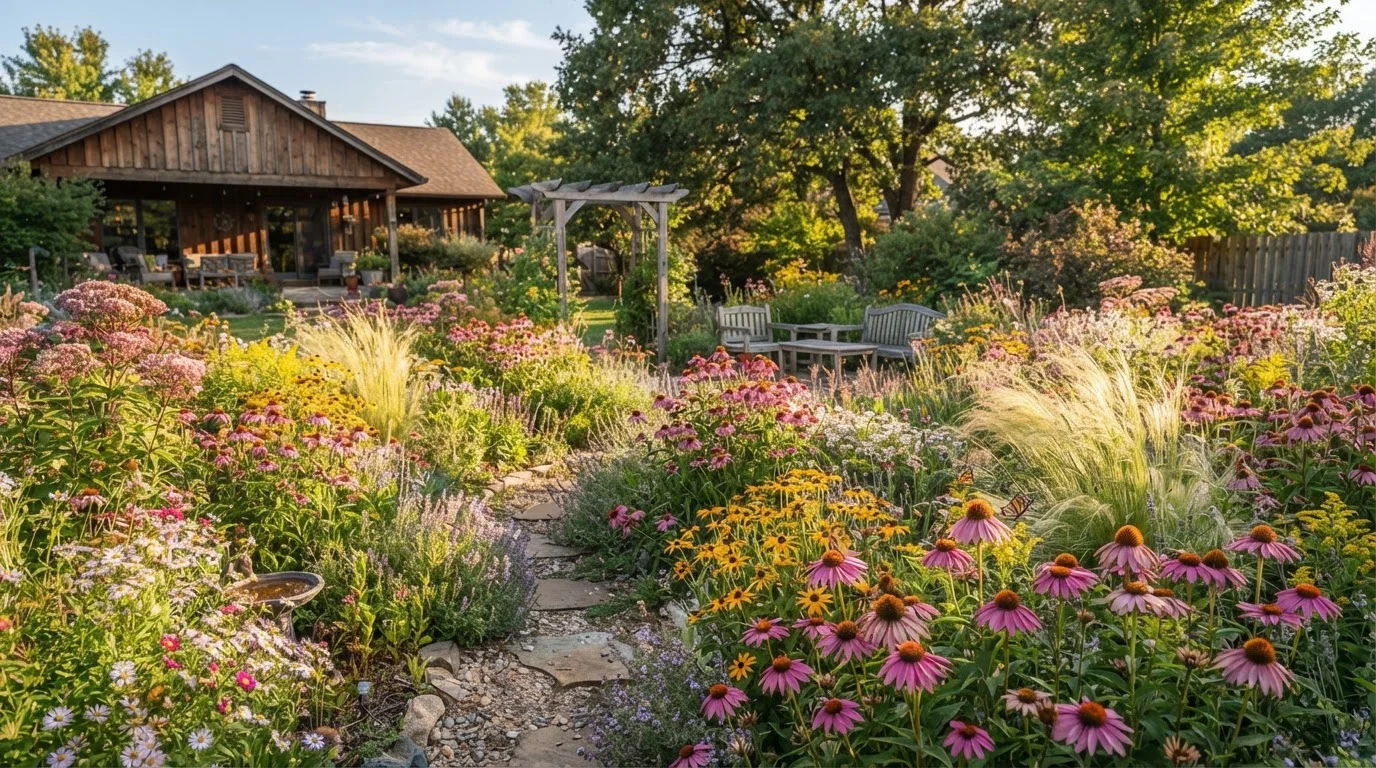
Nativity is not a national designation. A prairie coneflower (Echinacea purpurea) native to the central US may have no ecological relationship with the Pacific Coast's pollinators. When evaluating plants, aim to match them to your ecoregion - a geographic zone defined by shared ecology, not state lines. Your local cooperative extension office or native plant society can help you identify appropriate species for your specific area.
It's also worth distinguishing native plants from non-invasive plants. A plant can be non-invasive without being native, and while it may not actively harm an ecosystem, it also won't provide the deep ecological support that native species do. Understanding this distinction helps set realistic expectations for what native planting can accomplish.
Why Ecologists Consistently Recommend Them
The ecological case for native plants centers on a concept called co-evolution. Many native insects - particularly caterpillars, which are the primary food source for nesting songbirds - are chemically specialized to feed on specific plant families. When those plants disappear from a landscape, the insects that depend on them decline, and the birds that depend on those insects follow. Non-native plants, however beautiful, often can't substitute in this chain.
“Natives are not just pretty plants. They are the living infrastructure of entire food webs. Remove them, and you begin unraveling the web itself.”
— Doug Tallamy, Professor of Entomology and Wildlife Ecology, University of Delaware
Native plants also support soil health in ways non-natives often don't. They tend to form relationships with native mycorrhizal fungi - underground networks that improve nutrient exchange and water uptake. Disrupting these relationships by planting non-native species can gradually erode the biological richness of your garden's soil.
90%+
Of land birds rely on insects to feed nestlings
Research by entomologist Doug Tallamy highlights that most songbird species depend heavily on caterpillars, which are largely plant-specialist insects tied to native flora.
4x
More pollinator species in native vs. non-native plantings
Studies comparing native and non-native garden plantings have found significantly greater pollinator diversity and abundance in areas dominated by native species.
50-80%
Less irrigation needed after native plant establishment
University extension research across multiple US regions indicates that established native plantings typically require substantially less supplemental water than equivalent non-native landscapes.
From a water and maintenance standpoint, native plants are adapted to local rainfall patterns. Once their root systems are established - typically after one to two growing seasons - many require little to no supplemental irrigation. This aligns well with low-maintenance landscaping strategies that reduce long-term upkeep without sacrificing ecological value.
Setting Realistic Expectations
Native plants aren't a no-effort solution. The establishment period is real: newly planted natives need consistent moisture, weed suppression, and some patience. Expect the first season to look modest. Root development happens largely underground, and visible growth often follows in year two or three.
Match Plant to Site Before You Buy
Before selecting any native species, note your planting area's sun exposure, soil drainage, and typical moisture level throughout the year. A plant native to your region will still struggle if placed in conditions that don't match its natural habitat. Most native plant society websites include habitat preference data alongside species listings.
It's also worth knowing that "native" doesn't automatically mean pest-free or disease-resistant. Stressed plants - whether native or not - are more susceptible to problems. Proper siting matters: placing a shade-adapted native in full sun, or a dry-prairie species in a waterlogged bed, will undermine the plant's natural resilience. Understanding your yard's conditions before selecting species is essential.
For gardeners building a longer-term planting plan, pairing natives with complementary species can extend seasonal interest and maximize habitat value. Our guide to annuals vs. perennials can help you think through how native perennials might anchor a garden design that performs across multiple seasons. You might also explore companion planting strategies to see how grouping certain species together can improve outcomes for the whole planting.
Practical Ways to Get Started
You don't need to replace your entire landscape to make an impact. Even a single native tree or a small pollinator bed can meaningfully support local wildlife. A few practical starting points:
- Start with one area. A corner bed, a strip along a fence, or a spot that currently struggles with turf is a manageable starting point for introducing native species.
- Choose plants suited to your conditions. Assess sun exposure, soil drainage, and moisture before selecting species. Native plants placed in unsuitable conditions won't thrive any more than non-natives would.
- Source locally when possible. Plants grown from local seed stock are often better adapted to your specific region than those sourced from distant nurseries, even when the species name is the same.
- Layer your planting. Native ecosystems feature canopy trees, understory shrubs, ground-layer plants, and leaf litter. Mimicking this layering - even loosely - creates more habitat value than a flat bed of wildflowers alone.
Refer to seasonal garden planning guidance to time your native plant introductions appropriately, since fall is often the ideal planting window for many native perennials across much of the US.