

Key Takeaways
- Asphalt shingles are the most widely used option due to their lower upfront cost and ease of installation.
- Metal roofing offers exceptional longevity and performs well in both high-wind and heavy-snow climates.
- Tile and slate are the heaviest materials and typically require structural reinforcement before installation.
- Climate, roof pitch, local building codes, and budget all significantly influence which material suits a given home.
- All four materials require professional installation; some also need permits or inspections before work begins.
Our Verdict
No single roofing material is universally superior - the right choice depends on climate, structural capacity, budget, and aesthetic priorities. Asphalt suits most budgets and climates, metal rewards those prioritizing longevity, while tile and slate deliver premium durability and curb appeal where structure allows.
| Best for | Recommended |
|---|---|
| Homeowners seeking lower upfront cost and easy replacement | Asphalt Shingles |
| Those prioritizing long-term durability in high-wind or snowy regions | Metal Roofing |
| Homes in hot, dry climates requiring heat-resistant materials | Tile (Clay or Concrete) |
| Historic or high-end properties with reinforced structural framing | Slate |
Understanding What Sets Each Material Apart
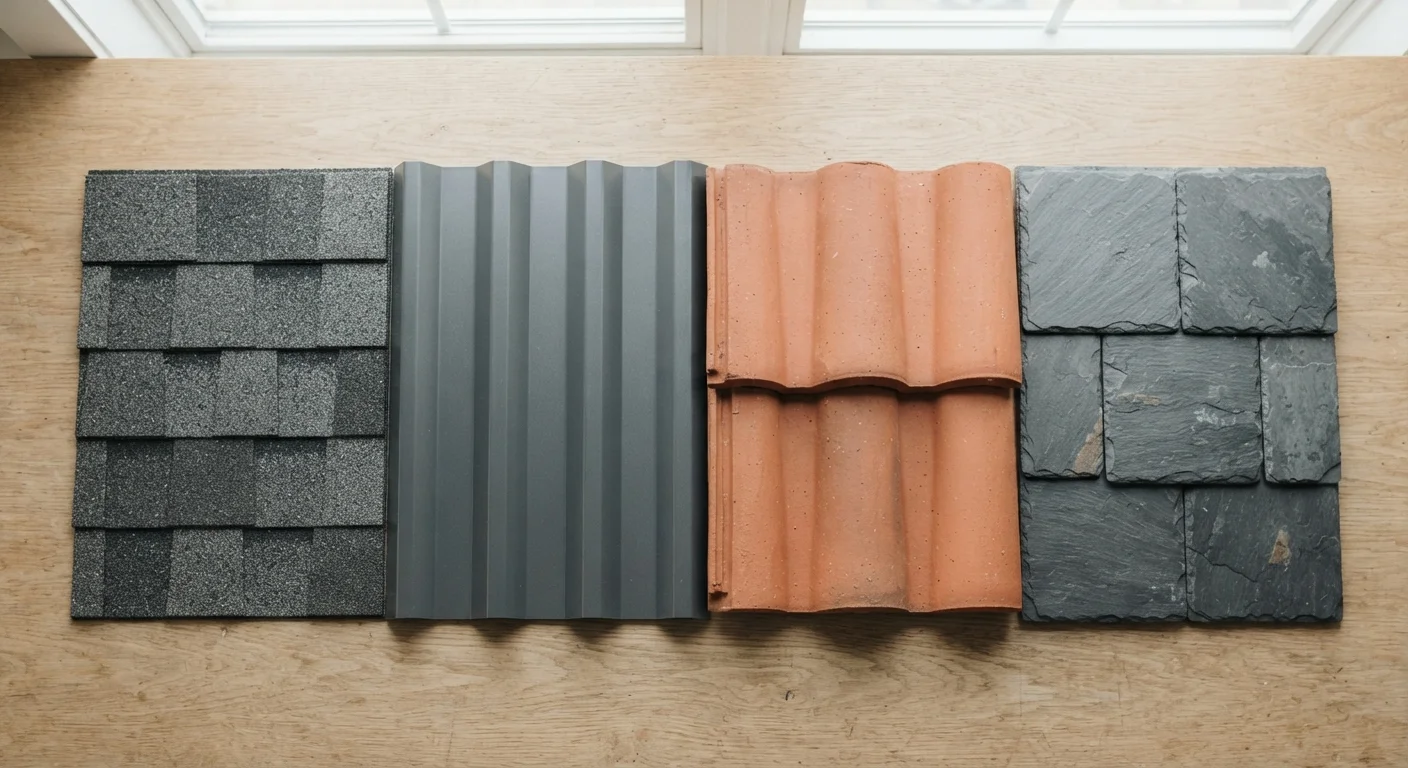
Choosing a roofing material isn't simply a matter of picking a look you like. Your home's structural capacity, local climate, HOA guidelines, and long-term ownership plans all factor into the decision. This comparison covers the four most common residential roofing materials in the US - asphalt shingles, metal, tile (clay and concrete), and natural slate - evaluated across durability, weight, climate suitability, maintenance demands, and installation complexity.
As you work through this, keep in mind that roofing is a major home investment. The ongoing costs of homeownership extend well beyond installation day, so factoring in maintenance and lifespan is just as important as the initial price comparison.
| Asphalt Shingles | Metal | Clay/Concrete Tile | Natural Slate | |
|---|---|---|---|---|
| Typical Lifespan | 20-30 years | 40-70 years | 30-50+ years | 75-150+ years |
| Approximate Weight (per sq ft) | 2-4 lbs | 1-4 lbs | 9-12 lbs | 10-15+ lbs |
| Structural Reinforcement Needed | Rarely | Sometimes | Usually | Almost always |
| Climate Suitability | Most climates | All climates | Hot, dry, or coastal | Temperate to cold |
| Installation Complexity | Low to moderate | Moderate to high | High | Very high |
| Maintenance Demand | Moderate | Low | Low to moderate | Low (specialist repairs) |
| Relative Cost | Lower | Moderate to high | Moderate to high | Highest |
Asphalt Shingles: The Practical Workhorse
Asphalt shingles dominate the US residential market for a reason: they're relatively affordable, widely available, and can be installed by most licensed roofing contractors. They come in three-tab and architectural (laminate) styles, with architectural shingles offering better wind resistance and a dimensional appearance.
Typical lifespan ranges from 20 to 30 years, though this varies considerably based on climate and ventilation quality. Asphalt performs adequately across most US climate zones but can degrade faster in extreme heat or areas with significant freeze-thaw cycling. One advantage: individual damaged shingles are straightforward to replace without disturbing the entire roof.
Check Attic Ventilation Before You Re-Roof
Poor attic ventilation is one of the leading causes of premature asphalt shingle failure. Heat and moisture buildup can warp sheathing and accelerate granule loss. Before any roof replacement, ask your contractor to evaluate ventilation and, if needed, upgrade ridge vents or soffit vents as part of the project scope.
Metal Roofing: Longevity Under Pressure
Metal roofing - available in standing seam panels or metal shingles - has a lifespan commonly cited between 40 and 70 years when properly installed and maintained. It handles high winds, heavy snow loads, and hail better than asphalt, and its slick surface sheds debris and precipitation efficiently.
Weight is a moderate concern: steel and aluminum panels are lighter than tile or slate but heavier than asphalt, so a structural assessment is advisable for older homes. Metal roofs also have strong energy-efficiency credentials - reflective coatings can reduce radiant heat transfer, which aligns with findings discussed in our article on energy-efficient home upgrade myths. Noise during rain is a common concern, though modern underlayments significantly reduce it.
~70%
US homes with asphalt shingle roofs
Asphalt shingles remain the dominant residential roofing choice in the US, according to industry estimates from the National Roofing Contractors Association.
40-70 yrs
Typical metal roof lifespan
Metal roofing manufacturers generally cite a lifespan of 40-70 years depending on material type, coating quality, and climate exposure.
10-15+ lbs
Slate weight per square foot
Natural slate's high weight per square foot means most homes require a structural engineering assessment before installation can proceed.
Tile and Slate: Premium Materials With Structural Demands
Clay and concrete tiles are common in the Southwest and Florida, where their thermal mass and moisture resistance suit hot, dry, or coastal climates. Clay tile can last 50 years or more; concrete tile typically 30-50 years. Both are heavy - concrete tile runs roughly 9-12 lbs per square foot - making structural evaluation essential before installation.
Natural slate is among the most durable roofing materials available, with some installations lasting well over a century. It's also the heaviest option, often exceeding 15 lbs per square foot, and commands the highest installation cost due to the specialized labor required. Slate is non-porous, fire-resistant, and visually distinctive, making it a popular choice for historic and high-end homes.
Both tile and slate can crack under impact and require skilled repair work - finding experienced installers in some regions can be a challenge. Before committing, verify whether your local building department requires permits or inspections for a full roof replacement, as requirements vary by jurisdiction.
Making the Right Call for Your Home
The best roofing material for your home emerges from the intersection of your structural reality, climate zone, and long-term plans. If you're in a high-humidity or freeze-thaw region, asphalt or metal are typically more forgiving. In arid, high-heat environments, tile's thermal mass offers real benefits. If you're restoring a historic property with robust framing, slate may be worth the premium.
Roof replacement is also a good moment to evaluate adjacent systems - insulation, ventilation, and underlayment quality all influence how well any material performs. Just as flooring decisions depend on the subfloor beneath, roofing performance is shaped by what's underneath and around it.
Always work with a licensed, insured roofing contractor, obtain at least two or three written estimates, and ask specifically about structural assessments and local permit requirements before any work begins.