

Key Takeaways
- Neglected spaces like junk drawers and entryway floors create daily friction that compounds over time.
- Organizing forgotten zones often takes less time than people expect and delivers outsized relief.
- Digital clutter - downloads folders, desktop files - functions exactly like physical clutter in terms of mental load.
- Under-sink cabinets and car interiors are common blind spots that affect both function and mood.
- Consistent small habits prevent forgotten spaces from reverting to chaos after a single tidy session.
The Spaces You Walk Past Every Day
Every home has zones that don't make it onto the weekend chore list - corners, drawers, and surfaces that accumulate quietly until the chaos is impossible to ignore. The problem isn't laziness; it's that these spots rarely trigger a strong enough visual alarm to demand attention. Meanwhile, they quietly drain time, mental energy, and sometimes money.
Research in environmental psychology consistently links disordered environments to elevated stress and reduced focus - and that effect doesn't care whether the clutter is in plain sight or buried in a cabinet. As our look at the hidden costs of a disorganized home explores, the real price of clutter shows up in your daily decision-making long before it shows up visually.
The list below targets the specific forgotten zones that tend to matter most - and explains why each one deserves a dedicated fix.
The Junk Drawer
Almost every American household has one - a drawer where batteries, twist ties, spare keys, and mystery cords coexist without logic. The junk drawer isn't inherently bad; the problem is when it becomes the default destination for anything without a home. When that happens, things you actually need - a working pen, a tape measure, a spare fuse - disappear into the chaos.
A useful approach: empty it completely, discard anything broken or unidentifiable, and assign only a few specific categories to live there (tools under 6 inches, batteries, tape). Small divider trays keep categories from merging again. The goal isn't perfection - it's functional retrieval in under five seconds.
A junk drawer is only useful when you can find things in it within five seconds.
The Entryway Floor
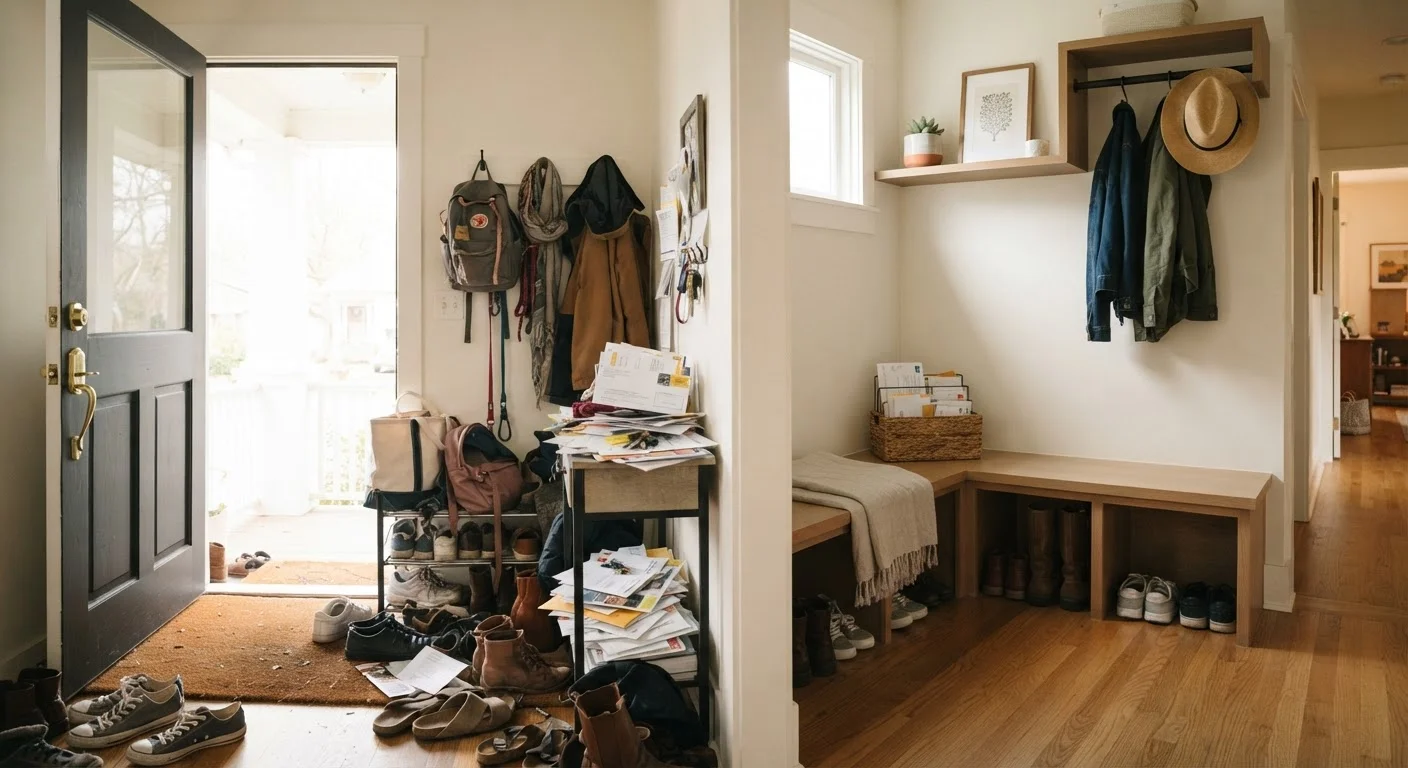
Shoes multiply near doors. So do bags, umbrellas, and sports equipment. The entryway floor is one of the highest-traffic zones in any home, and when it's cluttered, it sets a stressed, chaotic tone before you've even taken your coat off - and creates a frustrating obstacle on the way out the door.
Containing this zone means providing clear, accessible homes for the items that genuinely belong there. A low bench with under-seat cubbies, wall hooks at reachable heights, and a single tray for shoes-in-use can transform the entryway from an obstacle course into a functional transition space. Vertical storage strategies can be especially effective in narrow entryways where floor space is limited.
Entryway clutter sets your home's emotional tone before you've even removed your shoes.
Under-Sink Cabinets
In kitchens and bathrooms alike, the cabinet under the sink tends to become a graveyard for half-empty cleaning products, mystery bottles, and things people meant to throw away but didn't. The awkward shape - pipes running through the middle - makes it easy to ignore, which is exactly why it gets worse over time.
Start with a full purge: discard anything expired, empty, or redundant. Then use stackable bins or small caddies sized to fit around the plumbing. Storing like items together (cleaning supplies in one caddy, spare toiletries in another) makes restocking intuitive and prevents the gradual slide back into disorder.
Under-sink cabinets reward organization because the awkward shape makes bad habits easy to reverse.
The Car Interior
Many people maintain tidy homes but live out of chaotic cars - coffee cups in the cupholder, gym bags on the back seat, paperwork in the door pocket. Because the car exists in a separate mental category from the home, it escapes the same organizational attention, even though most people spend significant daily time in it.
A simple system helps: a small trash receptacle (a clip-on container works well), one designated bag for items that travel in and out regularly, and a rule that nothing lives in the car permanently unless it genuinely needs to. A monthly five-minute reset prevents the slow accumulation that makes the task feel overwhelming.
Most people spend more time in their car than they realize - it deserves the same organizational care as any room.
Digital Downloads and Desktop Files
Digital clutter is real clutter. A desktop covered in unnamed files or a downloads folder holding three years of PDFs creates the same kind of low-grade friction as a cluttered countertop - it slows retrieval, creates decision fatigue, and produces a vague but persistent sense of disorder. For anyone who works from home, it can meaningfully affect productivity.
The fix is a simple folder structure with broad categories (Finance, Home, Work, Reference) and a recurring habit - monthly works for most people - of sorting downloads and clearing the desktop. Deleting duplicates and files you'll never use again is the digital equivalent of decluttering room by room: methodical, low-stakes once you start, and immediately satisfying.
Digital clutter creates the same mental friction as physical clutter - just harder to see.
The Space Behind and Under Furniture
Under the bed, behind the sofa, and along the back walls of closets are zones that accumulate items through gravity and avoidance. Things roll back there, get kicked out of the way, or get stored temporarily and forgotten. Over time these zones become dense with items no one can name.
Clearing these areas every few months - especially under beds and behind large furniture - serves two purposes: it removes clutter, and it allows you to reassess what's being stored out of sight. If you don't know what's there, it probably shouldn't be there. A seasonal declutter checklist makes these sweep-throughs feel routine rather than overwhelming.
If you don't know what's stored under your furniture, that's the first sign it needs a reset.
Building Habits That Keep These Spaces in Check
Tackling a forgotten zone once is satisfying. Keeping it organized is the real challenge. Most systems collapse not because they're wrong, but because they weren't designed around actual household behavior. Understanding why organizing systems fall apart can help you design solutions that stick rather than ones that look good for two weeks.
Start With a 15-Minute Reset
Rather than planning a full day of reorganization, pick one forgotten zone and commit to just 15 minutes. Remove everything, wipe the space down, and only return what genuinely belongs there. That single action often provides enough momentum to tackle the next zone within days. Small resets compound quickly into lasting change.
If your household includes multiple people with different habits and thresholds for clutter, the shared zones on this list - entryways, car interiors, and digital spaces - will need agreed-upon systems, not just personal resolutions. Organizing a home when people have different habits offers practical approaches for exactly that situation.
Start with just one zone from this list. Give it a complete reset, then assign it a five-minute weekly maintenance window. That small investment is usually all it takes to prevent full backslide.
This article is for general informational and organizational guidance only. Results will vary based on individual household circumstances and habits.