

Key Takeaways
- Tipping is expected in the US but can be considered rude in Japan and parts of East Asia.
- Eating with your hands is proper etiquette in many parts of India, the Middle East, and West Africa.
- Slurping noodles in Japan signals enjoyment; in most Western cultures it reads as impolite.
- Splitting the bill evenly is common in the US but uncommon or awkward in many European and Asian contexts.
- Leaving food on your plate carries different meanings - waste in some cultures, satisfaction in others.
- Cultural dining missteps are rarely catastrophic, but awareness goes a long way toward mutual respect.
Why Dining Etiquette Matters When You Travel
Few moments reveal a traveler's cultural awareness quite like sitting down at a table. Ordering food is universal; how you behave while eating it is anything but. Dining etiquette is one of the most intimate windows into a culture's values - what it considers respectful, communal, or offensive is often rooted in centuries of tradition.
The good news is that genuine curiosity and a willingness to observe go a long way. Most hosts and restaurant staff around the world recognize an earnest traveler who's trying. Understanding the basics before you arrive, however, transforms a meal from a potential minefield into one of the most memorable exchanges travel can offer. As our guide to cultural greetings illustrates, the principles that shape physical customs extend naturally to the table.
20%
Standard tip expected in US restaurants
According to the Pew Research Center, tipping norms in the US have risen over time, with 20% now widely considered the baseline for good service.
0%
Tipping rate expected in Japan
Japan's service culture operates on the principle that quality service is a professional standard, and tipping is generally declined or seen as impolite.
6+
Major world regions with distinct dining norms
Anthropologists and cultural researchers have documented significant variation in mealtime customs across Asia, Europe, Africa, the Americas, and the Middle East.
Tipping: Where It's Expected, Insulting, or Simply Absent
In the United States, leaving 18-20% is a social contract - servers depend on tips as a primary income source, and skipping them reads as a deliberate slight. Canada and parts of Latin America follow similar expectations, though percentages vary.
Cross the Pacific and the dynamic reverses sharply. In Japan, tipping is generally considered rude - the logic being that excellent service is a professional standard, not an extra to be rewarded with cash. Leaving money on the table can cause confusion or even embarrassment. Similar norms apply in South Korea and China, particularly outside tourist-heavy areas.
Much of continental Europe occupies a middle ground. In France, Germany, and Italy, rounding up the bill or leaving a few coins is appreciated but not obligatory. Service charges are often included in the total. Always scan the bill before adding extra - paying twice for service is an easy mistake to make.
Check the Bill Before Tipping Abroad
Many restaurants in Europe, Australia, and parts of Asia automatically include a service charge - often labeled 'service compris' or a percentage added to the total. Adding a tip on top of an included charge is unnecessary and easy to overlook. Make it a habit to scan the bottom of the bill before leaving extra cash.
Utensils, Hands, and Chopsticks: How You Eat Signals Respect
The Western assumption that forks and knives are the default is quickly challenged. Across much of South Asia, the Middle East, and West Africa, eating with your right hand - and specifically, never the left - is both traditional and courteous. The left hand is historically associated with hygiene tasks and considered unclean in many of these cultures. Observing which hand locals use and mirroring it thoughtfully demonstrates awareness.
Chopstick etiquette in East Asia carries its own code. In Japan and China, sticking chopsticks upright in a bowl of rice mimics funeral offerings and is deeply inauspicious. Passing food chopstick-to-chopstick is similarly tied to funeral rites and should be avoided. Instead, place food on a shared plate or the edge of someone's bowl.
Watch the table for 60 seconds before reaching for anything - observe how locals hold their utensils, whether dishes are passed or placed, and when people start eating.
Most dining missteps happen in the first moments of a meal. Observation costs nothing and almost always reveals the local protocol before you need to act.
When uncertain about tipping, a quiet ask to a local colleague or hotel concierge before you dine saves both awkwardness and offense.
Tipping norms shift not just by country but by city, restaurant type, and even neighborhood - insider knowledge is more reliable than any rule of thumb.
In many cultures, using cutlery when the local custom is hands - or fumbling with chopsticks when a fork is offered - can read as reluctance rather than respect. Lean into the local method when it feels appropriate and safe to do so.
Shared Plates, Pacing, and Paying the Bill
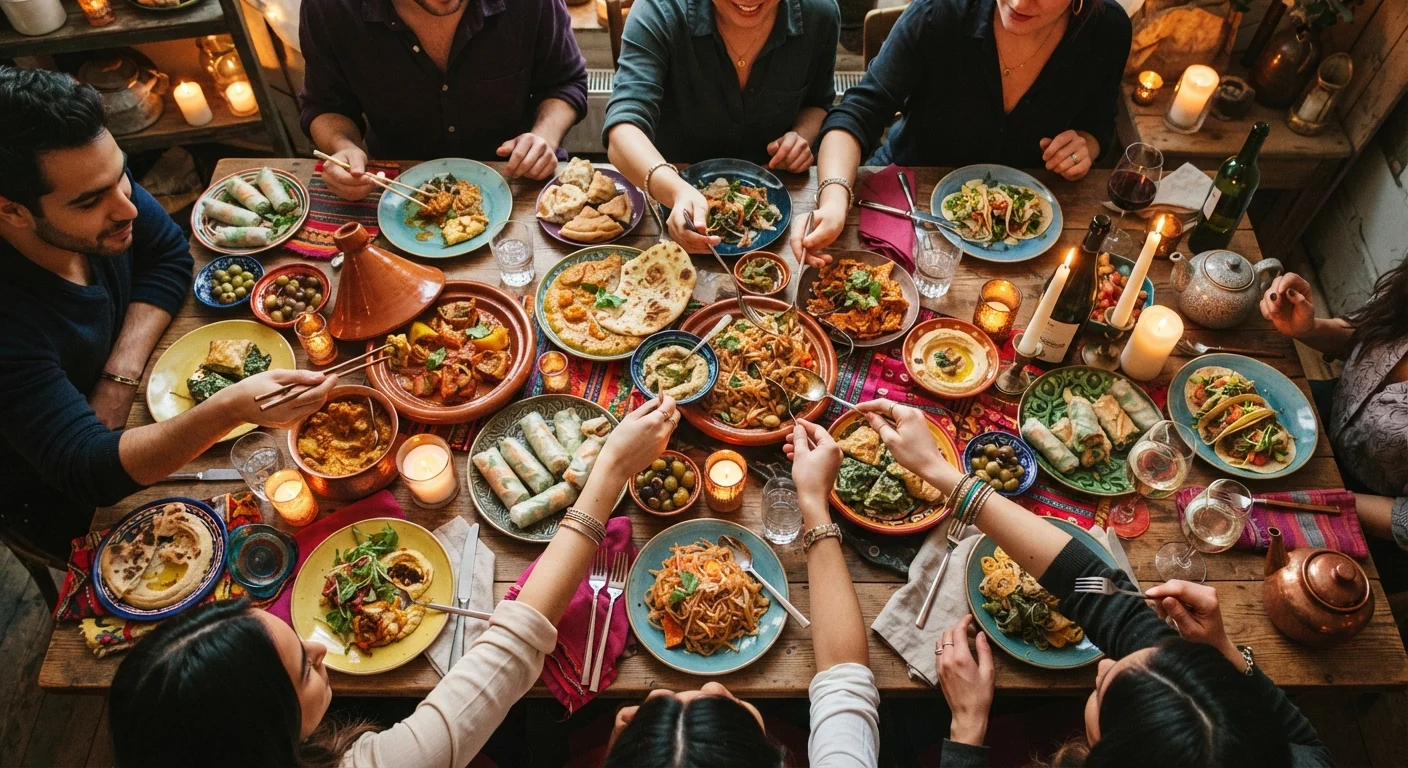
The concept of individually portioned meals is largely a Western norm. Across the Middle East, much of Asia, and parts of Latin America, meals are communal - dishes arrive at the center of the table for everyone to share. Serving yourself before elders or guests have taken food, or dominating a shared dish, can be perceived as inconsiderate.
Pacing matters too. In Spain and Greece, meals are unhurried social events; asking for the check the moment you've finished eating signals that you're eager to leave. In contrast, a table in New York expects efficient turnover. Reading the room - and the culture - determines when it's appropriate to signal for the bill.
Who pays is its own negotiation. In China, it's common for one person to insist on covering the entire meal as a gesture of generosity, and a back-and-forth over who pays is part of the ritual. Splitting costs evenly among strangers or acquaintances is far less common than in the US. Understanding these dynamics connects directly to the broader subject of hospitality as a cultural value.
Refusing Food Can Offend in Some Cultures
In many Middle Eastern, South Asian, and East African settings, a host offering food repeatedly is expressing sincere hospitality - and a quick, firm refusal may feel dismissive or even rude. A gracious approach is to accept a small portion initially, then decline gently with thanks on subsequent offers. Context and tone matter more than the word 'no.'
Noise, Slurping, and What Your Body Language Communicates
In Japan, audibly slurping ramen or soba is not only acceptable - it's widely understood as a sign of enjoyment and even helps cool the noodles. The same sound at a French bistro would draw stares. Context is everything.
Leaving food on your plate sends conflicting signals depending on where you are. In some parts of China, a completely empty plate can suggest the host didn't provide enough food; leaving a small amount signals satisfaction. In many Western contexts, finishing your plate is a compliment. And in parts of the Middle East and South Asia, declining a second serving too quickly may feel dismissive - hosts may offer food multiple times before accepting a polite refusal.
Body language at the table also carries weight. In some cultures, passing dishes or gesturing with the left hand is impolite. Pointing with utensils, talking while chewing, or leaning across the table may be unremarkable at home but jarring elsewhere. These patterns intersect with the broader norms covered in public behavior across cultures.
Regional Quick-Reference: Key Rules by Area
No guide can capture every nuance of every culture, but the following regional patterns give travelers a reliable starting framework:
- East Asia (Japan, South Korea, China): No tipping in most contexts; observe chopstick etiquette carefully; wait for elders to begin eating first.
- South Asia (India, Sri Lanka, Bangladesh): Eating with the right hand is common and often preferred; accept food offerings graciously; vegetarian options are widely expected.
- Middle East: Meals are communal and generous; accept tea or coffee as a gesture of welcome; alcohol may not be available or appropriate in many settings.
- Southern Europe (Italy, Spain, Greece): Meals are slow and social; splitting the bill is less common; espresso after dinner is customary, not optional for most locals.
- West Africa: Communal eating from a shared bowl is traditional in many regions; right-hand etiquette applies; hospitality is taken seriously.
- United States and Canada: Tipping is expected; individual plates are standard; efficiency at the table is generally valued.
Dining customs are, at their core, an expression of how a culture defines care, community, and respect. Traveling with that awareness - and pairing it with the insights in our guide to dress norms worldwide - makes for richer, more respectful encounters wherever you sit down to eat.
“Food is our common ground, a universal experience. But how we share it reveals everything that makes us different - and everything that connects us.”
— James Beard, American culinary author and food educator