

Key Takeaways
- Lisbon offers a compelling mix of historic culture, coastal access, and walkable neighborhoods at a relatively accessible price point.
- Fado music and Moorish-influenced Alfama district give the city a cultural identity unlike any other European capital.
- Steep hills and uneven cobblestones can make navigation challenging, especially for visitors with mobility considerations.
- Day trips to Sintra and Cascais beaches are easily reachable, extending what a visit can offer.
- Lisbon's growing popularity means some central areas are experiencing tourist crowds and rising costs.
Authentic cultural identity rooted in Fado and history
Lisbon's Fado tradition and Moorish-influenced Alfama neighborhood give it a cultural depth that feels lived-in rather than curated for visitors. UNESCO's recognition of Fado as intangible heritage underscores its genuine significance.
Exceptional coastal and day-trip access
Cascais beaches and the Sintra palace complex are both reachable by train in under an hour, giving a short visit unusual geographic variety without requiring a rental car.
Walkable, compact historic neighborhoods
Alfama, Mouraria, and Belém are dense with architecture, viewpoints, and cafés that reward slow exploration on foot - a city structure that suits travelers who prefer immersion over ticking landmarks.
Underrated food culture with strong Atlantic influence
From grilled fish and bacalhau (salt cod) dishes to pastéis de nata and regional wines, Lisbon's food scene is deeply rooted and widely accessible without requiring reservation-only fine dining.
World-class tile and decorative arts heritage
The Museu Nacional do Azulejo houses one of the world's finest collections of painted ceramic tiles, a craft tradition spanning five centuries that runs through nearly every neighborhood in the city.
Steep hills and cobblestones challenge many visitors
Lisbon's famously hilly terrain and traditional stone pavements can be exhausting over a full day and pose real accessibility barriers for travelers with mobility limitations, knee issues, or wheeled luggage.
Rising prices narrowing the affordability advantage
Increased tourism and a surge in short-term rental properties have pushed accommodation and dining costs upward in central neighborhoods, making Lisbon less of a budget outlier than it was a decade ago.
Tourist pressure altering central neighborhoods
Areas like Bairro Alto and parts of Alfama have experienced a shift in local character as visitor numbers have grown, with some streets dominated by souvenir shops and international restaurants rather than everyday Lisbon life.
Hot, crowded summers in popular districts
July and August bring intense heat and peak visitor numbers to the most central areas, which can make sightseeing uncomfortable and queues at popular sites frustratingly long.
Limited English signage in outer neighborhoods
While central Lisbon is well set up for English-speaking visitors, neighborhoods further from the tourist center can have limited multilingual infrastructure, requiring some navigation confidence or basic language preparation.
Our Verdict
Lisbon rewards curious travelers who are willing to slow down, wander its hilly neighborhoods, and engage with its distinctive Atlantic soul. It isn't a city that delivers everything at a glance - its charms unfold gradually through its music, pastries, viewpoints, and waterfronts. Those expecting the grand spectacle of Paris or the beach-and-architecture density of Barcelona may need to recalibrate expectations, but travelers who embrace Lisbon on its own terms often leave deeply satisfied.
Ideal for culturally curious travelers seeking an authentic, storied European capital with coastal access, without the overwhelming scale of better-known destinations.
What Lisbon Gets Right
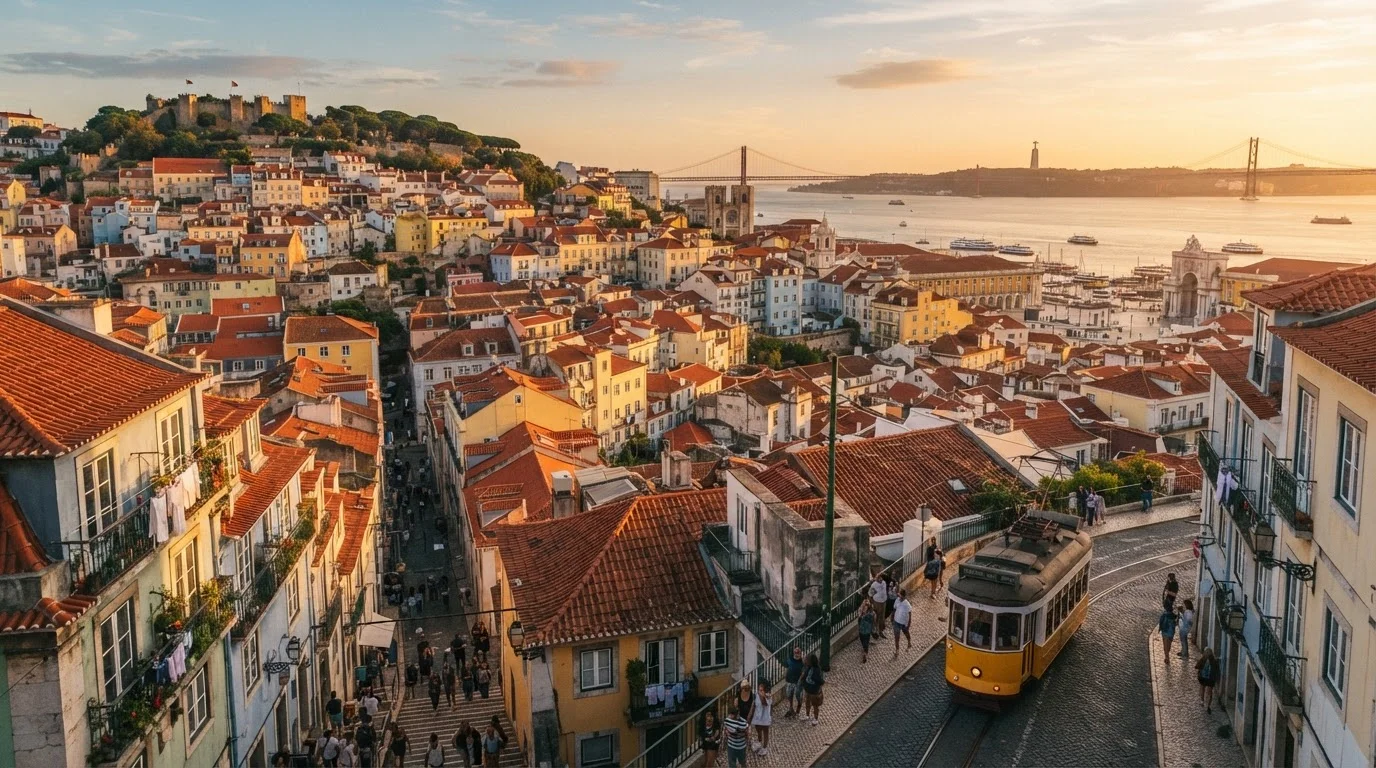
Lisbon occupies a peculiar position in European travel - frequently mentioned, rarely headlining anyone's bucket list the way Paris or Rome do. That's part of what makes it so worthwhile. The Portuguese capital sits at the western edge of continental Europe, draped across seven hills above the wide Tagus estuary, and it carries a sense of lived-in authenticity that more heavily marketed cities sometimes struggle to preserve.
The neighborhoods tell the story best. Alfama, the oldest district, descends in a tangle of whitewashed walls and laundry lines from the São Jorge Castle - its Moorish street pattern largely intact after nearly five centuries. Evenings here, Fado drifts from small restaurant doorways: a melancholic, guitar-backed vocal tradition that UNESCO recognized as part of the world's intangible cultural heritage. It's not a tourist performance - it's woven into the neighborhood's identity.
Beyond the old city, Lisbon connects travelers to a coastline that few urban European destinations can rival. Within 30 to 40 minutes by train, you reach the Atlantic-facing beaches of Cascais or the fairy-tale palaces of Sintra, making it possible to combine city exploration with day trips in ways that feel genuinely varied rather than forced. For practical advice on structuring that kind of layered visit, our guide to short city stays offers useful frameworks for pacing without over-scheduling.
Authentic cultural identity rooted in Fado and history
Lisbon's Fado tradition and Moorish-influenced Alfama neighborhood give it a cultural depth that feels lived-in rather than curated for visitors. UNESCO's recognition of Fado as intangible heritage underscores its genuine significance.
Exceptional coastal and day-trip access
Cascais beaches and the Sintra palace complex are both reachable by train in under an hour, giving a short visit unusual geographic variety without requiring a rental car.
Walkable, compact historic neighborhoods
Alfama, Mouraria, and Belém are dense with architecture, viewpoints, and cafés that reward slow exploration on foot - a city structure that suits travelers who prefer immersion over ticking landmarks.
Underrated food culture with strong Atlantic influence
From grilled fish and bacalhau (salt cod) dishes to pastéis de nata and regional wines, Lisbon's food scene is deeply rooted and widely accessible without requiring reservation-only fine dining.
World-class tile and decorative arts heritage
The Museu Nacional do Azulejo houses one of the world's finest collections of painted ceramic tiles, a craft tradition spanning five centuries that runs through nearly every neighborhood in the city.
Where Lisbon Falls Short
No destination is without friction, and Lisbon has its share. The same hills that make its skyline photogenic can make a day of walking genuinely tiring - particularly in summer heat. The famous cobblestones (calçada portuguesa) are beautiful in photographs and punishing underfoot over long distances, and they present real accessibility challenges for travelers with mobility limitations or those using wheeled luggage.
Tourism pressure is also reshaping parts of the city. The Bairro Alto and Baixa districts - historically the heart of local nightlife and commerce - have seen significant shifts in character as international visitors and short-term rental properties have proliferated. Prices in central restaurants and accommodations have risen notably, narrowing the gap with more established European capitals that visitors once used Lisbon to avoid. Compared to what draws millions to Barcelona, Lisbon's tourist infrastructure is less developed - which cuts both ways, offering quiet corners while sometimes lacking clear signage or English-language support in smaller neighborhoods.
Steep hills and cobblestones challenge many visitors
Lisbon's famously hilly terrain and traditional stone pavements can be exhausting over a full day and pose real accessibility barriers for travelers with mobility limitations, knee issues, or wheeled luggage.
Rising prices narrowing the affordability advantage
Increased tourism and a surge in short-term rental properties have pushed accommodation and dining costs upward in central neighborhoods, making Lisbon less of a budget outlier than it was a decade ago.
Tourist pressure altering central neighborhoods
Areas like Bairro Alto and parts of Alfama have experienced a shift in local character as visitor numbers have grown, with some streets dominated by souvenir shops and international restaurants rather than everyday Lisbon life.
Hot, crowded summers in popular districts
July and August bring intense heat and peak visitor numbers to the most central areas, which can make sightseeing uncomfortable and queues at popular sites frustratingly long.
Limited English signage in outer neighborhoods
While central Lisbon is well set up for English-speaking visitors, neighborhoods further from the tourist center can have limited multilingual infrastructure, requiring some navigation confidence or basic language preparation.
4.8M+
Annual tourists visiting Lisbon
According to Turismo de Portugal, the capital consistently attracts several million international visitors annually, a figure that has grown substantially over the past decade.
~35 min
Train time from Lisbon to Cascais
The Cascais line runs frequent direct services from Cais do Sodré station, making Atlantic beach access one of the most convenient of any European capital.
Reading Lisbon on Its Own Terms
The travelers who tend to find Lisbon most rewarding approach it with patience and curiosity rather than a checklist. The city rewards wandering - following a tram line to its end, finding a miradouro (viewpoint) marked on no map, sitting in a neighborhood café long enough to notice its rhythms. Its museums are genuinely world-class (the Museu Nacional do Azulejo alone is worth a full afternoon), and its food culture - built on fresh Atlantic seafood, slow-braised meats, and the ubiquitous pastel de nata custard tart - is among Europe's most underappreciated.
The practical trade-offs are real, and travelers should weigh them honestly. Mobility, heat tolerance, and accommodation budgets all shape how a Lisbon trip lands. But for those who arrive with flexible expectations and a willingness to let the city unfold at its own pace, Lisbon tends to leave an impression that lasts well beyond the return flight.
Accessibility Considerations Worth Planning Around
Lisbon's historic cobblestone streets and hilly terrain can present significant challenges for travelers using wheelchairs, walkers, or pushchairs. The city has invested in some accessible routes and elevator connections (including the famous Elevador de Santa Justa), but coverage is uneven. Travelers with mobility needs are encouraged to research specific neighborhood accessibility in advance and contact accommodations directly about step-free access. Portugal's national tourism board publishes accessibility guides for major destinations.