

Key Takeaways
- Barcelona's identity is Catalan first-a cultural layer that distinguishes it from other Spanish cities.
- Gaudí's architectural works, including the still-unfinished Sagrada Família, are unlike anything else in Europe.
- The city's food culture ranges from casual market tapas to avant-garde Catalan cuisine with serious depth.
- Barcelona's urban beaches are central to local life, not just tourist additions.
- The city is compact and transit-friendly, making it unusually navigable for first-time visitors.
Barcelona as a Destination
Barcelona is the capital of the autonomous region of Catalonia in northeastern Spain, situated on the Mediterranean coast. It draws visitors through a rare combination of world-class architecture, a deeply layered cultural identity, thriving culinary traditions, and accessible beaches-all within a walkable, well-connected city. Unlike many European capitals, Barcelona's appeal is shaped as much by its distinct Catalan character as by any single landmark or attraction.
Catalonia holds its own language (Catalan), government, and cultural institutions separate from the Spanish national framework, a distinction that shapes local customs, signage, and civic identity visitors will notice immediately.
A City Shaped by Two Identities
Arriving in Barcelona, most visitors quickly notice something that sets it apart from Madrid, Seville, or other Spanish cities: street signs appear in Catalan first. Shop owners may greet you in a language that sounds like a bridge between Spanish and French. This isn't incidental. Barcelona is the capital of Catalonia, a region with its own language, government, and fiercely maintained cultural identity that predates modern Spain itself.
That dual identity-simultaneously Spanish and distinctly Catalan-gives the city a texture that rewards curious visitors. Local festivals like the Festa Major de Gràcia and the deeply rooted tradition of castellers (human tower building, recognized by UNESCO) aren't tourist performances. They're genuine expressions of a civic culture that residents take seriously. Understanding this context makes even a short visit feel richer. For travelers drawn to destinations shaped by layered cultural histories, Barcelona sits in the same conversation as destinations like Morocco.
Architecture That Defies Category
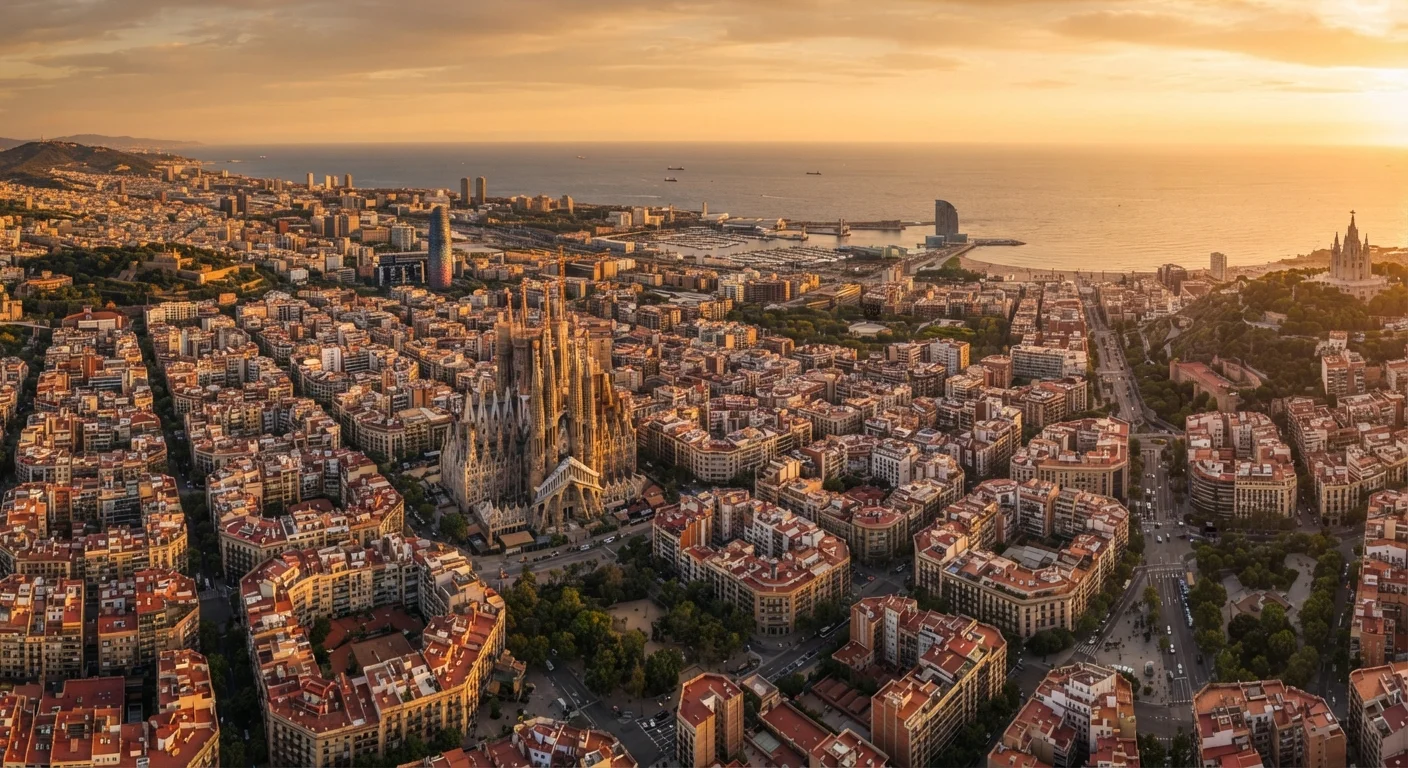
No single element draws more first-time visitors than Barcelona's built environment. Antoni Gaudí's work dominates the conversation-and for good reason. The Sagrada Família, still under construction after more than 140 years, is an engineering and artistic achievement that resists easy description. Its forest-like interior columns, kaleidoscopic light, and facades depicting scenes from the Bible in sculpted stone feel genuinely unlike anything else in Europe.
But Gaudí is one thread in a larger tapestry. The Eixample district is a grid of broad avenues lined with Modernisme buildings-Catalonia's answer to Art Nouveau-from architects like Lluís Domènech i Montaner and Josep Puig i Cadafalch. The Palau de la Música Catalana, a concert hall encrusted in stained glass and mosaic, is a working venue, not a museum piece. Walking the neighborhood without an agenda, simply observing facades and doorways, is itself a worthwhile activity.
140+
Years Sagrada Família has been under construction
Construction began in 1882 and is projected to reach completion in the coming years, making it one of the longest-running architectural projects in modern history.
~9 million
Annual international overnight tourists in Catalonia
According to Spain's National Statistics Institute (INE), Catalonia consistently ranks among Spain's top regions for international tourism volume.
7
UNESCO World Heritage Sites in Barcelona
Seven works by Antoni Gaudí within the city are collectively designated as UNESCO World Heritage Sites, reflecting their outstanding universal architectural value.
Food, Markets, and the Catalan Table
Barcelona's food culture operates at several registers simultaneously. At the accessible end, the Boqueria market on Las Ramblas-despite its tourist traffic-still supplies local restaurants and offers a genuine cross-section of Catalan produce: jamón, fresh seafood, wild mushrooms, and cheeses from the Pyrenees. Slightly off the beaten path, the Mercat de Santa Caterina in El Born functions with less fanfare and more local clientele.
Catalan cuisine itself is worth understanding as distinct from generic Spanish food. Dishes like pa amb tomàquet (bread rubbed with tomato and olive oil), escudella (a slow-cooked meat and vegetable stew), and salt-cod preparations have deep regional roots. The city also became a center of avant-garde cooking in the early 2000s, a legacy that continues in restaurants exploring technique and local ingredients seriously. Visitors willing to eat at off-peak hours and venture into residential neighborhoods consistently report more authentic and better-value meals.
Eat and Explore Like a Local
Barcelona's most rewarding meals are often found in residential neighborhoods like Gràcia, Poble Sec, and Poblenou rather than on Las Ramblas. Lunch is the main meal of the day for many locals, and the menú del día-a set midday menu-typically offers multiple courses at a fraction of dinner prices. Exploring one neighborhood thoroughly on foot often yields better food discoveries than following any single list.
The Waterfront and What It Actually Offers
Barcelona's beaches are a relatively recent addition to the city's story-much of the waterfront was redeveloped for the 1992 Summer Olympics. What emerged was a stretch of accessible urban beaches backed by a promenade, cycling paths, and the Barceloneta neighborhood. For a major European city, the combination of functional public transit, a walkable old town, and a legitimate Mediterranean beach within 20 minutes of nearly anywhere is unusual.
The port area has its own character: the Barceloneta fish restaurants, the modern Rambla del Mar, and the Frank Gehry-designed fish sculpture that marks the edge of the Olympic Village. It's worth noting that summer beach crowds are substantial, and the waterfront draws its share of petty theft-keeping valuables secured is standard practical advice. Travelers who also explore Lisbon's coastal appeal often find useful contrasts in how each city relates to its waterfront.
Why the City Holds Its Appeal
What sustains Barcelona's reputation among experienced travelers isn't any single attraction but the density of things worth experiencing within a compact, navigable space. The metro system is reliable. The old town is walkable. The food is serious. The architecture is genuinely irreplaceable. And the cultural layer-Catalan identity, language, and civic life-gives the city a personality that distinguishes it from interchangeable European capitals.
None of this means Barcelona is without friction. Overtourism in certain neighborhoods is a documented concern that local residents and city planners continue to grapple with. Prices in central areas reflect high demand. But for visitors approaching the city with some awareness and curiosity, Barcelona continues to deliver on what draws people there in the first place: a place that feels like itself.