

Key Takeaways
- Islam structures daily rhythms in Morocco, including prayer times, weekly rest days, and annual observances like Ramadan.
- Hospitality-particularly the offer of mint tea-is a genuine cultural cornerstone, not a tourist performance.
- Morocco's medinas (historic walled city centers) are functional neighborhoods, not just sightseeing zones.
- Modest dress is a practical sign of respect in most Moroccan contexts, especially in rural areas and sacred spaces.
- Morocco's identity draws from Amazigh, Arab, Andalusian, and African traditions-no single label fully captures it.
Moroccan Culture
Moroccan culture is a layered blend of Amazigh (Berber), Arab, Andalusian, and sub-Saharan African influences, shaped over centuries of trade, migration, and Islamic tradition. It governs everything from how families greet one another to the rhythm of the work week and the layout of city streets. Understanding it means recognizing that daily life in Morocco is deeply communal, spiritually anchored, and rich with unspoken social codes.
Morocco is officially a constitutional monarchy with Islam as the state religion. The country recognizes both Arabic and Amazigh (Tamazight) as official languages, reflecting its plural heritage.
A Country Shaped by Crossroads
Morocco sits at one of the world's most consequential intersections-where Africa meets Europe, and the Atlantic meets the Mediterranean. That geography is not incidental. It explains why Moroccan culture feels like no single thing: it absorbs and layers influences rather than erasing them. The indigenous Amazigh people were here long before Arab armies arrived in the seventh century, and both identities persist side by side today. Andalusian Muslims and Jews fleeing medieval Spain brought architecture, music, and craftsmanship that still mark cities like Fes and Tetouan. Caravan routes from sub-Saharan Africa added further texture to food, textiles, and spiritual practice.
The result is a country where a single city block might hold a centuries-old mosque, a Jewish mellah (historic Jewish quarter), and a French colonial building-and all three feel authentically Moroccan. Understanding Morocco means resisting the urge to flatten this complexity into a single postcard image. For travelers curious about how culture shapes daily life across the globe, Morocco offers one of the richest case studies available. The Culture & Customs hub is a useful starting point for building that kind of contextual awareness before any trip.
Islam and the Architecture of Daily Life
It would be impossible to understand Morocco without understanding Islam's practical role in everyday rhythms. The adhan-the call to prayer-sounds five times a day from minarets across the country, and while not every Moroccan stops what they're doing each time, those calls mark time the way clocks do elsewhere. Friday midday prayer is the week's communal anchor, and many businesses close or reduce hours around it.
Ramadan, the month of fasting, is the most visible expression of collective religious identity. During daylight hours, many restaurants close or operate differently, the pace of city life slows, and after sunset the streets come alive with iftar meals shared among families and neighbors. Travelers visiting during Ramadan will encounter a Morocco that feels distinct from any other time of year-quieter by day, vibrant by night, and deeply focused on community.
Traveling During Ramadan
Visiting Morocco during Ramadan offers a genuinely distinct experience, but it requires some adjustment. Eating, drinking, or smoking in public during daylight hours is considered disrespectful and is legally restricted in some areas. Most tourist-facing establishments in cities remain open, but travelers should plan with flexibility and sensitivity to the observance taking place around them.
Morocco also observes several Islamic holidays whose dates shift annually with the lunar calendar. Checking these dates before travel helps set realistic expectations about what will be open or closed.
The Souk, the Medina, and the Logic of Moroccan Space
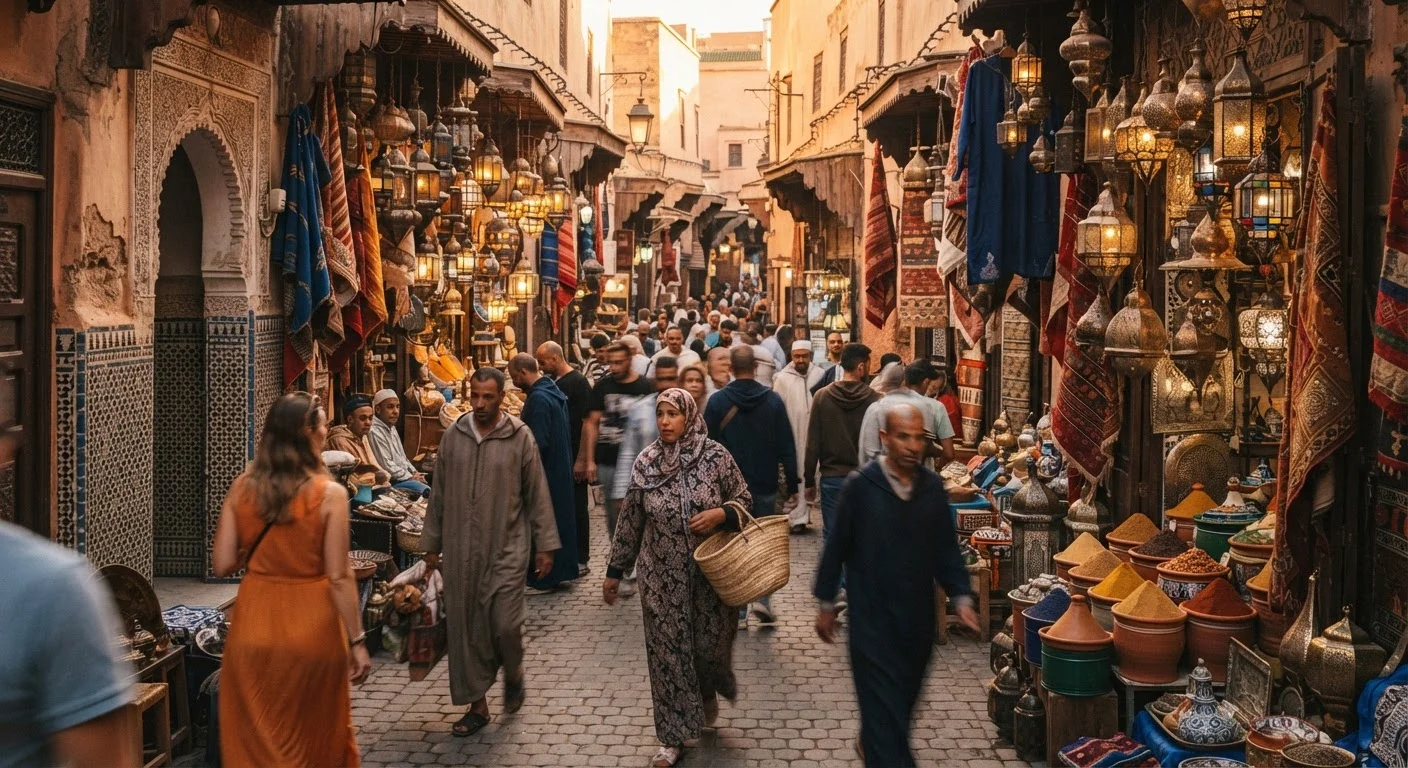
Morocco's medinas-the historic, walled centers of cities like Marrakech, Fes, and Chefchaouen-are often described as mazes, and that description is both accurate and misleading. They are not designed to confuse outsiders; they follow an internal logic rooted in centuries of urban planning, where residential quarters, craft guilds, religious institutions, and commercial zones each had their place. Getting genuinely lost in a medina is part of experiencing it honestly.
The souk (market) sits at the medina's commercial heart, and it is one of the most direct windows into Moroccan economic and social life. Leather workers, weavers, spice merchants, and metalworkers often cluster by craft in a system that dates to medieval guild organization. Shopping here is participatory-prices are frequently negotiated, and the exchange itself is as much about relationship as transaction.
Approach Souk Visits With Patience
Giving yourself unscheduled time in a souk-rather than treating it as a checklist stop-tends to produce the most rewarding encounters. Genuine curiosity about a craftsperson's work, delivered respectfully, often opens conversations that no guided tour can replicate. If you're not interested in buying, a polite 'shukran' (thank you) and a smile are entirely appropriate ways to move on.
This stands in interesting contrast to how cities like Barcelona have organized their tourist-facing commercial spaces. Where Barcelona's appeal draws on broad European urban energy, Morocco's medinas pull visitors into something more ancient and intimate.
13M+
International visitors to Morocco annually
Morocco's national tourism agency has reported international arrivals exceeding 13 million in recent pre-pandemic years, underscoring the country's global draw.
99%
Share of population identifying as Muslim
According to Pew Research Center data, Morocco has one of the highest rates of Muslim identification of any country, reflecting Islam's deep cultural integration.
3
UNESCO World Heritage medinas in Morocco
The medinas of Fes, Marrakech, and Tétouan are among Morocco's UNESCO-listed sites, recognized for their outstanding historic urban fabric.
Hospitality, Family, and Social Norms
Moroccan hospitality is frequently cited by travelers as the most memorable part of any visit, and it is worth understanding why it operates the way it does. Offering food, tea, or shelter to a guest is not merely polite-it carries moral and spiritual weight in Islamic tradition. An invitation into a Moroccan home is a meaningful gesture, and accepting it graciously, removing shoes at the door, and complimenting the food are all ways of honoring that.
Family is the primary social unit in Morocco, and extended family networks remain strong even in urban centers. Multigenerational households are common, and major life events-weddings, religious observances, births-tend to be community-wide affairs rather than private ones. Travelers who engage with these norms thoughtfully-rather than treating them as photo opportunities-tend to have richer, more authentic experiences.
It is also worth noting that public displays of affection are generally uncommon and, in some contexts, frowned upon. Same-sex relationships face significant legal and social restrictions, and LGBTQ+ travelers should research current conditions carefully and consult up-to-date official guidance before visiting. For a broader look at how cultural customs around sensitive life events vary across the world, the piece on mourning and funeral customs offers useful comparative perspective.
This article is intended for general informational purposes. Travelers should verify entry requirements, safety advisories, and current local conditions through official government sources before making any travel plans.