
Cultural Customs Around Death and Mourning That Travelers Should Understand

| Mourning color: East Asia (Japan, China) | White |
| Mourning color: Western Europe and the Americas | Black |
| Mourning color: South Asia (Hindu tradition) | White |
| Islamic burial timeframe | Within 24 hours of death |
| Hindu mourning period (shraddha) | Typically 13 days |
| Photography at funerals and graves | Generally inappropriate without explicit permission |
| Día de los Muertos origin | Indigenous Mesoamerican and Catholic traditions |
| West African funeral tone | Often celebratory; music, color, and dance common |
Why Death Customs Demand a Traveler's Attention
Few moments in human life carry more emotional weight than death. And few situations expose a traveler's cultural assumptions more quickly than stumbling into a mourning ritual without understanding its context. Around the world, grief takes radically different forms - some cultures encourage open wailing, others mandate stoic silence; some dress mourners in black, others in white. Knowing the difference isn't just polite. In many communities, showing up at or near a funerary space without awareness of local norms can be seen as deeply disrespectful.
This guide is designed as a reference, not an exhaustive rulebook. Customs vary not just by country but by region, religion, ethnicity, and family. Use what follows as a starting framework, and always follow local cues and guidance from people who live there. For broader context on navigating sacred and ceremonial spaces, see our guide to sacred spaces and visitor responsibilities.
| Mourning color: East Asia (Japan, China) | White |
| Mourning color: Western Europe and the Americas | Black |
| Mourning color: South Asia (Hindu tradition) | White |
| Islamic burial timeframe | Within 24 hours of death |
| Hindu mourning period (shraddha) | Typically 13 days |
| Photography at funerals and graves | Generally inappropriate without explicit permission |
| Día de los Muertos origin | Indigenous Mesoamerican and Catholic traditions |
| West African funeral tone | Often celebratory; music, color, and dance common |
Key Mourning Customs by Region
East Asia: In Japan, funerals are predominantly Buddhist and follow precise ceremonial steps, including incense offerings and specific rituals around cremation. White is the traditional color of mourning, not black. Attendees are generally expected to be quiet, restrained, and formally dressed. Understanding Japanese cultural norms more broadly will help you navigate these encounters with appropriate sensitivity. In China, similar associations between white and mourning exist, though urban practices have grown more varied.
South Asia: Hindu mourning traditions in India typically involve cremation, often performed within 24 hours of death. The color white signals mourning - not celebratory colors. A 13-day mourning period, called shraddha, is observed in many communities. Visitors should follow the lead of hosts on whether their presence is welcome at any stage.
West Africa and the African Diaspora: Many West African cultures hold elaborate, communal funeral celebrations that can include music, dancing, and vibrant dress - what outsiders might mistake for a festival. These events honor the deceased joyfully, but they remain deeply sacred. Treating them as spectacle or photographing without explicit permission is considered offensive.
Mexico and Latin America: Día de los Muertos (Day of the Dead) is perhaps the world's most misunderstood mourning tradition. It is not Halloween. Rooted in Indigenous and Catholic traditions, it involves building ofrendas (altars), visiting cemeteries, and communing with deceased relatives. Tourists can respectfully observe - but should not touch family altars, take photographs without permission, or treat cemetery gatherings as photo opportunities. For guidance on when observation becomes intrusion, see our article on attending local ceremonies respectfully.
The Middle East and North Africa: Islamic funeral rites generally require burial within 24 hours. Non-Muslims are not always welcome at the funeral prayer (Janazah) itself but may be invited to offer condolences afterward. Modest dress is essential - understanding regional dress norms will help you arrive appropriately prepared.
Shraddha
A Hindu ritual mourning period, typically lasting 13 days after a death, during which family members observe specific rites and restrictions to honor the deceased.
Janazah
The Islamic funeral prayer performed before burial. It is an important religious rite and non-Muslim attendance may not always be appropriate or invited.
Ofrenda
An altar constructed in Mexican Día de los Muertos tradition, featuring photographs, food, and objects meaningful to a deceased loved one. Touching or photographing family ofrendas without permission is disrespectful.
Día de los Muertos
A Mexican and Latin American tradition honoring deceased relatives, observed around November 1-2. Rooted in Indigenous and Catholic customs, it involves cemetery visits, altars, and communal remembrance - not to be confused with Halloween.
Lying in state
A practice in some cultures where the deceased is displayed in an open casket at home or in a public space before burial, allowing relatives and community members to pay their respects.
Practical Etiquette for Travelers
If you encounter a funeral procession or a mourning gathering while traveling, the most universally applicable rule is: pause, be still, and let it pass or conclude before you move on. Avoid talking loudly, laughing, or photographing the scene. If you're invited to pay respects - which does happen to respectful visitors - accept graciously, follow the lead of others, and keep interaction brief and quiet.
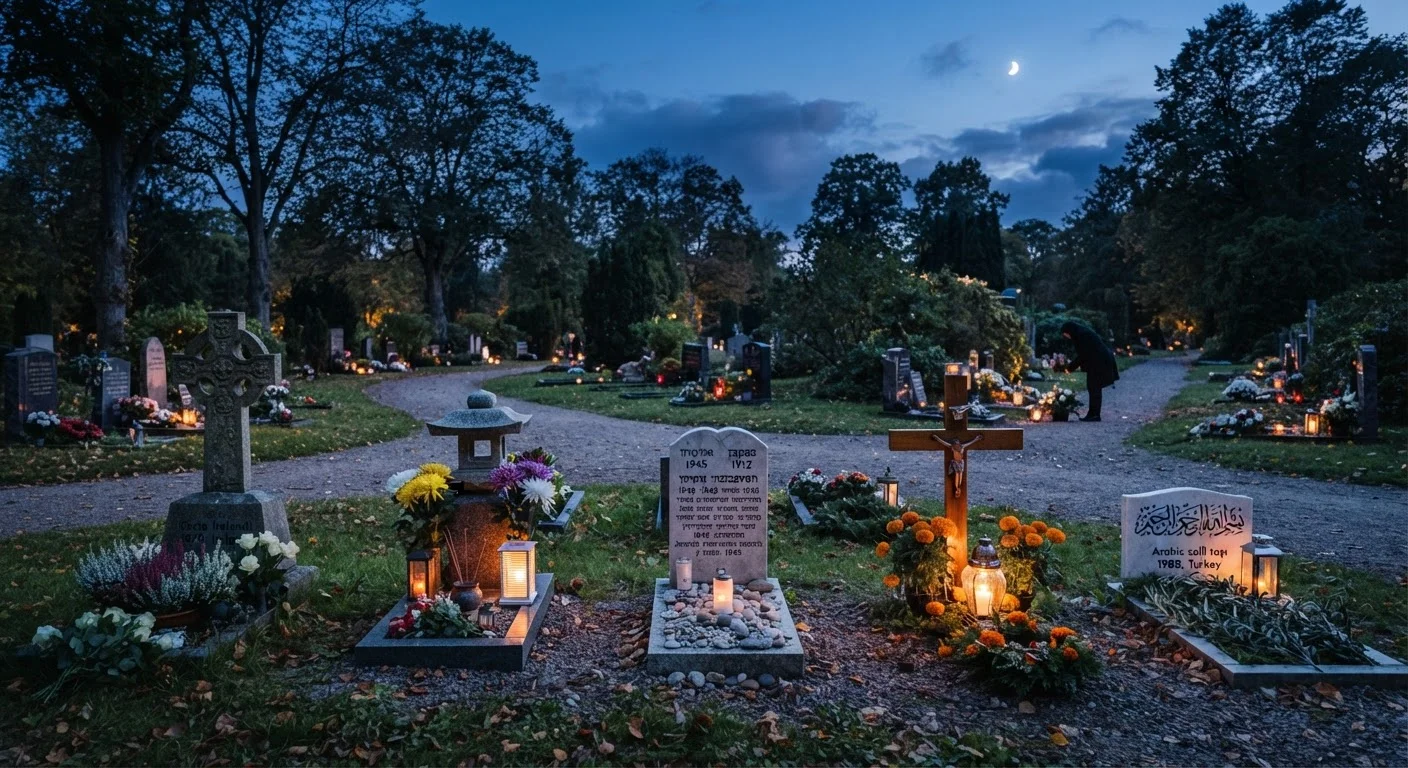
Cemetery visits as a tourist activity are common in many countries - Paris's Père Lachaise or Buenos Aires's Recoleta are popular destinations. Even in tourist-friendly cemeteries, treat the space as you would any sacred site: speak quietly, stay on designated paths, and never touch or climb grave structures. In working cemeteries - where families actively mourn - visitor presence should be minimized unless you have a direct connection.
Condolence customs also vary significantly. In some cultures, bringing food to a bereaved household is the expected gesture; in others, flowers are appropriate; in still others, cash gifts help the family cover funeral expenses. Gift-giving etiquette across cultures applies here as much as anywhere else - the wrong gesture, however well-intentioned, can cause unintended offense.
When in Doubt, Observe Before Participating
If you find yourself near a mourning ceremony or funeral gathering while traveling, the safest approach is quiet observation before any participation. Watch how locals behave - where they stand, whether they speak, how they dress - and mirror that behavior. If you're unsure whether your presence is welcome, it's appropriate to quietly withdraw. Asking a trusted local contact or guide before the fact is always better than improvising on the spot.