
Sacred Spaces and Visitor Responsibilities: What to Know Before Entering Religious Sites

Key Takeaways
- Dress code requirements vary enormously across religious traditions and individual sites - research each one specifically.
- Photography is restricted or forbidden entirely at many sacred spaces; always ask before raising a camera.
- Active worship services may be closed to non-worshippers; timing your visit matters as much as dress.
- Behavioral norms like silence, specific movement patterns, and head covering differ by faith and region.
- Showing up informed signals genuine respect - something local communities notice and appreciate.
Summary
22 items · 20-35 minutes
Why Preparation Is Itself a Form of Respect
Walking into a cathedral, mosque, temple, or shrine as a traveler is a privilege that billions of worshippers take seriously. These aren't backdrops for selfies or checkboxes on an itinerary - they are living, breathing spiritual communities. The difference between a welcome visitor and an unwitting intruder often comes down to a few minutes of advance research.
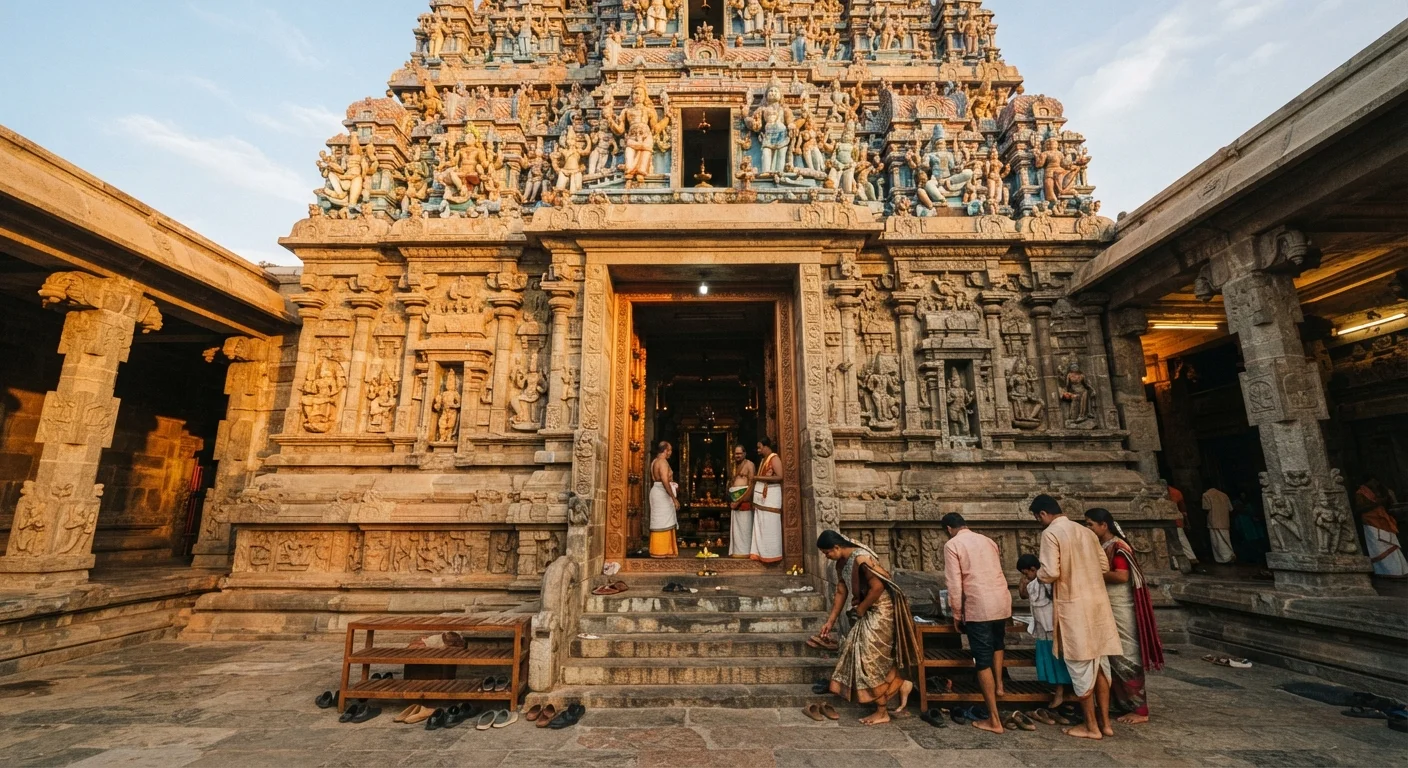
Religious sites span an extraordinary spectrum: the soaring Gothic naves of European cathedrals, the serene gravel gardens of Zen temples, the gold-domed mosques of the Middle East, the painted Hindu mandirs of South Asia, the understated Quaker meetinghouses of New England. Each carries its own codes of conduct rooted in theology, cultural history, and community expectation. No single checklist can cover every variation - but the framework below captures the categories that matter nearly everywhere.
For destination-specific depth, our guide to cultural norms in Japan walks through temple and shrine etiquette in one of the world's most protocol-conscious travel destinations. And if clothing is your primary concern, dress norms travelers frequently misjudge offers essential regional context.
Research Before You Arrive
Dress and Physical Presentation
Photography and Recording
Behavioral Conduct Inside
Participation and Interaction
On the Ground: Navigating Behavior Inside Sacred Spaces
Even well-prepared travelers can stumble once they're inside. Architectural grandeur, crowds, and the excitement of discovery can pull attention away from behavioral awareness. A few principles apply broadly across traditions.
Sound is one of the most frequently overlooked dimensions of sacred space. Many sites are actively used for prayer or meditation throughout the day - not just during formal services. Raised voices, ringing phones, and audible commentary from tour groups can genuinely disrupt worshippers. Treat the ambient quiet as a shared resource.
Active Services May Exclude Non-Worshippers
Many religious sites that are otherwise open to visitors will close sections - or the entire premises - during prayer times, services, or religious festivals. This is especially common at mosques during Friday Jumu'ah prayers and at Hindu temples during puja ceremonies. Arriving during a restricted period is not simply inconvenient; it can genuinely disrupt worshippers. Always check the schedule and plan your visit outside active worship windows if you are attending as a tourist.
Physical movement also carries meaning. In many Hindu and Buddhist temples, circumambulating (walking around a shrine or altar) should follow a clockwise direction. Mosques typically have designated spaces for men and women. Some Orthodox Jewish synagogues and certain Hindu shrines restrict access for non-adherents entirely, not as a slight to tourists but as an expression of the site's sacred function.
Behavioral expectations at religious sites intersect with the broader question of when travelers are truly welcome at ceremonies and rituals. Our piece on when travelers should and shouldn't attend local events helps decode that line. Similarly, public behavior norms that vary by country provides useful context for reading unfamiliar social environments.
When In Doubt, Ask - Then Follow the Answer
No checklist can anticipate every site-specific rule, and religious customs evolve with communities. If you are uncertain whether something is permitted - entering a particular room, taking a photograph, sitting in a specific area - ask a staff member or volunteer rather than assuming. Crucially, if you are told something is not allowed, accept that answer gracefully. Pushback or negotiation in a sacred space is widely perceived as disrespectful regardless of the cultural context.
Finally, remember that some sites exist at the intersection of the sacred and the funerary. Cemeteries and memorial chapels attached to religious sites carry their own layer of gravity. Our coverage of cultural customs around death and mourning is worth reading before visiting any site where grief and faith converge.
This article provides general cultural and travel information for educational purposes. Rules and customs vary significantly by site, country, and religious tradition. Always verify current requirements with official sources or site administrators before visiting.