
Festivals, Ceremonies, and Uninvited Guests: When Travelers Should and Shouldn't Attend Local Events

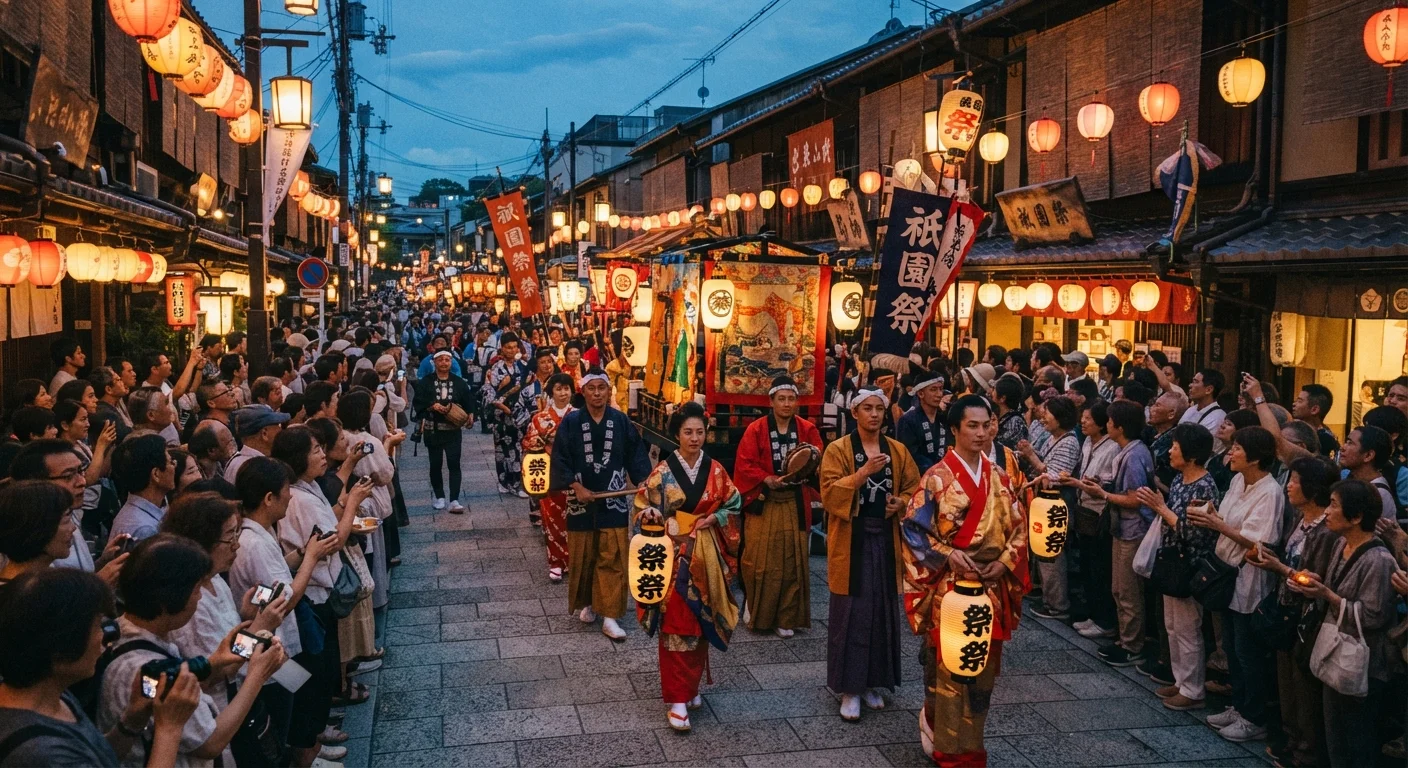
Key Takeaways
- Not all local events are public - some ceremonies are restricted to community members or initiated participants.
- Asking permission before entering or photographing any cultural event is always the right first step.
- Body language, physical barriers, and local cues can tell you whether observers are welcome.
- Even at open festivals, respectful presence means following the community's lead rather than your own curiosity.
- Researching events before you travel helps you attend with context and genuine appreciation rather than accidental intrusion.
The Difference Between a Public Celebration and a Sacred Gathering
Travelers who stumble upon a festival in a village square or a ceremony on a riverbank face an immediate question: is this something I am meant to witness? The honest answer is that it depends entirely on the event - and the burden of figuring that out falls on the visitor, not the community.
Many celebrations around the world are genuinely public by design. Think of Brazil's Carnival street blocos, Mexico's Day of the Dead altars set up in public cemeteries, or the lantern festivals that light up cities across East Asia - these are deliberately outward-facing events that welcome curious onlookers and, in many cases, active participation. But a funeral procession winding through an Indonesian village, a Navajo healing ceremony, or a Shinto purification rite conducted at a shrine are a different matter entirely. These are not performances. They are living religious and community acts, and an uninvited outsider with a camera can disrupt something that holds deep meaning for everyone present.
The distinction matters because no two events broadcast their status the same way. Understanding that difference is, at its core, an exercise in cultural intelligence - the ability to observe context before acting on impulse.
How to Read the Room Before You Step In
Before you approach any gathering you haven't been explicitly invited to, take a moment to observe from a neutral distance. What you see in the first few minutes will tell you a great deal.
Observe quietly from a distance before making any move to approach
First impressions of a gathering - its tone, its boundaries, the presence or absence of other outsiders - provide essential context. Acting on observation rather than impulse prevents accidental intrusion during moments that may be private or sacred.
Research events before you travel, not just when you arrive
Knowing in advance whether a festival is publicly oriented or community-restricted allows you to arrive with context, appropriate clothing, and realistic expectations. Improvised attendance without background knowledge is how well-meaning travelers cause harm.
Direct questions about access to event organizers or community elders, not fellow tourists
Other tourists are no more qualified than you to judge whether attendance is appropriate. Organizers and community members have both the authority and the knowledge to tell you what role, if any, outside visitors play.
Treat photography as a separate permission from attendance
Being allowed to watch an event does not automatically mean you may record it. Photography during ceremonies can feel extractive or disrespectful to participants, particularly when the images will later circulate on social media without context or consent.
Match your body language and volume to the energy of the event
Loud conversation, laughter at a solemn moment, or conspicuous movement during a quiet ritual signals disrespect even when it is unintentional. Mirroring the physical register of those around you is one of the fastest ways to show cultural awareness.
Physical boundaries are among the clearest signals. Rope lines, temporary fencing, or even a row of community members standing at the perimeter often indicate that the event has a defined inside and outside. Signage in the local language - even if you can't read it - combined with the absence of other outside observers is meaningful. If you are the only non-local present, that itself is information worth weighing carefully.
Tone matters, too. A joyful street festival will generally feel porous and inclusive; people will make eye contact, gesture for you to join, and smile at your curiosity. A solemn ceremony will have a gravitational seriousness that signals something else is happening. Public behavior norms differ dramatically across cultures, so what reads as casual in one context may be deeply formal in another.
Asking Permission - And Accepting the Answer
When in doubt, ask. A simple, respectful inquiry - directed at a local who appears to be an organizer or community elder rather than a fellow bystander - can open a door or gracefully close one. Keep the question brief and your tone genuinely curious rather than entitled. Something as simple as a gesture toward the gathering paired with a questioning expression communicates your intent even across a language barrier.
Phrase it as curiosity, not entitlement
When asking whether you may observe an event, frame your question as genuine interest in understanding, not as a traveler asserting a right to experience. Phrases that acknowledge the community's ownership of the event - 'Would it be appropriate for me to watch?' rather than 'Can I come in?' - tend to land very differently. If a translator or bilingual local is nearby, asking through them shows additional care.
Equally important is how you receive the answer. A shake of the head, an arm extended palm-out, or a firm but polite word in the local language all mean no. Accept that gracefully. Lingering at the edge hoping to catch glimpses anyway, or photographing from a distance after being refused, is a form of intrusion that many travelers rationalize but that communities experience as a real violation. The same principle applies at religious sites and sacred spaces, where the expectations around visitor presence are often explicit but not always signposted in English.
If you are welcomed in, express genuine gratitude - and then follow the community's lead on where to stand, whether to photograph, and when to be quiet.
When Attendance Is Welcomed: How to Be a Good Guest
Being permitted to attend a cultural event is a privilege, not a right. That framing shapes everything about how a respectful traveler should behave once inside.
Dress modestly unless you are explicitly told otherwise. Many festivals tied to religious calendars or life-cycle events - weddings, harvests, coming-of-age rituals - carry expectations about clothing that locals absorb through years of cultural context. As an outsider, erring toward conservative dress is almost always safe. The same thoughtfulness applies to mourning and funeral observances, where dress and demeanor carry particularly heavy significance.
Photography deserves its own consideration. Even when you've been welcomed as an observer, assume that cameras require separate permission. Some moments within an otherwise open ceremony - a ritual prayer, a sacred object being carried, an elder performing a blessing - are not meant to be recorded. Watch what local attendees do. If no one else has a phone raised, yours should stay in your pocket.
Understanding host-guest dynamics in the local culture can also guide your behavior: in some contexts, accepting food or drink offered during a celebration is a sign of respect, while in others it may not be appropriate for an outsider. When you're unsure, a polite, curious question to someone nearby is better than either refusing sharply or consuming without awareness.
When 'Tourist-Friendly' Labels Can Mislead
Some events are marketed to visitors as cultural experiences without the full consent or enthusiasm of the communities performing them. Staged or commodified versions of ceremonies can strip rituals of their meaning and economically pressure communities to perform sacred acts for outside consumption. Where possible, seek context from local cultural organizations, community tourism cooperatives, or reputable travel writers familiar with the destination rather than relying solely on tour operator descriptions.