

Key Takeaways
- NYC is five distinct boroughs - Manhattan is just one part of the whole city.
- The subway is the most efficient way to get around, even if it takes a few rides to get comfortable.
- Neighborhoods vary dramatically in feel, pace, and character even a few blocks apart.
- Over-scheduling your itinerary is one of the most common first-timer mistakes.
- Walking between nearby attractions often reveals more than any guided tour.
Start here
Understanding the Five Boroughs
Next
Getting Around: Transit Without the Panic
Then
Neighborhoods Worth Knowing
Finally
Setting Realistic Expectations
Understanding the Five Boroughs
New York City is not a place - it is five places, each with its own rhythm, identity, and personality stitched together under one iconic name. Manhattan, Brooklyn, Queens, the Bronx, and Staten Island form the five boroughs, and understanding this basic geography instantly makes the city feel less like an overwhelming monolith and more like a collection of manageable neighborhoods.
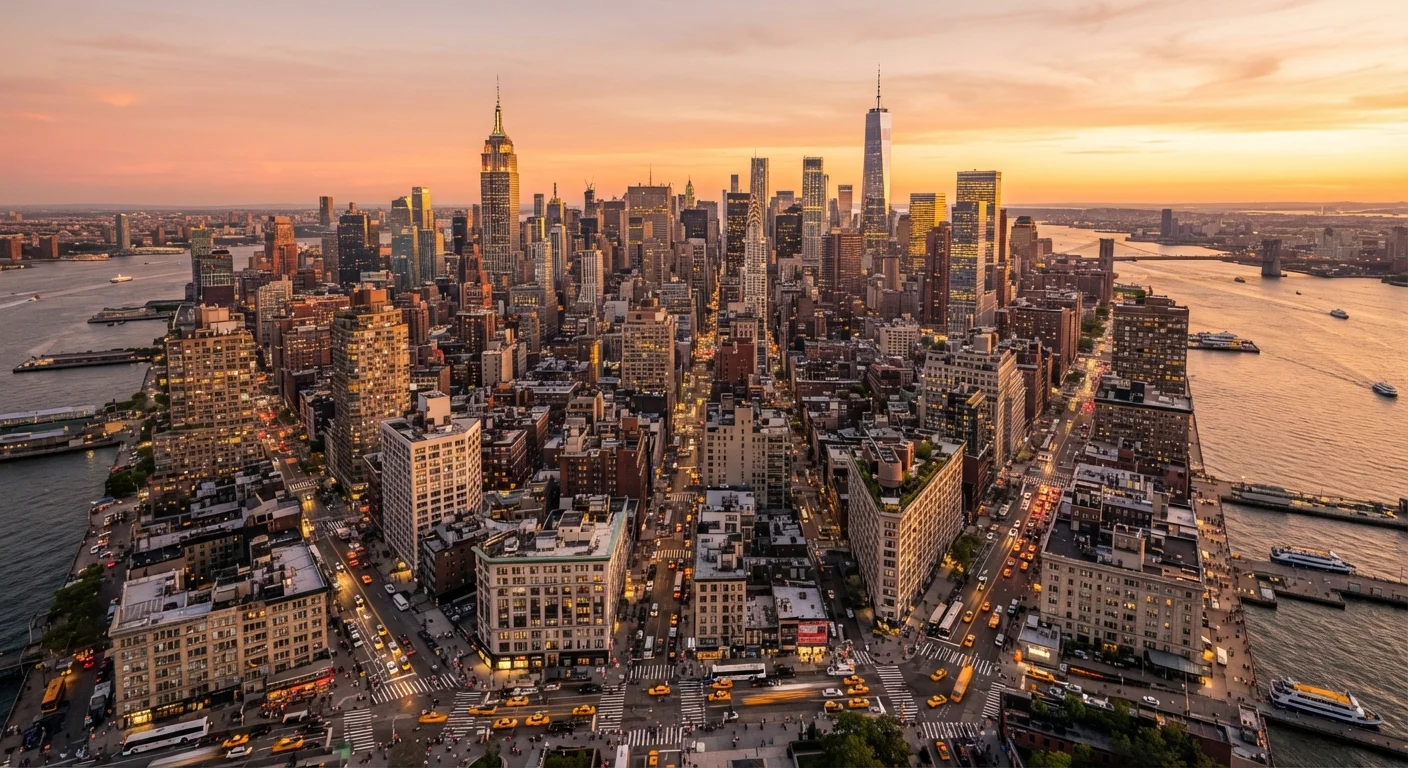
Manhattan is the narrow island most people picture when they think of NYC - Times Square, Central Park, the Empire State Building. It is dense, vertical, and perpetually in motion. Brooklyn, just across the East River, has evolved into a cultural powerhouse of its own, blending historic brownstone neighborhoods with thriving arts and food scenes. Queens is arguably the most ethnically diverse urban area on earth, a patchwork of immigrant communities where the food alone is worth the subway ride. The Bronx is home to the Yankees, the original hip-hop scene, and the surprisingly lush New York Botanical Garden. Staten Island, connected to Manhattan by the free Staten Island Ferry, offers a slower pace and a skyline view that rivals any paid attraction.
Borough
One of New York City's five administrative and geographic divisions - Manhattan, Brooklyn, Queens, the Bronx, and Staten Island - each functioning somewhat like its own distinct city within the larger whole.
Subway line
A numbered or lettered train route that runs through the NYC subway system; each line follows a specific path through the boroughs and is color-coded on official maps.
OMNY
The MTA's contactless fare payment system that lets riders tap a credit card, debit card, or smartphone to pay for subway and bus rides without a physical MetroCard.
Uptown / Downtown
Directional shorthand used in Manhattan: 'uptown' means moving north toward higher street numbers, while 'downtown' means moving south toward lower ones - essential for reading subway signs and giving directions.
DUMBO
An acronym for 'Down Under the Manhattan Bridge Overpass,' a neighborhood in Brooklyn known for its cobblestone streets, waterfront parks, and views of the Manhattan skyline.
For most first-timers, the smartest approach is to anchor in Manhattan, spend a day in Brooklyn, and leave the other boroughs for future trips - or for travelers who have already fallen for the city and want to go deeper.
Getting Around: Transit Without the Panic
The New York City subway runs 24 hours a day, 365 days a year, connecting all five boroughs across more than 400 stations. That scope can feel staggering, but most visitors use only a handful of lines - the 1/2/3 running along the west side of Manhattan, the 4/5/6 on the east side, and the A/C/E through Midtown. A reliable transit app with offline maps, such as those provided by the MTA or third-party navigation tools, is your single best travel companion.
Use Offline Maps Before You Go
Cell service in underground subway stations is inconsistent and sometimes nonexistent. Download an offline transit map or a navigation app with offline capability before you leave your accommodation each day. Knowing your route in advance - even roughly - saves real frustration when you are deep underground and your signal disappears.
Payment has modernized considerably: you can now tap a contactless credit or debit card or smartphone directly at most turnstiles via the OMNY system, eliminating the need to buy a physical MetroCard if you prefer. For longer stays, a weekly unlimited pass may offer better value - general information on fares is available at the MTA's official website.
Taxis and rideshares are widely available but can become painfully slow and expensive during rush hours or bad weather. Walking, counterintuitively, is often the fastest way to cover short distances in Manhattan, and it rewards you with details no vehicle can offer - a bakery smell, a street musician, a conversation overheard in three languages. For a practical approach to structuring your days, thinking in terms of neighborhoods rather than individual attractions will save both time and shoe leather.
Neighborhoods Worth Knowing
Manhattan's neighborhoods shift character within a matter of blocks, and knowing a handful of them by name and feel will help you navigate like someone who has been here before. Midtown - broadly the 30s through the 50s in street numbers - is tourist central: Times Square, the Rockefeller Center, and Grand Central Terminal all live here. It is energizing and photogenic, but it is not where New Yorkers spend their leisure time.
Head downtown to Greenwich Village for tree-lined streets, independent bookstores, and the lively energy of Washington Square Park. The Lower East Side carries a long history of immigrant communities and now balances that heritage with a younger food and nightlife scene. SoHo offers cast-iron architecture and gallery culture, while Chinatown and Little Italy - practically adjacent - are vivid windows into the city's layered immigrant story.
Cross the Brooklyn Bridge on foot - an experience that costs nothing and delivers extraordinary views - and you arrive in DUMBO (Down Under the Manhattan Bridge Overpass), a neighborhood of cobblestoned streets and waterfront parks. Continue inland to Brooklyn Heights or Park Slope for quieter, residential charm. Much like first-timers in Paris who stick only to the most famous arrondissements, visitors who never leave Midtown Manhattan go home with an incomplete picture of the city they traveled so far to see.
Setting Realistic Expectations
New York City will not conform to your schedule. Subway delays happen. Lines outside popular attractions can stretch an hour long. The city is louder, more expensive, and physically larger than most first-timers anticipate - and it is also more surprising, more generous with unexpected moments, and more alive than any description can quite capture.
NYC Costs More Than You Expect
New York City consistently ranks among the most expensive cities in the United States for visitors. Hotel rates, restaurant meals, and even casual snacks near major landmarks carry significant premiums. Set a realistic daily budget that accounts for these costs before you arrive - being caught underprepared financially can put a real damper on an otherwise great trip.
The practical reality is that costs in NYC run higher than the US average across nearly every category: dining, accommodation, and entertainment all carry Manhattan pricing. Building a realistic daily budget before you arrive - and leaving room for spontaneous detours - will prevent the kind of financial stress that can shadow an otherwise wonderful trip. For those new to city travel in general, a broader primer on trip planning fundamentals can help you think through logistics before you land.
Resist the impulse to cram every landmark into a single itinerary. The travelers who remember New York most fondly are rarely those who checked off the most boxes - they are the ones who slowed down in a neighborhood they had not planned to visit, ate something they could not pronounce, and let the city show them something unscripted. That is, ultimately, what New York does best.