

Key Takeaways
- Season determines nearly everything about your Iceland experience, from daylight hours to road access.
- The Ring Road is the most practical framework for first-time visitors exploring the country.
- Weather in Iceland changes rapidly - building flexibility into your schedule is essential, not optional.
- F-roads require a 4WD vehicle and are only legally accessible during summer months.
- Verify entry requirements, road conditions, and safety advisories through official Icelandic sources before traveling.
What you will need
Why Iceland Rewards the Prepared Traveler
Iceland has an almost mythological reputation - glaciers, geysers, Northern Lights, and landscapes that look like they belong to another planet. But the country also has a talent for humbling the underprepared. Snowstorms arrive without much warning in October. Bridges close. Roads marked on tourist maps are sometimes impassable for standard rental cars. Understanding what you're getting into doesn't diminish the adventure - it protects it.
The good news is that Iceland is genuinely accessible for everyday travelers. Its infrastructure is relatively well-developed, English is widely spoken, and the main scenic routes are clearly signposted. What complicates trips most often isn't the destination itself - it's mismatched expectations about seasonality, driving conditions, and how much is realistically possible in a given window of time.
Before you start building a daily schedule, consider reading up on what a travel itinerary should actually include - Iceland in particular rewards flexible frameworks over rigid minute-by-minute plans.
What you will need
Choosing Your Season Honestly
No single season is "the best" time to visit Iceland - each comes with real trade-offs that matter depending on what you want from the trip.
Summer (June-August) offers nearly 24 hours of daylight, open highland roads, accessible hiking, and the widest range of activities. The trade-off: crowds at popular sites like the Golden Circle are significant, and you will not see the Northern Lights - the sky never gets dark enough.
Winter (November-February) gives you the best odds for aurora viewing and a stark, otherworldly atmosphere. However, daylight is limited to four or five hours, many highland roads are closed entirely, and driving conditions can be genuinely dangerous. This is not the season to underestimate weather forecasts.
Shoulder seasons (March-May and September-October) strike a middle ground: longer days than deep winter, fewer crowds than peak summer, and a real chance of Northern Lights sightings. Road conditions vary considerably and can change quickly, so monitoring the Icelandic Road and Coastal Administration's road condition website (road.is) is essential regardless of when you go.
The Northern Lights Aren't Guaranteed
Aurora visibility depends on solar activity, cloud cover, and darkness - none of which are within your control. Treat Northern Lights as a potential bonus rather than a trip anchor. Apps like Space Weather Live and the Icelandic Met Office aurora forecast tool can help you plan around favorable windows, but patience and flexibility matter more than any single night's forecast.
Building Your Route Around the Ring Road
Route 1 - commonly called the Ring Road - circles the entire island and covers roughly 830 miles. It connects most of Iceland's major natural attractions and serves as the backbone of nearly every first-time visitor's itinerary. A full loop typically takes seven to ten days at a comfortable pace, though most travelers focus on the south and west in shorter trips.
If your time is limited, the stretch between Reykjavík and the Jökulsárlón glacier lagoon on the south coast delivers an extraordinary concentration of iconic scenery - waterfalls like Skógafoss and Seljalandsfoss, the Vatnajökull glacier, black sand beaches, and small fishing villages. This section alone can fill five meaningful days without feeling rushed.
Thinking about the broader logistics of structuring driving days, overnight stops, and contingency routes? The principles in this road trip planning guide translate well to Iceland's specific conditions.
Decide your season and set realistic expectations
Before booking anything, determine which season aligns with your priorities - Northern Lights, hiking access, or shoulder-season balance. Read official sources on seasonal road closures and daylight hours so your expectations match reality on the ground.
Anchor your itinerary to a primary route
Choose a main corridor - the full Ring Road or a focused south-coast section - and build your days around driving distances and overnight stops. Avoid over-scheduling: plan one or two major stops per day and leave buffer time for weather delays or spontaneous detours.
Book accommodation early and confirm cancellation policies
Lodging along the Ring Road - particularly in smaller towns and near popular sites - fills up months in advance during summer. Book as early as possible and confirm the property's cancellation policy in case weather forces a change in plans.
Confirm your vehicle class and insurance coverage
Review your rental agreement carefully. Confirm whether your vehicle is classified as 4WD and what the policy says about F-road access. Understand what your insurance covers - gravel damage, ash and sand, and river crossings are common exclusions that require separate coverage in Iceland.
Monitor conditions daily once you arrive
Check road.is and vedur.is each morning before setting out. Conditions that were clear the night before can change overnight. If a route is marked closed or conditions look hazardous, adjust your plan rather than pushing through - most major attractions can be revisited by approaching from a different direction or on a different day.
Safety and What Not to Underestimate
Iceland's landscape is beautiful in a way that can feel almost inviting to approach carelessly - and that's part of what makes it hazardous. Each year, travelers are caught off guard by sleeper waves on black sand beaches, unstable terrain near geothermal areas, and rapidly deteriorating weather on exposed hiking trails.
The Icelandic Meteorological Office (vedur.is) and safetravel.is are the two most important resources for monitoring conditions before and during your trip. Both are official sources and are updated regularly. Check them daily, not just once before you leave.
On the practical side: F-roads (highland interior tracks marked with an "F" on maps) are legally restricted to 4WD vehicles, and driving a standard car on them voids most rental agreements and can result in fines. Verify the specific terms of your rental contract and confirm which vehicle category you actually have - not just whether it looks large enough.
Never Turn Your Back on the Ocean
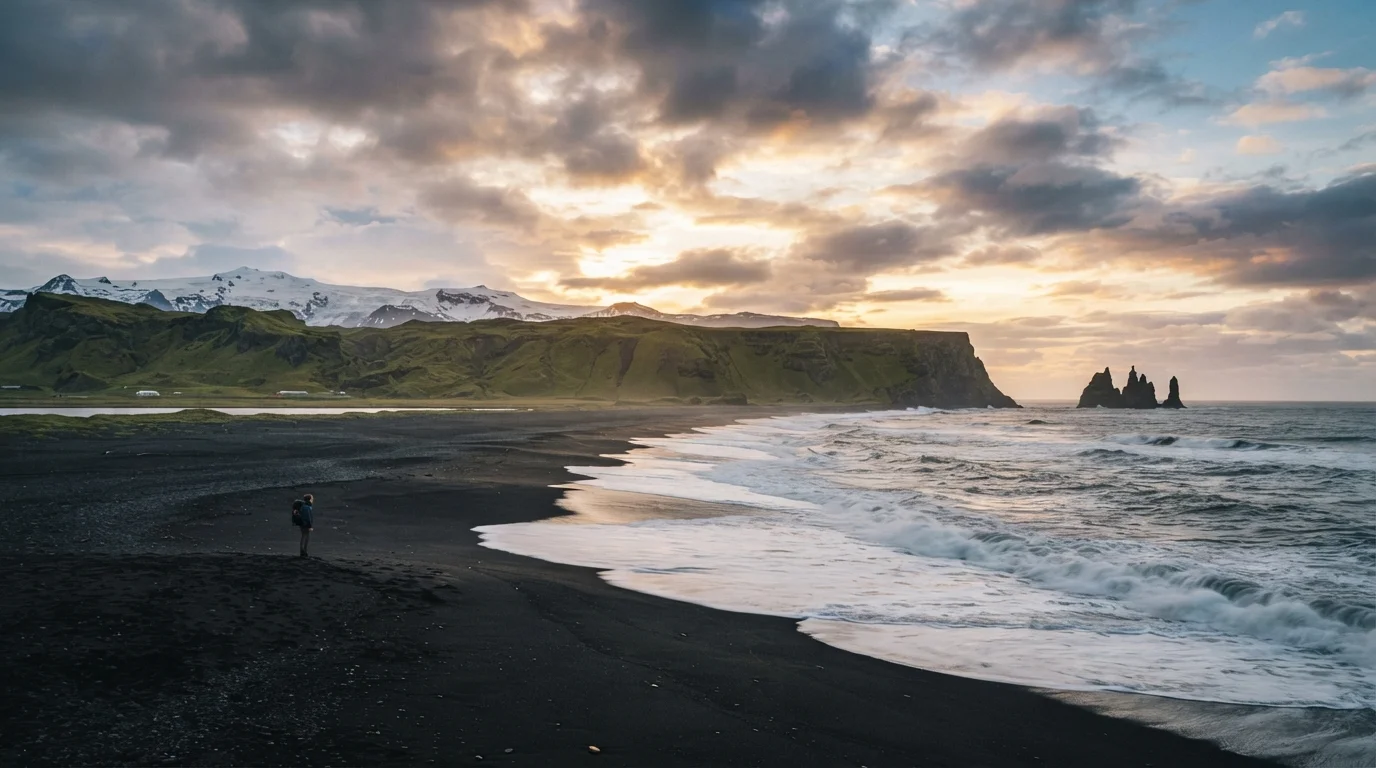
Iceland's black sand beaches, particularly Reynisfjara near Vík, are known for powerful and unpredictable sneaker waves that have injured and killed visitors. Signage at these beaches is serious - it reflects documented danger, not routine caution. Stay well back from the water's edge and never stand at the shoreline watching waves approach.
For packing, Iceland's weather shifts fast enough that layering is genuinely necessary rather than a suggestion. Packing for any climate without overfilling your bag offers a sensible framework for managing gear across variable conditions without overpacking.