

Key Takeaways
- Complete service records can meaningfully support a vehicle's resale value at sale or trade-in.
- Lenders and insurers sometimes factor documented maintenance into vehicle valuation assessments.
- A simple folder or digital app is enough to build a reliable maintenance paper trail.
- Records should include dates, mileage, service performed, and shop or parts receipts.
- Gaps in service history are a red flag for used-car buyers and independent inspectors.
Why Records Are Worth More Than You Think
Most drivers are diligent about getting their oil changed or rotating tires on schedule - then promptly lose the receipt. That habit is quietly costing them. A documented service history is one of the few things that converts routine maintenance spending into a tangible asset you can present at resale or trade-in.
When a private buyer or dealership evaluates a used vehicle, a service history filled with dated, mileage-stamped records signals that the car was cared for consistently. Without that documentation, buyers often assume the worst - and price accordingly. As part of the broader picture of vehicle ownership outlined in our end-to-end ownership guide, maintenance records are one of the few ongoing habits that pay off at every stage.
~$500-$1,000+
Potential resale value difference with documented service history
Industry appraisers and consumer automotive publications consistently note that verifiable maintenance records can add several hundred dollars or more to a vehicle's negotiated price, though actual amounts vary by market and vehicle condition.
1 in 4
Used-car buyers who cite missing service history as a negotiating point
Consumer surveys conducted by automotive research organizations indicate a significant share of used-vehicle buyers use undocumented maintenance as justification for lower offers.
What to Keep - and for How Long
Not every piece of paper needs permanent storage, but certain records deserve a dedicated file:
- Oil changes and fluid services: Date, mileage, and type of fluid used.
- Tire rotations, alignments, and replacements: Include brand if you purchased tires, and mileage at installation.
- Brake inspections and replacements: Note which axle and the measured pad thickness if available.
- Major repairs: Any diagnostic work, replaced components, or warranty-covered service - keep these indefinitely.
- Recall completions: Dealer-stamped notices confirming a recall was addressed.
- Scheduled interval services: Timing belt, transmission fluid, spark plugs - anything tied to mileage milestones.
Keep records for the life of the vehicle. When you sell, hand over the complete file. Buyers paying for a pre-purchase inspection - a step covered in our used car pre-purchase checklist - will specifically look for this documentation.
Record the mileage on every single service visit, not just the date.
Date alone is ambiguous - a buyer can't tell if 12 months between oil changes meant 3,000 miles or 18,000. Mileage stamps make the maintenance cadence verifiable and meaningful.
Keep dealer recall completion notices with your permanent vehicle file.
Recalls are safety-related repairs performed at no cost to the owner. Proof that recalls were completed addresses a specific concern buyers and inspectors check for, and it confirms the vehicle meets current safety standards.
Note who performed each service - dealer, independent shop, or self-performed.
Provenance matters. A buyer or lender can verify work done by a licensed shop; self-performed work is harder to confirm, so attaching parts receipts adds credibility when you did the job yourself.
Photograph or scan paper receipts and store them in a cloud folder.
Thermal paper receipts fade within a few years and can become illegible. A digital backup ensures your records survive spills, fires, or simply time.
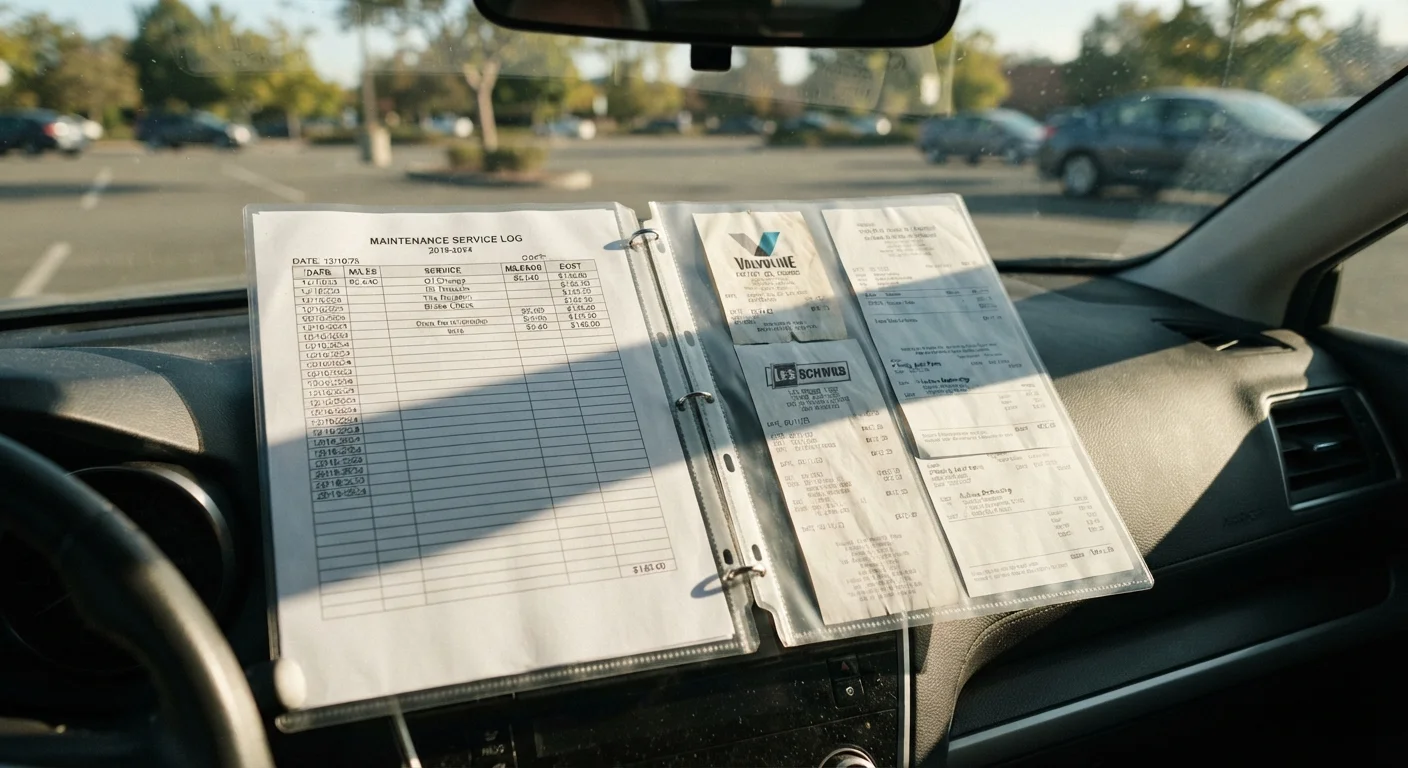
Create a one-page summary log that lists every service in chronological order.
Buyers reviewing a stack of loose receipts may miss items or become confused. A clean summary sheet that matches the receipts beneath it makes the history immediately readable and builds confidence.
Organizing Your Records: Simple Systems That Actually Work
The system you'll actually use beats the perfect system you won't. Here are three approaches that work for different habits:
Whichever method you choose, the goal is consistency. Log every service within a day or two of having it done, before the receipt disappears into a glove box pile. It's also worth noting that newer vehicles don't eliminate this need - as explored in our article on whether newer cars are always cheaper to maintain, advanced systems and specialized service requirements make documentation even more critical for modern vehicles.
Digital Records Are Legally Valid
In most US states, scanned or photographed receipts are accepted as proof of service for warranty disputes, lender valuations, and private sales. However, some manufacturer warranty claims may specifically require original dealer-stamped paperwork. Check your warranty terms if you plan to rely on digital copies for a formal claim.
Lenders, Insurance, and the Paper Trail
Beyond resale, maintenance records can matter in two less obvious contexts. First, if you refinance an auto loan, some lenders assess the vehicle's current condition as part of the process. A verifiable service history supports the vehicle's stated value. Second, in the event of a mechanical breakdown or disputed insurance claim, documented proof that you followed manufacturer-recommended service intervals can clarify whether a problem stems from neglect or a covered defect.
This is general financial and insurance information - for decisions specific to your loan or policy, consult your lender or a licensed insurance professional.
“The best time to start a maintenance log is when you buy the car. The second best time is today. Buyers don't trust memory - they trust paper.”
— Consumer automotive education materials, General guidance reflected across major vehicle ownership advisory sources
This article provides general vehicle ownership information and is not a substitute for advice from a qualified mechanic, financial adviser, or insurance professional.