

Key Takeaways
- Sautéing uses a wide, flat pan; stir-frying uses a wok - the equipment shapes the result.
- Stir-frying typically runs hotter and moves faster than classic sautéing.
- Fat choice matters: butter suits sautéing, while high-smoke-point oils are essential for stir-frying.
- Both techniques require prep work done before heat is applied - there's no time to pause mid-cook.
- Knowing which method to use helps you hit the right texture and flavor every time.
Our Verdict
Sautéing and stir-frying are both fast, high-heat techniques, but they're built for different cuisines, ingredients, and outcomes. Sautéing delivers tender, lightly browned results ideal for European-style dishes, while stir-frying produces crispier textures and bolder flavors suited to Asian-inspired cooking. Matching the method to your meal - and your equipment - makes all the difference.
| Best for | Recommended |
|---|---|
| Cooking proteins or vegetables in French or Italian-inspired dishes | Sautéing |
| Quick weeknight meals with a crispy, smoky finish | Stir-Frying |
| Cooks with a standard stovetop and everyday pans | Sautéing |
| Those who already own or want to invest in a wok | Stir-Frying |
What Makes These Techniques Different?
At first glance, sautéing and stir-frying look nearly identical - both involve high heat, a little fat, and constant movement. But they come from entirely different culinary traditions and produce noticeably different results. Understanding the distinction helps you cook more intentionally, rather than hoping one method works like the other.
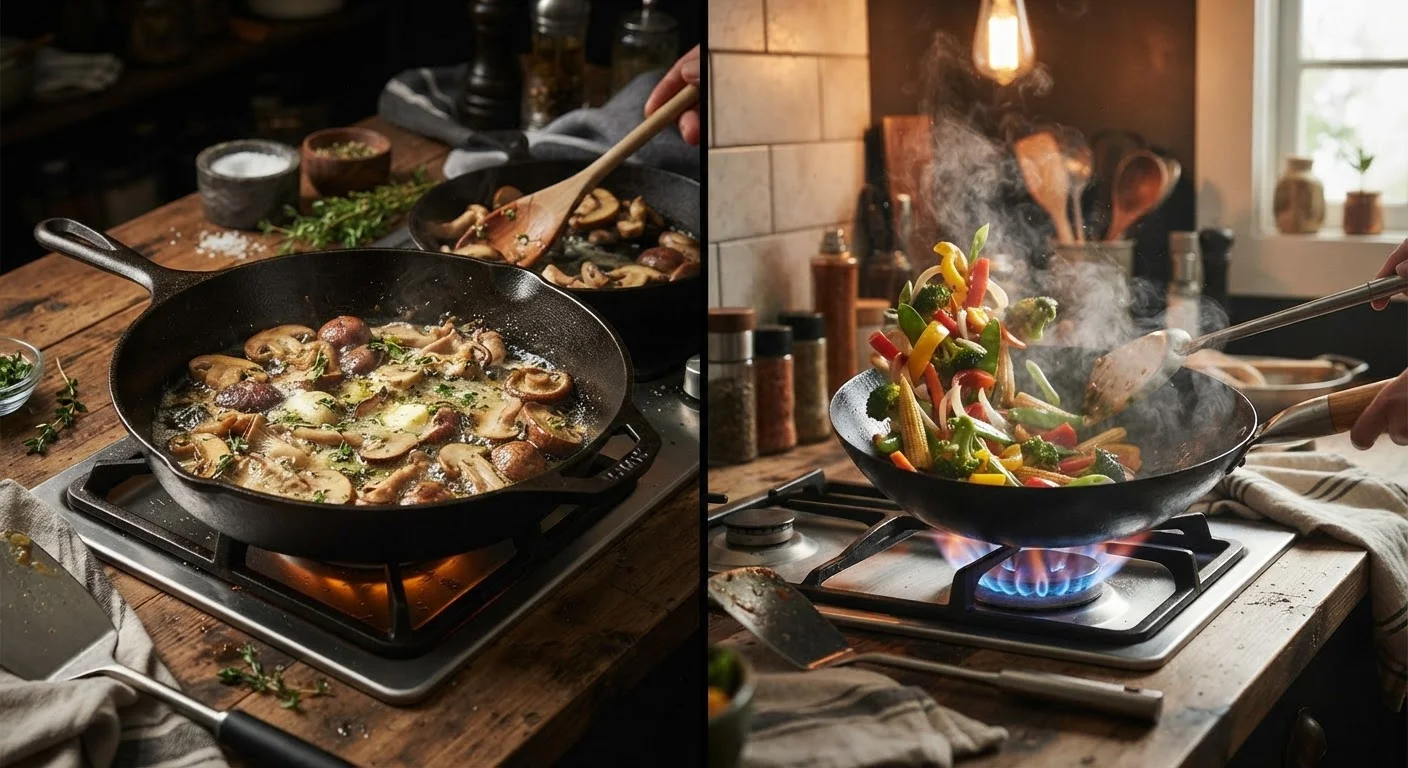
Sautéing (from the French sauter, meaning "to jump") is a European technique that uses a wide, shallow pan called a sauté pan or skillet. Food is cooked quickly in a small amount of fat over medium-high heat, with occasional tossing or stirring. The goal is usually a light golden exterior with a tender inside - think sautéed mushrooms, chicken breast, or zucchini.
Stir-frying is a Chinese cooking method traditionally done in a round-bottomed wok over very high heat - often higher than a standard home burner can reach. Ingredients are cut small, added in stages, and tossed constantly. The result is food that's cooked through but still vibrant, with a slightly smoky edge sometimes called wok hei (breath of the wok).
For more context on how these fit into the broader landscape of cooking, see our guide to dry heat vs. wet heat cooking methods.
Equipment, Fat, and Heat: The Key Variables
The pan you reach for is the first real decision point.
- Sautéing works best in a wide skillet or sauté pan with sloped or straight sides - stainless steel or cast iron both perform well. The flat surface promotes even browning.
- Stir-frying is designed for a wok, whose sloped walls let you push cooked food up and away from the hottest zone at the base. A flat-bottomed wok works on most American home stovetops.
Fat selection also differs. Sautéing is comfortable with butter, olive oil, or other moderately heat-tolerant fats. Stir-frying demands oils with a high smoke point - such as peanut, avocado, or canola oil - because the heat involved would burn butter almost instantly.
Temperature is the third variable. Stir-frying generally runs hotter than sautéing, which is part of why that signature char and crispness develops so quickly. If your burner can't get very hot, your stir-fry risks steaming rather than searing. Adding a smaller batch of food at a time helps compensate on a home stove.
| Sautéing | Stir-Frying | |
|---|---|---|
| Origin | French/European cuisine | Chinese cuisine |
| Best pan | Skillet or sauté pan | Wok (flat-bottomed for home use) |
| Ideal fat | Butter, olive oil | Peanut, canola, or avocado oil |
| Heat level | Medium-high | Very high |
| Food movement | Occasional toss or stir | Constant tossing |
| Typical result | Lightly golden, tender | Crisp, smoky, vibrant |
| Best for | Proteins, soft vegetables, pan sauces | Mixed vegetables, quick noodle and rice dishes |
Prep Before You Cook - No Exceptions
Both techniques share one unbreakable rule: everything must be ready before you turn on the heat. Once the pan is hot, there's no time to chop an extra clove of garlic or measure out a sauce. Experienced cooks call this mise en place - French for "everything in its place."
Mise en Place Makes or Breaks It
Whether you're sautéing or stir-frying, set out every ingredient before the burner goes on. Chop, measure, and arrange your aromatics, proteins, vegetables, and sauces in the order you'll use them. A few extra minutes of prep prevents scrambling - and burning - mid-cook.
For sautéing, this typically means patting proteins dry (moisture is the enemy of a good sear), slicing vegetables uniformly, and having any finishing ingredients - herbs, lemon juice, a splash of wine - measured out nearby.
For stir-frying, prep is even more critical because the cooking window is so short. Vegetables should be cut small and similarly sized. Sauces like soy, oyster, or rice wine should be pre-mixed in a small bowl. Aromatics like ginger and garlic go in first, so have them at the front of the line.
When to Use Which - And What to Expect
Choosing the right method comes down to what you're cooking and what result you're after.
Reach for sautéing when:
- You're cooking delicate proteins like fish fillets or scallops that need gentle, even heat.
- You want to build a pan sauce afterward - the fond (browned bits) left in a skillet are flavor gold.
- Your dish is inspired by Mediterranean or European flavors.
Reach for stir-frying when:
- You want vegetables to stay crisp and bright while still being fully cooked.
- You're making an Asian-inspired dish where smokiness and speed are part of the flavor profile.
- You have tougher vegetables like broccoli or snap peas that can handle intense heat without turning mushy.
Neither method replaces the other, and both pair well with a range of side dishes. If you're curious about how water-based methods like simmering or poaching compare, our temperature guide to liquid cooking walks through those techniques clearly.
~2-5 min
Typical stir-fry cooking time
Most stir-fry dishes go from raw ingredients to finished plate in just a few minutes over high heat.
400°F+
Minimum wok temp for stir-frying
Culinary guides generally suggest the wok should be very hot before adding oil or food to achieve proper searing.