

| Boiling temperature (sea level) | 212°F / 100°C |
| Simmering temperature range | 185-205°F / 85-96°C |
| Poaching temperature range | 160-180°F / 71-82°C |
| Best use of boiling | Pasta, dried beans, potatoes, blanching |
| Best use of simmering | Soups, stews, braises, stocks |
| Best use of poaching | Eggs, fish, chicken breast, fruit |
Why Temperature Is the Real Technique
When a recipe says "bring to a boil, then reduce to a simmer," it's not fussing over detail - it's describing two entirely different cooking environments. Boiling, simmering, and poaching all use hot liquid as the cooking medium, but each creates distinct textures, flavors, and results. Understanding the difference is one of those small skills that quietly improves almost everything you make.
These methods fall within the broader world of wet-heat cooking. If you want a fuller picture of how that compares to roasting or frying, dry heat vs. wet heat is worth a look. For now, let's break down what's actually happening at each temperature - and why it matters on your plate.
| Boiling temperature (sea level) | 212°F / 100°C |
| Simmering temperature range | 185-205°F / 85-96°C |
| Poaching temperature range | 160-180°F / 71-82°C |
| Best use of boiling | Pasta, dried beans, potatoes, blanching |
| Best use of simmering | Soups, stews, braises, stocks |
| Best use of poaching | Eggs, fish, chicken breast, fruit |
Boiling, Simmering, and Poaching at a Glance
Here's the core breakdown:
Boiling
Cooking in liquid at or near 212°F (100°C at sea level), where vigorous bubbles continuously break the surface. Best for sturdy, starchy foods that need high heat.
Simmering
Cooking in liquid held between roughly 185°F and 205°F (85-96°C), with gentle, steady bubbles. Ideal for soups, stews, and braises where slow flavor development matters.
Poaching
Cooking in liquid kept between approximately 160°F and 180°F (71-82°C), with minimal surface movement. Used for delicate proteins like eggs and fish to preserve moisture and texture.
Collagen
A connective tissue protein in meat that breaks down into gelatin when exposed to moist heat over time, making slow-simmered cuts taste rich and tender.
Blanching
Briefly plunging food into boiling water, then into ice water to stop cooking. Used to set color, soften texture slightly, or loosen skins on tomatoes and stone fruit.
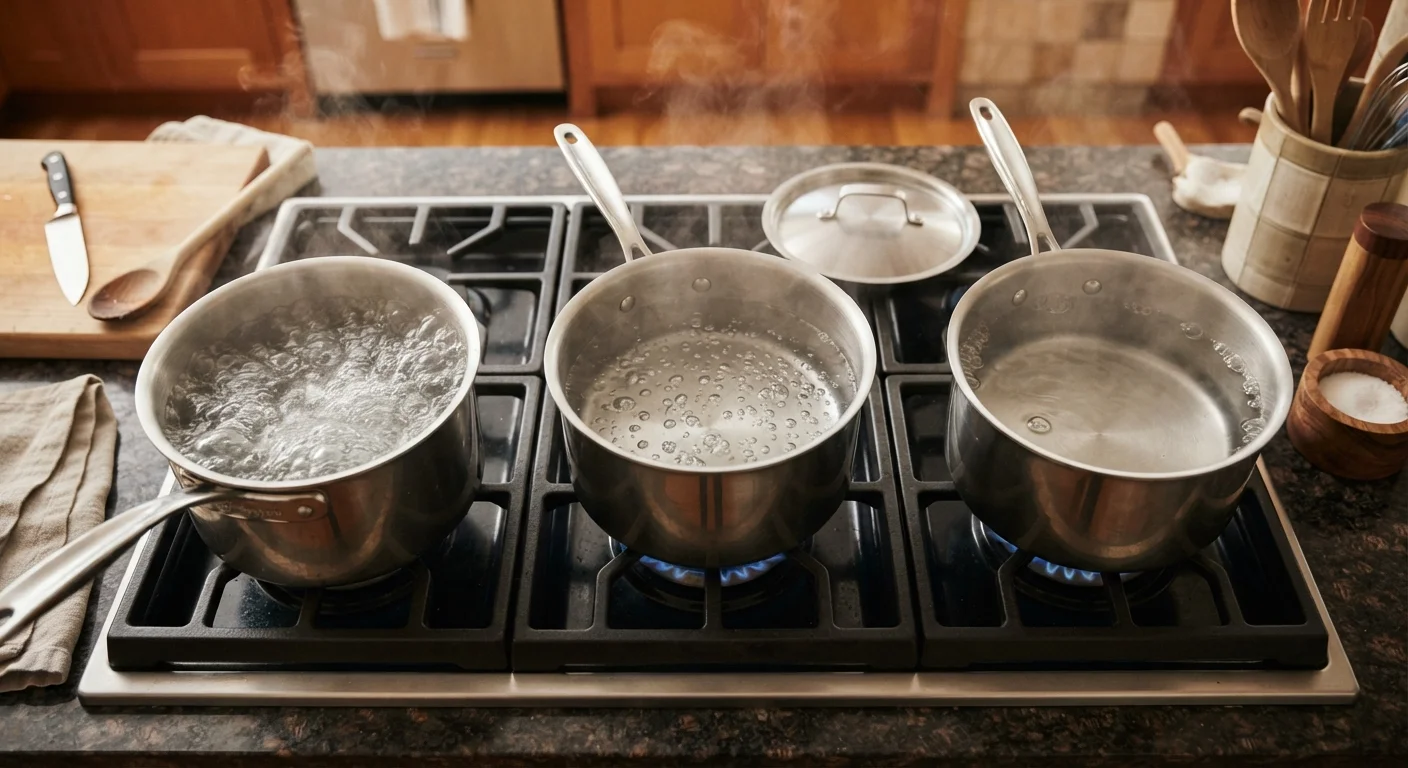
Boiling is the most aggressive of the three. At a full boil, vigorous bubbles break the surface constantly and the liquid churns. This is ideal for pasta, dried legumes, blanching vegetables, and any food sturdy enough to withstand turbulence. That churning, however, can toughen proteins - so boiling a chicken breast to cook it through often yields something dry and rubbery.
Simmering happens when the liquid is hot but not quite at a full boil. You'll see small, steady bubbles rising from the bottom with occasional breaks at the surface - not a rolling churn. This gentler environment is where soups, stews, and braises thrive. It extracts flavor slowly, allows collagen in meat to melt into gelatin, and keeps things from falling apart. When a recipe says "low and slow," simmering is almost always the goal. For tips on building good simmering liquids, see our piece on stock vs. broth.
Poaching is the most delicate of the three. The liquid barely moves - you might see a faint shimmer or a lazy bubble here and there. This calm environment is perfect for eggs, fish fillets, and chicken breast when you want them tender and moist. Poaching also works beautifully for fruit in spiced liquid. Because the temperature is low, the food cooks slowly and evenly without tightening or breaking apart.
Matching the Method to the Food
Choosing between these three techniques comes down to two questions: How tough is the food, and what texture are you after?
- Boil pasta, potatoes, corn, hard-boiled eggs, and dried beans. These foods benefit from high heat and aren't damaged by turbulence.
- Simmer soups, stews, braised meats, and homemade stocks. Gentle heat gives tough cuts time to become tender and lets flavors meld.
- Poach eggs, fish, chicken breast, and delicate fruit. Low heat keeps texture soft and lets the liquid's flavor gently season the food.
One practical note: many recipes start at a boil and immediately ask you to reduce heat. That's not wasted energy - bringing liquid to a boil quickly and then dialing back is often faster and more controlled than trying to creep up to a simmer from cold. Knowing how your particular stove reads temperature helps too; what "medium heat" actually means on your stove explains why dial settings don't tell the whole story.
Altitude Changes Your Boiling Point
At sea level, water boils at 212°F. But the higher you are above sea level, the lower the boiling point drops - by roughly 2°F for every 1,000 feet of elevation. If you live in a high-altitude city, pasta and dried beans may need a bit more time to cook through than the package suggests. Your simmer and poach temperatures remain similarly reduced, so adjust timing rather than cranking up the heat.
Once you've got a feel for temperature and technique, the next leap is understanding the recipe itself. Reading a recipe like a cook will sharpen how you interpret instructions before you even turn on the burner.
52°F
Temperature gap between poaching and boiling
The roughly 52°F difference between poaching (160°F) and boiling (212°F) represents entirely different cooking environments for proteins and texture.
~6°F lower
Boiling point drop per 1,000 ft elevation
At higher altitudes, water boils at lower temperatures - roughly 2°F less per 1,000 feet - which can extend cooking times for pasta and legumes.