

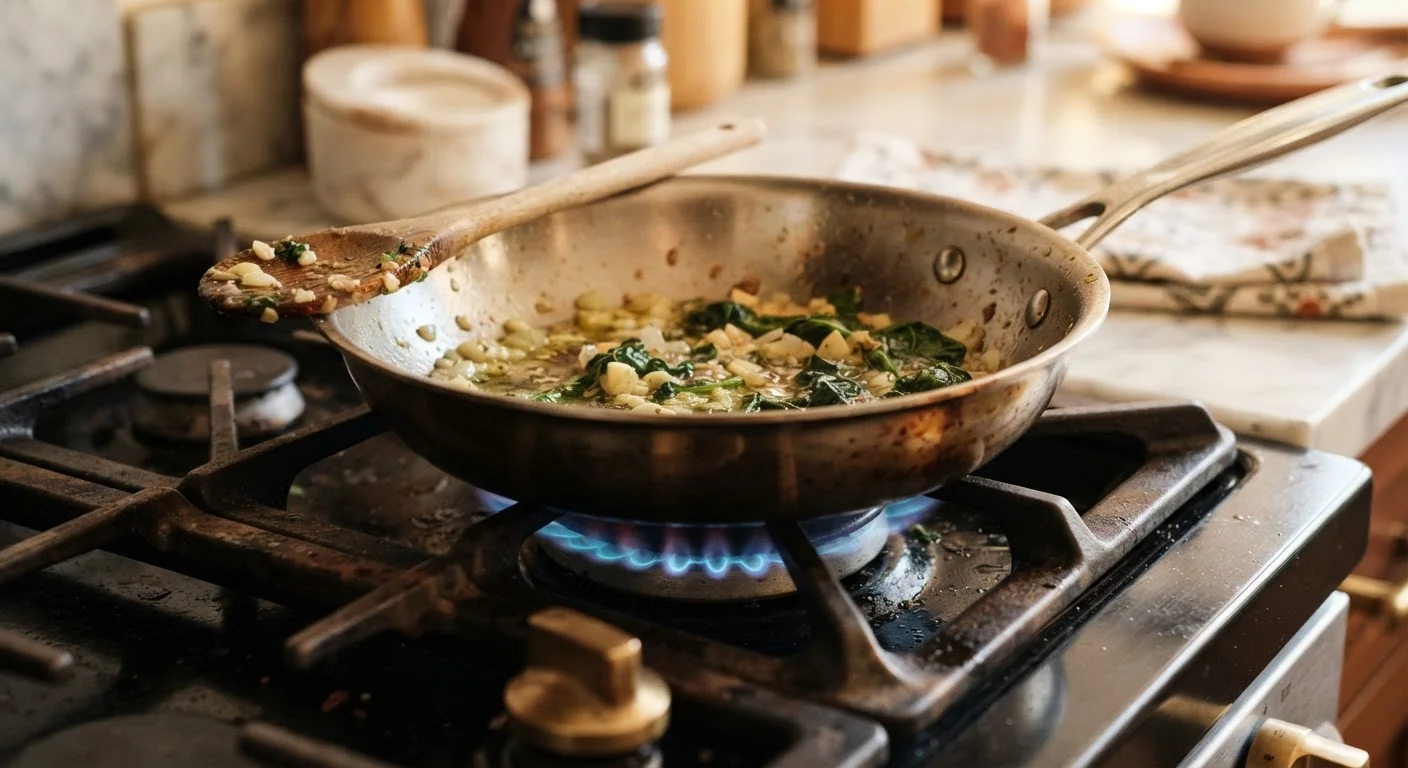
Key Takeaways
- "Medium heat" on a dial is a relative guideline, not an absolute temperature.
- The pan's behavior - shimmer, sizzle, smoke - tells you more than the knob position.
- Most stovetop sautéing and pan sauces happen in the 325-375°F surface range.
- Preheating your pan before adding food dramatically improves consistency.
- Gas, electric, and induction stoves each reach medium heat at different dial positions.
Medium Heat
Medium heat is a stovetop setting that produces a steady, moderate cooking temperature - typically around 325-375°F (165-190°C) at the pan surface. It's the workhorse range used for sautéing vegetables, browning proteins gently, and building sauces without scorching. Because every stove is different, the dial position labeled "medium" doesn't guarantee the same result in every kitchen.
Pan surface temperature varies based on the pan's material, thickness, and preheating time - not the dial alone. An infrared thermometer is the most reliable way to verify surface heat.
Why Your Dial Is Only Half the Story
Every recipe seems to say it confidently: "heat over medium." But crack open two different stoves and that instruction can mean wildly different things. A gas range at the 5 o'clock position might blaze as hot as an electric coil cranked to 7. The dial is a starting point, not a destination.
What actually matters is what's happening inside the pan. Heat transfers from the burner, through the metal, and into your food - and that process is shaped by the pan's material, its thickness, how long it's been preheating, and even how much food you've added. A cold, thick cast-iron skillet set to medium will behave very differently from a lightweight stainless pan on the same burner.
Think of the dial as a rough compass bearing. You still have to look out the window to know where you are. Reading a recipe like a cook means understanding that heat instructions describe intent, not exact physics.
Start by Getting to Know One Pan
Rather than trying to master every piece of cookware at once, pick one skillet and one burner and practice on them consistently. After a week of cooking on the same setup, you'll start recognizing what medium actually looks and sounds like on your stove - which is far more valuable than any dial number.
Reading Your Pan Instead of the Knob
Experienced cooks barely glance at the dial - they watch the pan. Here are the most reliable cues to look for:
- The water-drop test: Flick a few drops of water into a dry, preheated pan. At medium heat they'll sizzle briskly and evaporate in two to three seconds. If they skitter across the surface in beads (the Leidenfrost effect), the pan is too hot. If they just sit there, it needs more time.
- Oil shimmer: Add a small amount of oil and watch it move. At medium heat, oil will ripple gently and shimmer when you tilt the pan. Wisps of smoke mean you've crossed into medium-high or high territory.
- The sizzle on contact: When food hits the pan, it should sizzle steadily - not violently spatter or fall silent. A quiet hiss with a gentle, sustained sizzle is your green light.
These cues work across stove types. Whether you're on gas, electric, or induction, the pan's behavior is honest in a way the dial simply isn't.
325-375°F
Typical pan surface temperature at medium heat
This range is widely cited by culinary educators as the functional medium zone for most stovetop sautéing tasks.
1-2 min
Recommended pan preheat time before adding food
Preheating allows the pan surface to reach an even temperature, reducing sticking and improving browning consistency.
3 types
Major residential stove types with different heat behavior
Gas, electric coil, and induction stoves each transfer heat differently, meaning medium on one does not equal medium on another.
Where Medium Heat Fits in the Cooking Spectrum
Medium heat sits in a productive middle ground. At the low end, you're gently warming or melting - think butter, chocolate, or a delicate egg. At the high end, you're achieving rapid browning, charring, or a hard sear. Medium is where most everyday cooking actually lives.
Common tasks that thrive at medium heat include:
- Sautéing onions, peppers, and aromatics until soft and golden
- Cooking chicken thighs or pork chops through without burning the outside
- Building pan sauces after a sear
- Scrambling eggs to a creamy, not rubbery, texture
- Warming leftovers evenly without drying them out
For liquid-based techniques - boiling, simmering, poaching - heat still matters but plays out differently. Our guide to liquid cooking temperatures breaks those distinctions down clearly. And if you want to understand why stovetop methods differ fundamentally from oven methods, dry heat vs. wet heat is worth a quick read.
Induction Stoves Behave Differently
Induction burners heat the pan directly through magnetic energy rather than a flame or hot coil, which means they respond to dial changes almost instantly - more like gas than electric. If you've recently switched to induction, expect a learning curve around heat control, since the same dial position may produce noticeably more or less heat than your previous stove.
Building Consistency in Your Own Kitchen
The fastest way to get comfortable with heat settings is repetition on the same stove with the same pan. Pick one pan - ideally a medium skillet you use often - and spend a few sessions paying close attention to how it behaves at different dial positions. Keep a mental (or actual) note of what "medium" looks like on your specific setup.
A few habits that help:
- Always preheat: Give your pan 1-2 minutes on the burner before adding oil or food. A cold pan leads to sticking and uneven cooking.
- Adjust as you go: Medium heat isn't set-and-forget. If you hear too much splattering, nudge down. If there's no sizzle, nudge up. Cooking is an ongoing conversation with your stove.
- Respect the pan material: Stainless steel needs higher heat to prevent sticking; cast iron holds heat intensely once hot; nonstick performs best at lower-to-medium settings to protect the coating.
Over time, reading heat becomes second nature - less about rules and more about instinct built through practice.