

Key Takeaways
- You only need a handful of basic tools and pantry staples to start cooking confidently at home.
- Learning one skill per day prevents overwhelm and builds genuine confidence by the end of the week.
- Knife safety, heat control, and seasoning are the three most transferable beginner skills in any kitchen.
- Mistakes are part of the process - most early cooking errors are completely fixable.
- Home cooking supports both your budget and your nutrition goals over time.
Start here
Before You Start: Setting Up for Success
Next
Days 1-2: The Foundational Skills
Build on it
Days 3-4: Building Flavor and Technique
Apply it
Days 5-7: Putting It All Together
Keep going
What Comes Next
Before You Start: Setting Up for Success
Walking into a kitchen without a plan is how beginners end up stressed and hungry. Spend fifteen minutes before Day 1 doing two things: stocking a small pantry and reading your recipes all the way through before a single burner turns on. Our guide on reading a recipe like a cook explains exactly why that habit matters so much.
Your starter pantry doesn't need to be elaborate. Aim for: olive oil, salt, black pepper, garlic, onions, canned tomatoes, dried pasta, rice, eggs, and one or two dried herbs like oregano and cumin. These dozen items unlock hundreds of simple meals.
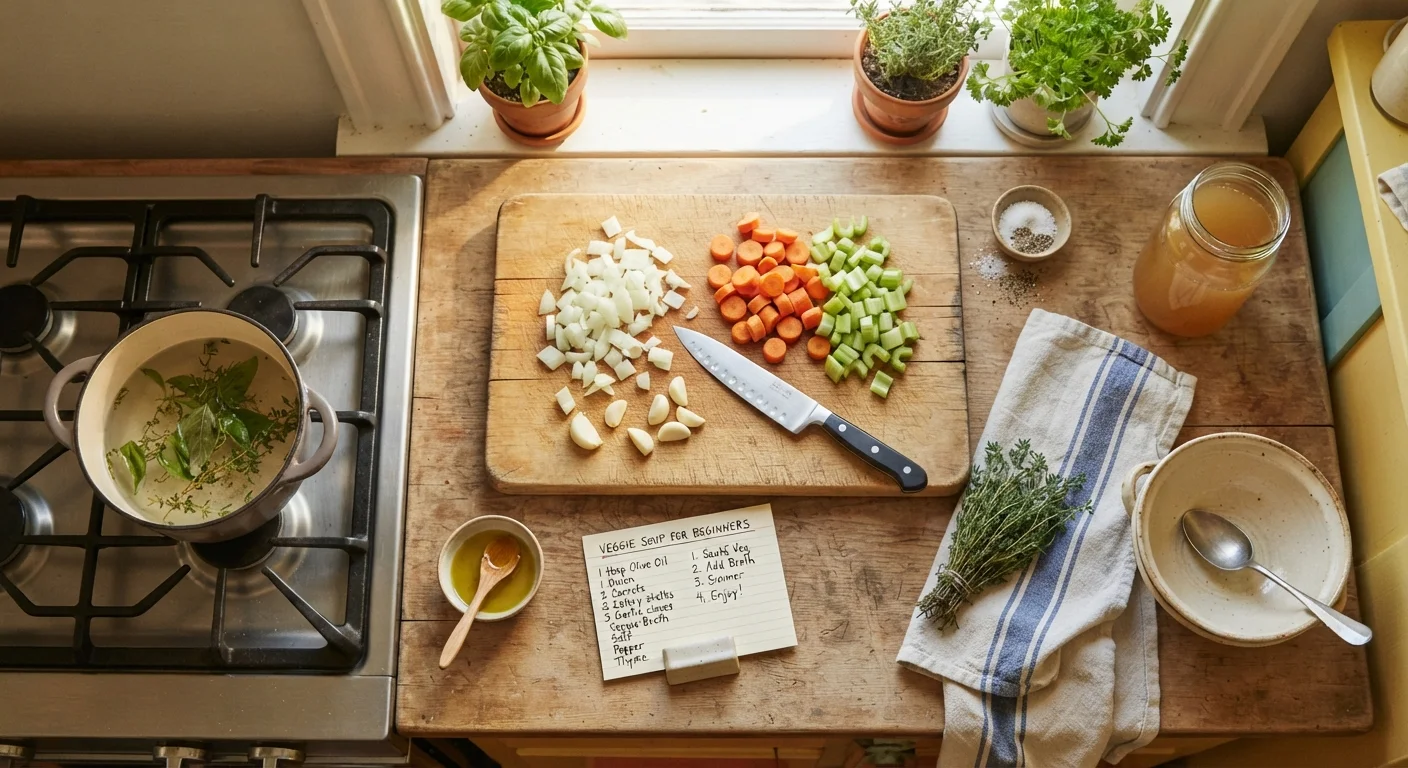
Mise en place
A French phrase meaning 'everything in its place.' It refers to prepping and organizing all your ingredients before you start cooking, so the process flows smoothly.
Sauté
Cooking food quickly in a small amount of fat over relatively high heat, stirring or tossing frequently to cook evenly without burning.
Simmer
Cooking a liquid at a gentle heat just below boiling, so small bubbles occasionally rise to the surface. Simmering develops flavor without causing rapid evaporation.
Seasoning
The act of adding salt, herbs, spices, or acids (like lemon juice) to food to enhance its natural flavor. Good seasoning happens gradually throughout cooking, not just at the end.
Deglaze
Adding liquid (water, broth, or wine) to a hot pan to loosen and dissolve the browned bits stuck to the bottom, which are packed with flavor.
Also set a realistic expectation: this week is about building habits, not producing Instagram-worthy dishes. A slightly overcooked scrambled egg still teaches you something valuable.
Days 1-2: The Foundational Skills
Day 1 - Knife work and heat control. Before anything else, learn to hold a chef's knife safely (knuckles curled as a guide) and practice a basic rock chop on an onion. Don't rush. Our article on knife skills every home cook needs goes deeper when you're ready. Then cook scrambled eggs over medium-low heat - the gentlest possible introduction to managing a burner.
Day 2 - Boiling and salting water. Cook pasta. It sounds trivial, but properly salted boiling water is a technique most people get wrong for years. The water should taste pleasantly salty, like mild broth. Toss the drained pasta with olive oil, garlic sautéed for sixty seconds, and a handful of whatever vegetable you have on hand.
Salt Your Pasta Water Generously
The water should taste like mild ocean water before you add the pasta. Under-salted water is the most common reason homemade pasta tastes flat compared to restaurant versions. You'll use less salt overall because the pasta absorbs it evenly during cooking.
Days 3-4: Building Flavor and Technique
Day 3 - Sautéing and seasoning in layers. A simple stir-fry or veggie sauté teaches you the single most valuable cooking lesson: seasoning is not something you do at the end. Salt lightly at each stage - when the onions go in, when the vegetables follow, when everything comes together. Taste constantly.
Day 4 - Simmering a sauce. Open those canned tomatoes and make a basic tomato sauce. Sauté garlic in olive oil, add the tomatoes, season, and let it simmer on low for twenty minutes. You're learning patience, heat management, and how flavors concentrate over time - three skills that carry into almost every recipe you'll ever cook. Pair it with the pasta you boiled on Day 2.
Watch Your Heat on Garlic
Garlic burns in seconds on high heat and turns bitter instantly - there's no saving it once that happens. Keep the heat at medium or medium-low when sautéing garlic, and stay nearby. If it turns dark brown, start over; it's worth the thirty seconds it takes.
Days 5-7: Putting It All Together
Day 5 - A simple grain bowl. Cook rice or another grain, roast a sheet pan of vegetables at 400°F, and assemble with a drizzle of olive oil and lemon juice. Sheet-pan roasting is one of the most forgiving techniques in home cooking - vegetables are hard to truly ruin this way.
Day 6 - A one-pot soup. Combine broth, whatever vegetables you have left, a can of beans or lentils, and your seasoning. Simmer for twenty to thirty minutes. This teaches you to work with what's available - a key mindset shift toward sustainable home cooking, and one that naturally supports your everyday nutrition goals.
Day 7 - Cook something twice. Repeat your favorite dish from the week, but tweak one thing - more garlic, a different herb, a longer simmer. Repetition with variation is how cooks actually learn. By the end of this day, you'll have cooked seven times in seven days. That consistency matters far more than any single dish turning out perfectly.
What Comes Next
One week of home cooking won't make you a chef, but it will give you a working foundation - and that's exactly what it's supposed to do. From here, keep adding one new skill every week or two: roasting a whole chicken, making a vinaigrette from scratch, baking a simple bread.
If you find yourself wanting to organize your kitchen to support the new habit, the principles in our guide to getting started with home organization translate surprisingly well to kitchen setup. And if you're thinking about how home cooking fits into a broader household budget, building your first budget is a natural companion read.
Knife Skills Every Home Cook Needs
A focused guide to the foundational cutting techniques home cooks use every single day - no culinary school required.
Reading a Recipe Like a Cook
Learn the pre-cooking habits that professional cooks rely on before a single burner turns on, so you're never caught off guard mid-recipe.
The kitchen rewards patience and curiosity more than talent. Keep cooking.