

Key Takeaways
- A meal rhythm uses loose weekly patterns instead of day-by-day prescribed meals.
- Anchoring meals to categories (like 'grain bowl night') reduces decision fatigue significantly.
- Keeping a short rotating pantry list makes weeknight cooking faster and less stressful.
- Built-in flexibility nights prevent the all-or-nothing collapse most strict plans suffer.
- Batch-prepping just two or three ingredients - not entire meals - is usually enough to succeed.
What you will need
Why Strict Meal Plans Tend to Fall Apart
Most of us have tried a detailed meal plan at some point - Sunday mapping out every lunch and dinner, color-coded and precise. By Wednesday, something shifts: a late meeting, a friend's invitation, or just plain exhaustion. The plan collapses, and often so does the motivation to cook at all.
The problem isn't a lack of willpower. It's that rigid plans don't account for the reality of a lived week. A meal rhythm works differently. Instead of assigning specific meals to specific days, it gives each day a loose category or theme, leaving room for what's actually in your fridge, your mood, and your schedule. Think of it as a framework rather than a script.
This approach sits somewhere between complete spontaneity and a locked-in plan - and that middle ground is where sustainable habits tend to live. For a deeper look at how structure and flexibility compare across daily routines, see structured vs. flexible routines. And if you're building other healthy habits alongside your eating routine, living well on a tight schedule covers the broader picture.
What You'll Need Before You Start
You don't need apps, spreadsheets, or a pantry overhaul. A few simple inputs are enough to get going.
What you will need
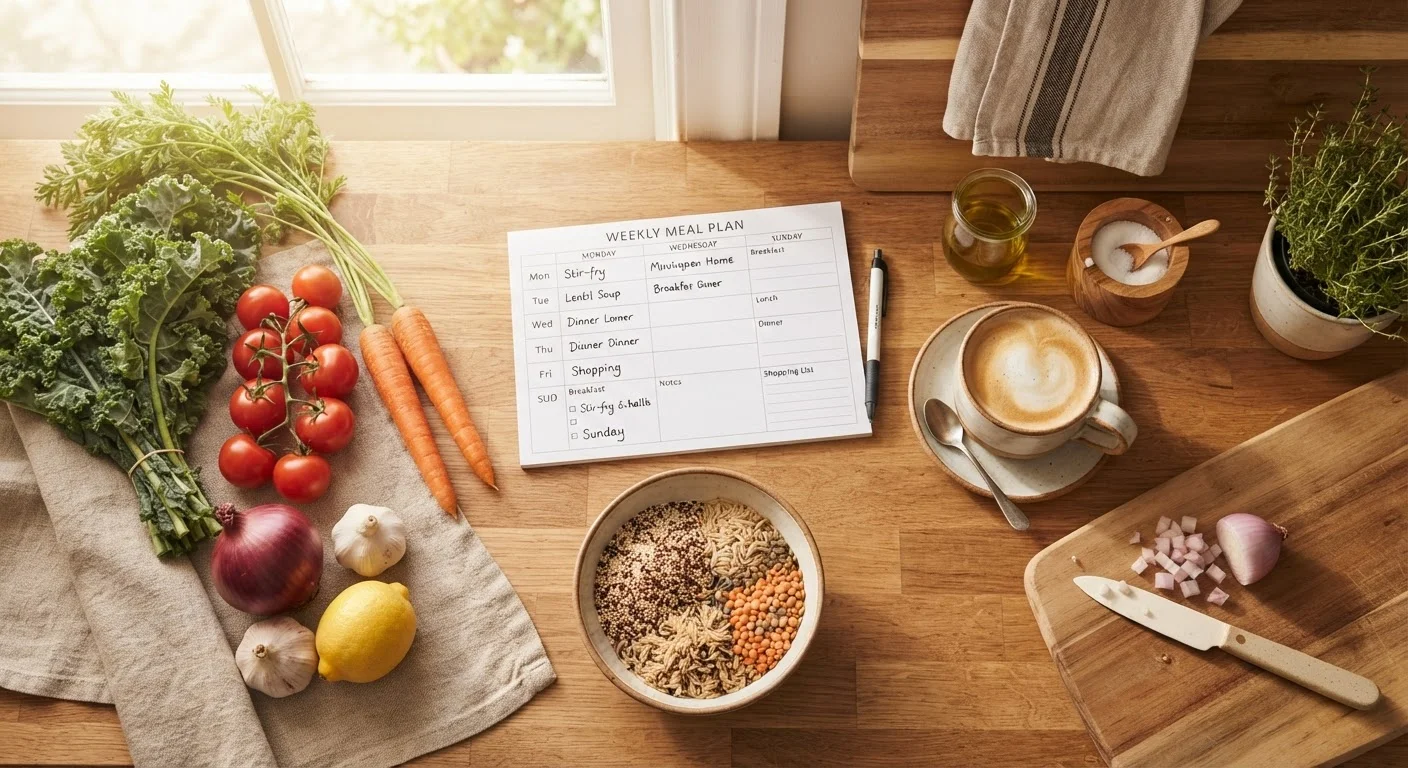
Notepad or whiteboard
Write out your weekly category themes so they're visible and easy to adjust.
A short pantry staples list
Keep a rotating list of 10-15 ingredients that anchor your go-to meals.
A simple weekly grocery routine
One predictable shopping trip per week prevents the 'nothing to cook' spiral.
Building Your Meal Rhythm Step by Step
Follow these steps at your own pace - even implementing two or three of them will make a noticeable difference in your week.
Map Your Real Week - Not Your Ideal Week
Before assigning any themes, look honestly at your week. Which nights do you have energy to cook? Which nights are typically rushed or social? Mark two or three nights as low-effort nights and two or three as cooking nights. Leave one as a flex night. This map becomes the skeleton your rhythm hangs on.
Assign Loose Categories, Not Specific Meals
Give each cooking night a broad theme rather than a dish. Examples: grain bowl night, pasta or noodles, something with eggs, sheet pan proteins and vegetables, soup or stew. The category tells you the format; you decide the specifics based on what's fresh and available that week.
Build a Short, Rotating Pantry List
Identify the 10-15 staple ingredients that make your chosen categories work - canned beans, dried pasta, eggs, a couple of whole grains, olive oil, a few spices. Keep these stocked consistently. This isn't a meal plan; it's infrastructure. When your pantry matches your categories, weeknight cooking becomes a matter of combining what's there, not consulting a recipe from scratch.
Do One Small Batch-Prep Session Per Week
You don't need to prep five complete meals. Instead, choose two or three ingredients to prepare ahead: cook a pot of grains, roast a tray of vegetables, or hard-boil some eggs. These components can move between multiple meals across the week, making low-effort nights genuinely quick without locking you into a predetermined dish.
Review and Adjust After Two Weeks
After your first two weeks, spend five minutes reflecting. Did any category feel like a chore every time? Was one night consistently skipped? Swap a theme, shift a night, or simplify. The rhythm should reduce friction - if something consistently creates resistance, it needs adjusting, not more discipline.
Let Your Categories Evolve Seasonally
A grain bowl night might lean on cold salads in summer and warm roasted vegetables in winter. Letting your categories shift with the season keeps the rhythm feeling fresh rather than monotonous. You're not changing the system - just updating what fills it.
Keeping It Going Without Burning Out
The biggest threat to any food routine isn't boredom - it's perfectionism. A meal rhythm only works if you treat a takeout night or a skipped prep session as a normal part of the pattern, not a failure. Build in at least one flex night per week intentionally, so when life intervenes on other nights, it doesn't feel like derailment.
Rotate your category themes every few weeks to keep things fresh without starting from scratch. And remember, a meal rhythm pairs well with understanding what actually goes on your plate. Our guide to building a balanced plate offers evidence-based principles for assembling meals that cover your nutritional bases - without rigid rules. Explore more practical eating guidance in the Nutrition & Diet hub.
Don't Let 'Rhythm' Become a New Rigid Plan
If you find yourself feeling anxious about breaking a category night, that's a sign the rhythm has tipped back toward rigid planning. The whole point is to give yourself a reliable default - not a new rule to follow. Takeout, leftovers, and 'whatever's in the fridge' nights are all valid expressions of a healthy food routine.