

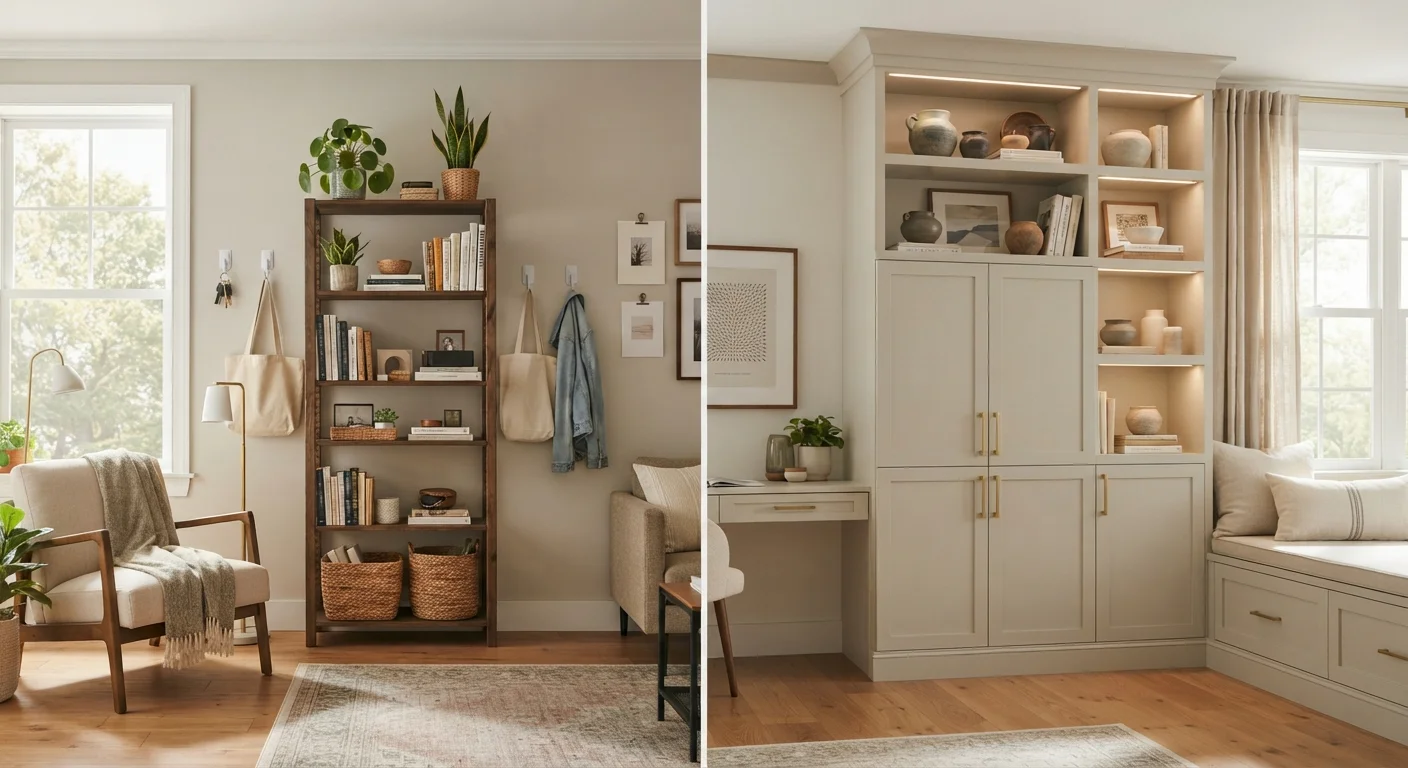
Key Takeaways
- Renters must work within landlord restrictions, making removable and freestanding solutions essential.
- Homeowners can invest in permanent built-ins, but those solutions don't travel with you if you move.
- Smart organization is achievable in any housing situation - the approach simply differs.
- Lease terms vary widely; always review yours before installing anything, even command strips.
- Flexibility and portability are the renter's greatest organizational assets.
Forces creative, portable organization thinking
Working within rental restrictions pushes renters toward modular, freestanding solutions that are often easier to reconfigure and move to a new home.
Low financial commitment to any single system
Because renter-friendly solutions are typically less expensive than built-ins, it's easier to experiment, swap out, or replace what isn't working.
Organization travels with you when you move
Freestanding shelving, drawer organizers, and tension-rod closet systems pack up and work in your next rental just as well as your current one.
No permanent wall anchoring for heavy storage
Renters cannot install load-bearing wall anchors without landlord approval, which limits the weight and size of wall-mounted storage options.
Cannot modify cabinets, closets, or layout
Built-in closet systems, cabinet pull-outs, and structural changes require ownership - renters must work with whatever configuration exists.
Security deposit risk from any installation damage
Even small holes or adhesive residue can result in deposit deductions if they aren't repaired or if they violate lease terms.
Less storage infrastructure in many rental units
Rental properties often have fewer built-in storage features - smaller closets, minimal cabinetry - compared to owner-occupied homes where improvements accumulate over time.
Our Verdict
Neither renting nor owning is inherently better for staying organized - each comes with a distinct set of tools and constraints. Renters benefit from thinking in portable, modular systems that adapt to new spaces, while owners can invest in permanent solutions that maximize their specific floor plan. The most organized homes result from understanding your situation and working deliberately within it.
Renters who feel hemmed in by their restrictions, and owners who haven't yet tapped into what permanent installation allows, will both find clarity in mapping their organization options to their housing reality.
Why Housing Status Is an Organization Variable
When most people think about home organization, they focus on bins, labels, and decluttering routines. What often goes unexamined is how much your housing status - renter or owner - determines which solutions are even available to you. The difference isn't just cosmetic. It shapes what you can install, how much you should invest, and how portable your systems need to be.
Renters typically face restrictions on drilling, painting, and permanent modifications. Owners have more latitude, but are also on the hook for any changes they make. Understanding these boundaries before you buy your first shelf bracket can save significant frustration - and potentially your security deposit.
For a broader look at the home improvement landscape, the Home Improvement hub covers renovation and upgrade strategies that apply across both housing types.
The Renter's Organization Reality
Renters operate under one governing constraint: you do not own the walls, floors, or fixtures. Most standard leases prohibit permanent alterations, which rules out built-in shelving, wall anchors rated for heavy loads, and cabinet modifications. Even seemingly minor changes - painting a closet, adding recessed lighting, or tiling a backsplash - typically require explicit landlord approval.
Forces creative, portable organization thinking
Working within rental restrictions pushes renters toward modular, freestanding solutions that are often easier to reconfigure and move to a new home.
Low financial commitment to any single system
Because renter-friendly solutions are typically less expensive than built-ins, it's easier to experiment, swap out, or replace what isn't working.
Organization travels with you when you move
Freestanding shelving, drawer organizers, and tension-rod closet systems pack up and work in your next rental just as well as your current one.
That said, the renter's market for organization solutions has grown considerably. Tension-mounted shelving, over-door organizers, furniture with integrated storage, and pressure-fit closet systems all work without fasteners. Adhesive products designed for renters - including removable hooks and strips - can handle lighter loads and peel away cleanly if used as directed.
One nuance worth flagging: adhesive product performance varies by wall surface and paint type. Always read manufacturer guidance and test in a low-visibility area first. And before installing anything, review your specific lease - some landlords have stricter rules than others. If you're new to navigating rental agreements, the first-time renter's guide breaks down lease terms and landlord expectations in practical detail.
No permanent wall anchoring for heavy storage
Renters cannot install load-bearing wall anchors without landlord approval, which limits the weight and size of wall-mounted storage options.
Cannot modify cabinets, closets, or layout
Built-in closet systems, cabinet pull-outs, and structural changes require ownership - renters must work with whatever configuration exists.
Security deposit risk from any installation damage
Even small holes or adhesive residue can result in deposit deductions if they aren't repaired or if they violate lease terms.
Less storage infrastructure in many rental units
Rental properties often have fewer built-in storage features - smaller closets, minimal cabinetry - compared to owner-occupied homes where improvements accumulate over time.
The Homeowner's Organization Advantage - and Its Limits
Ownership unlocks a different tier of organization options. Homeowners can install wall-anchored shelving rated for substantial weight, commission custom closet systems, add cabinetry in garages and mudrooms, and modify layouts to suit their actual storage needs. These permanent solutions often make the most of awkward spaces - think built-in window seats with storage below, or pantry pull-outs that use every inch of cabinet depth.
~36%
Share of US households that rent
According to US Census Bureau data, roughly one in three American households rents rather than owns, making renter-specific organization strategies relevant to a large portion of the population.
Under 3 years
Median renter tenure in a unit
US Census data suggests renters move more frequently than owners, which reinforces the value of portable, modular storage systems over fixed investments.
But permanent isn't always better. Built-in storage is optimized for your current space, not the next one. If you move, you generally leave those investments behind - or face the cost and effort of removal. There's also an upfront investment to weigh: custom cabinetry and professional closet installations can range from modest to significant depending on scope and materials.
Homeowners tackling structural questions - like whether a wall can accommodate a built-in - should understand what they're working with before any modification. Our guide to load-bearing vs. partition walls explains what's at stake before you pick up a drill.
Shared Spaces Add Another Layer
Whether you rent or own, living with others introduces a second organizational variable: other people's habits. Roommates, partners, or family members may have different standards for tidiness, different storage preferences, or different tolerances for shared systems. This tension plays out regardless of who holds the lease or the deed.
Shared Housing Adds Complexity
In shared rentals or owner-occupied homes with multiple residents, organization systems need buy-in from everyone who uses the space. A perfectly designed system that others ignore or actively resist won't function well. Before investing in storage solutions for shared areas, it's worth having a direct conversation about expectations, habits, and what each person actually needs from a shared space.
The good news is that housing-status strategies and shared-living strategies can work in tandem. A renter sharing an apartment can still establish zones, use labeled freestanding units, and create clear shared agreements about common areas. The organizing shared spaces guide offers practical frameworks for households where habits don't naturally align - useful whether you rent or own.